
How to Use AI in Business. A Production Company’s Real Story
Alphabet just announced an $80 billion equity raise to fund AI infrastructure. Berkshire Hathaway is putting $10 billion into the deal. That is not hype money. That is Warren Buffett money. The biggest companies on earth are betting everything on AI transforming how business gets done. But here is the thing most people miss: you do not need $80 billion to know how to use AI in business. You do not even need a tech team. You just need to be a good thinker.
There is a version of this company that existed four months ago that I barely recognize anymore. Not because we changed what we do. We are still the same full-service production company we have been for over 20 years. We still shoot, we still edit, we still build brands and tell stories. What changed is everything around the creative work. The admin. The reporting. The systems that kept us organized. The things nobody sees but everyone feels when they break down.
I want to tell you about that change because I think a lot of business owners are where we were: moving fast, working hard, not really moving the needle, and wondering if there is a better way.
The Way Things Were
Before AI, everything at C&I Studios was manual. And I mean everything.
We had some automation built into Podio, our project management platform, and we used various website plugins to handle bits and pieces. But every single one of those systems still required manual touch points. Sending contracts and quotes. Creating call sheets. Managing follow-ups and schedules. Auditing our website for broken links and outdated content. Building web pages one at a time. Interpreting analytics. Compiling reports.
We tried everything to make it easier. We moved to Webflow to try to streamline how we built portfolio pages. We hired developers to create custom plugins. We brought in SEO agencies. We hired freelancers from Upwork and Fiverr for specific projects. Results varied. Some of it worked. A lot of it did not. And even the stuff that worked still needed us to manage it.
We are an in-house company. We do everything ourselves: production, post-production, web, marketing, sales, operations. That is our strength, but it also means the admin burden is enormous. We were moving at lightning speed, but that speed was capped by the amount of manual effort everything required. And the reporting? Horrible. Just horrible. Manually pulling data from five different places, trying to make sense of it, trying to figure out where we actually stood. We did that for years.
The Spark
We had been using AI for a while, including ChatGPT and Claude, but like most people, we were just asking questions and getting answers. We managed to do some cool things with it, but nothing that really moved the needle. It was still pretty manual. You ask a question, you get an answer, you go do the thing yourself.
The turning point came about four months ago when we heard about ClawBot. We are Apple people, so we had seen the buzz about folks buying Mac Minis to run AI agents through OpenClaw. The concept was exciting, but we were cautious. We had heard the horror stories. AI running amuck, wrecking people’s files and emails. We were not about to let that loose on our production machines with years of client work on them.
But we thought: what if we tried the Mac Mini idea on a fresh machine? One that does not have anything on it that could be messed up? So we bought one. But we did not go with OpenClaw. Too complicated, too many security concerns for our comfort level. Instead, we went with Claude Code, which was just beginning to offer what OpenClaw could do. Shortly after, Claude launched Cowork, and that was pretty much the end of the conversation. We were all in.
The Learning Curve Was Shorter Than We Expected
There was a learning curve, sure. But here is the thing about us: we are critical thinkers. We have built this entire company from the ground up by thinking through problems. We can not write code from scratch. We are not software engineers. But we can think through just about anything, and it turns out that is the only skill you actually need.
We got it set up and started targeting the admin side of our business first. Every single thing we had in the pipeline to outsource, every Upwork job, every Fiverr gig, we did ourselves. The key insight was that AI does not need you to be technical. It needs you to be clear about what you want and willing to iterate until you get it. If you can describe a problem, you can solve it. That was a revelation for us.
How We Use AI in Business, What Actually Changed
The list is long, but here is the picture. And this is real AI business automation. Not theory, not a pitch deck, not a pilot program. This is what we actually built and use every day.
Reporting went from painful to instant. We connected AI to our APIs in Google Search Console, Google Analytics, and Ahrefs. Now we get accurate, detailed SEO reports on our websites every single day, automatically. What used to be our most dreaded task, manually pulling data from five different platforms and trying to make sense of it, is now handled by AI reporting tools we built ourselves. The data just shows up. We know exactly where we stand, and more importantly, we can see trends early enough to actually do something about them.
We replaced Webflow. We trained AI on how we build our web pages and our design standards. Not only did it match what we were doing. It builds better-looking pages, faster. We describe what we want, it builds it, we tweak from there. What used to take days takes hours. Our portfolio pages, service pages, and landing pages all get built this way now.
Broken links are a thing of the past. We used to rely on a plugin that would find some of them and fix none of them. AI found and fixed all of them in seconds. Every page on our site, from commercial video production to photography to music video production, stays clean and functional without us thinking about it.
Sales and finance reporting actually works now. The sales team set up AI with FreshBooks to build quotes faster and pull all of our sales data for better year-over-year reporting. Reports that used to be incredibly time-consuming to compile now take minutes. We went from guessing how a quarter was going to knowing exactly where every dollar stood, in real time.
AI for project management changed how we operate. We used to try to keep up with all the spinning plates ourselves. Now AI tells us what we need to do each day, who we need to respond to, what is going on with each project, what the next action is, and what is coming down the pipeline. It sends us text reminders for meetings, alerts us when our studio security cameras pick up activity, and checks our expenses for anomalies. All in one place. For a small business, this kind of AI workflow automation used to require enterprise software with enterprise price tags. We built ours for nothing.
We built our own tools. This is the one that surprises people the most. We built custom internal tools to replace services we were paying for. No more MailChimp. We built our own email planning system. No more RightSignature. We built our own digital signature tool. We gutted a handful of paid website plugins and built our own replacements. We even built a custom security plugin that does the work of five separate plugins. It worked so well that we turned it into a product and made it available for sale for other businesses that would rather have one great tool than five decent ones.
AI Data Management at Scale, 1.83 Petabytes
Then there is the data. I just asked AI how much we are managing and it told me: 1.83 petabytes across all locations. For reference, one petabyte is over a million gigabytes.
Now imagine manually tracking and managing that much data. Where it is. What is on it. How full each drive is. Which projects live where. AI data management tools exist for enterprise companies with enterprise budgets, but for a mid-size production company? There is nothing off the shelf that works. So we built one.
It is a visual dashboard that shows us, to the letter, where our data is and how much of it sits on which drives and servers. I just clicked on our RAW 12 drive and I can instantly see that it is 98% full with 3.6 TB used, 0.1 TB free, 30 projects on it, one of which is Juicery Rx at 52 GB across 135 files. That specific. And I can do that for any drive or server we have.
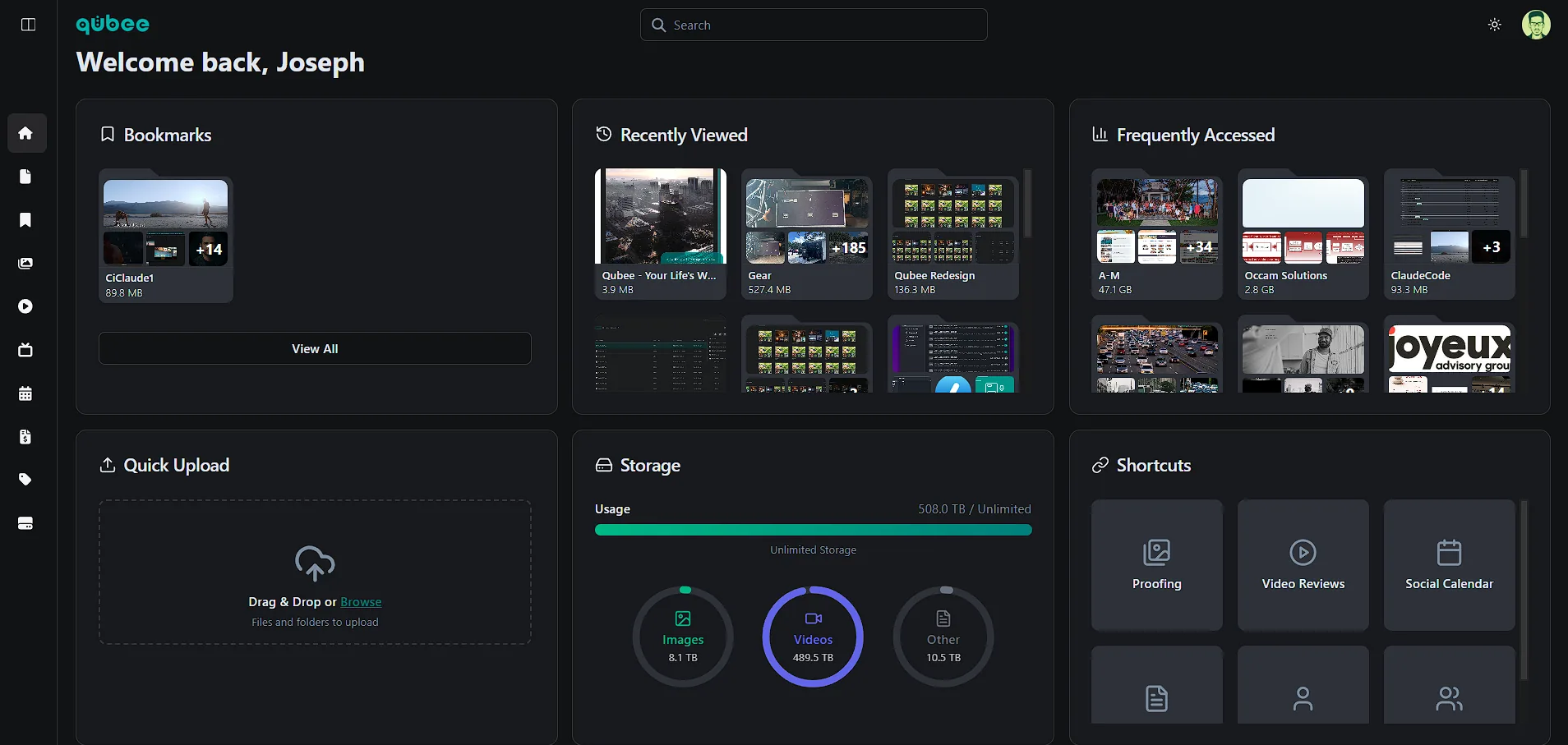
We also built a cloud storage platform called Qubee that our team and clients use to store, share, and manage production files securely. It started as an internal need and grew into a standalone product. That is what happens when you remove the barrier between thinking up a solution and actually building it.
AI Inventory Management for Production Gear
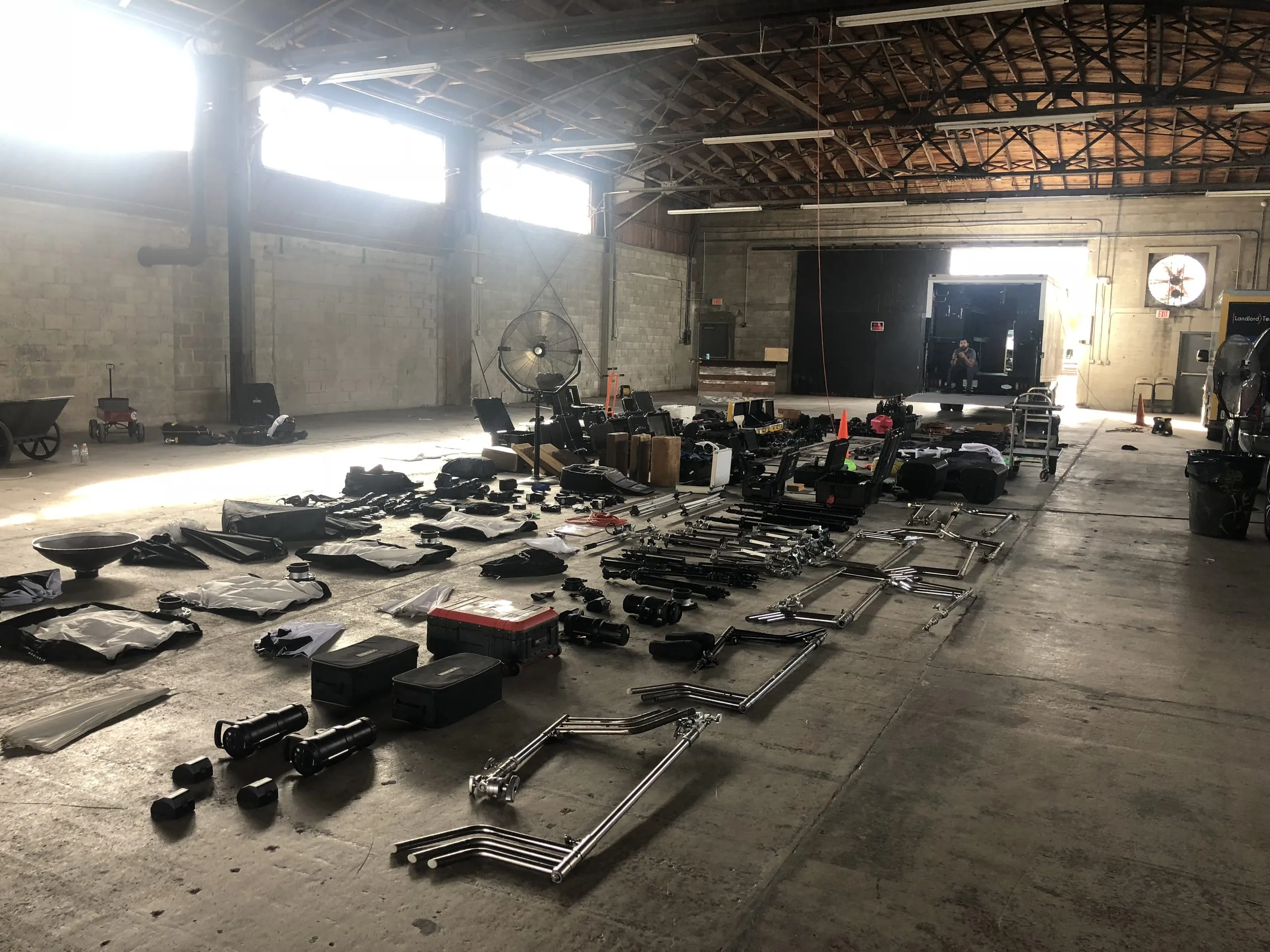
Gear inventory is its own beast. We have equipment stationed in different cities that travels all over the country and abroad for shoots. It is not just about knowing where the gear is. You have to track the condition, what needs repair, what needs replacing, what has been lost, what needs charging, what configuration it is in, and how much of it you have. These things directly impact our video production shoots and how ready we are. There is no worse feeling than arriving to set, opening a gear crate, and not seeing what you expected to see in there.
We built an AI inventory management tool that eliminates that uncertainty. It visually shows us where all of our gear is, down to the individual case, and what condition it is in. We even placed AirTags with the gear so we can pinpoint its geographical location on a map, which is handy when your equipment decides to take an unexpected detour during air transit. Every camera, every lens, every light kit, accounted for, in real time, across every location we operate out of.
The Results
It has been just under three months since we started seriously integrating AI into our operations. In that time:
- We have exponentially reduced our service expenses by replacing paid tools and outsourced work with custom solutions built in-house.
- We have greatly increased our output: more pages built, more reports generated, more leads tracked, more data organized, faster turnaround on everything.
- And most importantly, and this is the big one, we have retained all of our staff. Every single person. We gave them access to the same tools so they could optimize and increase their own workflows. AI did not replace anyone. It made everyone faster.
That last point matters. There is a lot of fear around AI and jobs. We get it. But our experience has been the opposite. When you give your team AI productivity tools that handle the tedious parts of their work, they do not become redundant. They become more valuable. They focus on the work that actually requires a human brain. The creative work. The relationship work. The judgment calls that no algorithm can make.
Why We Are Telling You This
We are not a tech company. We are a production company. We can not build software from scratch and we never pretended we could. But we have always been able to work with people who could, and the frustration was that it was either too costly or too slow or the results were not what we envisioned.
With AI, we have been able to build anything we can think up. And the things that were most front of mind were our pain points, the stuff we had been doing the hard way for years, the workflows we wished were better. Those got solved first. Then we moved on to our bigger ambitions. The “what ifs.” The “would it not be cool if we could…” ideas.
Now we are at the forefront of AI in video production and creative services. We are not replacing the creative or the human element. We are removing the slack, reducing the time to execution, and moving at lightning speed, this time with the weighted vest off.
Alphabet is spending $80 billion because they see where this is going. We see it too. The difference is we are not waiting for someone else to build the tools. We are building them ourselves, for our business, right now. And if you are a small business wondering how to use AI in business without a massive budget or a tech team, that is exactly what we did. It is possible. You just have to start thinking.
What About You?
If you have been thinking about this AI stuff and wondering what to do with it or how to even start, maybe we can help. Yes, we are a production company. But the industry does not really matter when all you need to do is think. And we are excellent thinkers.
We offer corporate video production, commercial production, live streaming, social media content, and full web development, all powered by the same AI-enhanced workflows we have been building for ourselves. The tools we built to make us faster are the same tools that make your projects better.
Get in touch and let us talk about what AI could do for your business.
Work with C&I Studios
If you are planning a project like this, our team can take it from concept to final delivery. Explore our AI video services, browse our work to see how we tell brand stories, and get in touch when you are ready to start.