Los Angeles Studio Rental. Inside Our 30,000 Sq Ft Studio
Most write ups of a Los Angeles studio rental describe rooms. Almost none of them tell you what actually decides whether a stage works for your shoot, which is the amperage at the tie in, the height of the door, what is already standing on the floor and who is in the building when something goes wrong.
What the square footage actually gets you
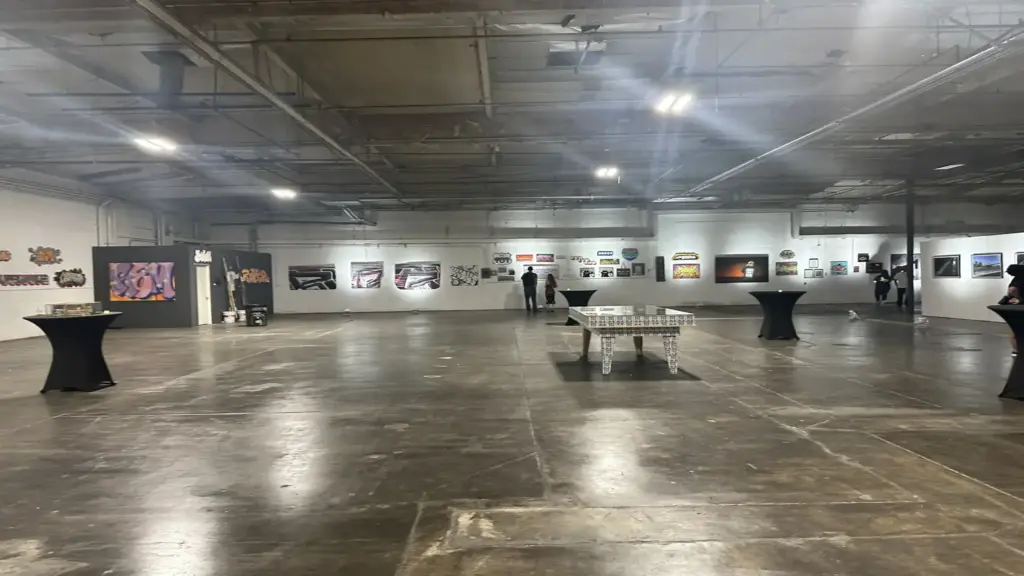
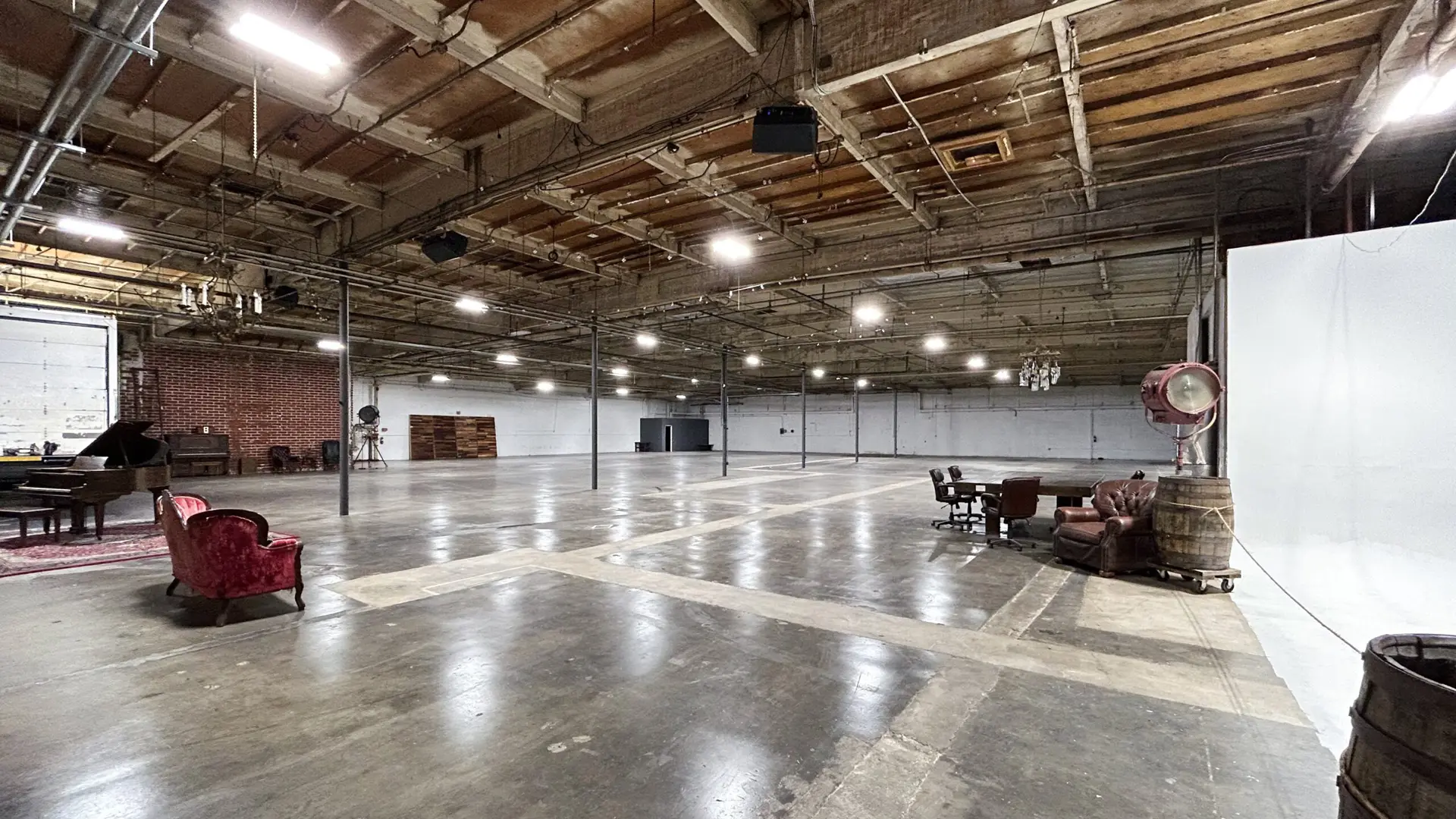
The stage is 30,000 square feet under 25 foot ceilings. Those two numbers get quoted together on every listing in the city and most people read them as a bragging right. They are not. They are the difference between one shoot day and two.
Square footage buys you simultaneity. At 30,000 feet you can hold a lit A set, a standing B set and a staging area for grip and wardrobe at the same time, which means the company moves instead of striking. A crew that strikes and rebuilds between setups loses somewhere between ninety minutes and half a day depending on how heavy the rig is. A crew that walks forty feet to a set that is already lit does not. That is the whole argument for a big stage, and it is a scheduling argument before it is a creative one.
Ceiling height buys you the top of your frame. At 25 feet you can fly a 20 by 20 silk, put a condor or a scissor lift on the floor, rig a multi point overhead design and still have air above the talent. Under about 14 feet, which is what a lot of converted retail and office space in LA gives you, your key ends up in frame or you shoot everything tighter than you wanted. If you are comparing spaces and you only have room in your head for one number, make it the ceiling.
The layout matters as much as the total. The main stage, a warehouse section and a gated backlot sit on one property, so a script that needs a controlled interior, a raw industrial look and an exterior can get all three without a company move. Productions that would otherwise book two locations and eat the travel usually finish here in a single day.
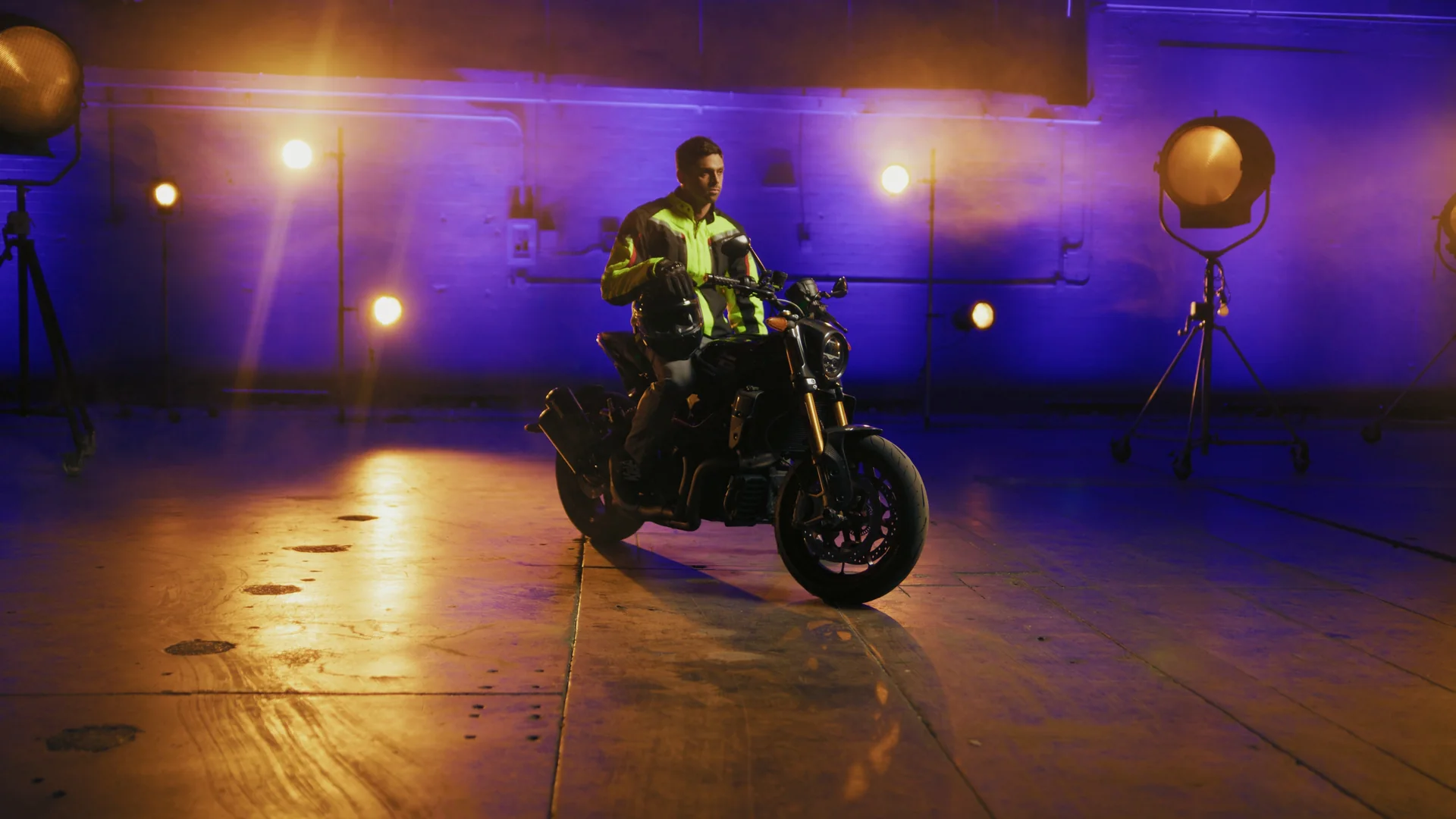
The specs that decide whether a stage works
Every stage listing leads with square footage because it is the easiest number to publish. These are the ones that actually decide whether your day goes well, and they are the ones we get asked about by the ADs and gaffers who call before a booking rather than the producers who call after.
Power
Ours is a 300 amp three phase Cam Lock tie in running through the stage, with distro available on request. In practical terms that carries a full studio lighting package, HMIs and LED walls without a generator parked outside. Generator rental plus a genny operator plus fuel is a real number, and it is the cost most first time stage bookers forget until the week of. When you tour a space, ask for the amperage and the tie in type, not whether there are outlets. Everywhere has outlets.
Loading doors
Two of them here. The front is 25 feet wide by 20 feet high and the rear is 20 by 20. Both open straight onto the stage floor. Door dimensions are the single most overlooked spec in the city because they do not affect the look of a single frame, and then a scissor lift or a hero vehicle shows up and cannot get in.
Blackout and the grid
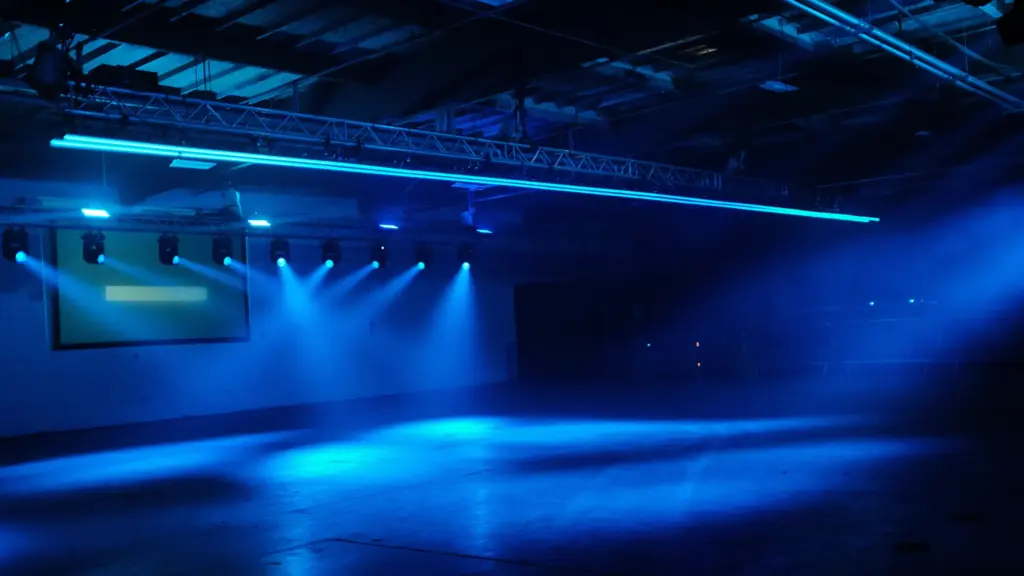
A ceiling lighting grid with blackout capability means you own the clock. Daylight through a skylight is beautiful for about ninety minutes and then it is a continuity problem. A stage you can black out shoots the same at 7am and 7pm, which is what lets you schedule a twelve hour day honestly instead of chasing the sun.
Internet
Hardwired gigabit plus studio Wi-Fi. This reads like an amenity and it is not. Live client review, remote directors, on set DIT pushing dailies and any streamed or hybrid event all fail on a stage with one weak access point. Ask whether the internet is hardwired or shared, and ask before the tech scout rather than during it.
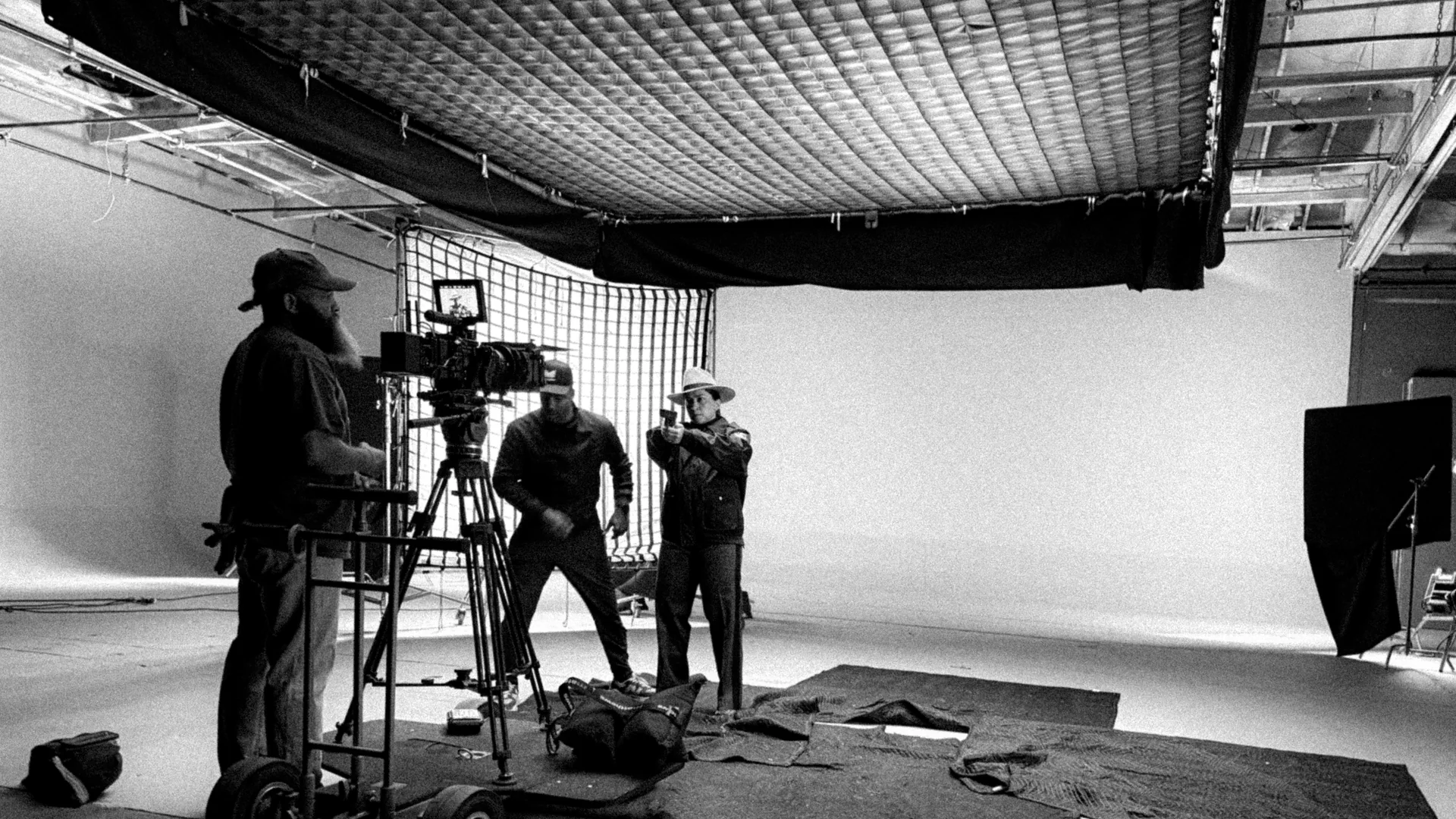
Drive-in access changes what you can shoot
A 25 by 20 foot door is not a convenience feature. It changes the list of things you are allowed to consider. Vehicles, set pieces built off site, grip trucks that unload inside instead of on the street and heavy equipment all come straight onto the floor. If the shot involves a car, that door is the shot.
It also compresses load-in and load-out, which is where stage days quietly go over. A crew that carries a package through a standard commercial door and down a hallway is losing an hour on each end of the day, and that hour is billed at crew rate across the whole company. We wrote about this specifically on our film studio with vehicle access page because it is the question we field most often from line producers.
The other thing a big door buys is staging room indoors. Cases, carts, flats and wardrobe racks live on the stage floor instead of on the sidewalk, which matters in Downtown LA more than it does almost anywhere else in the county.
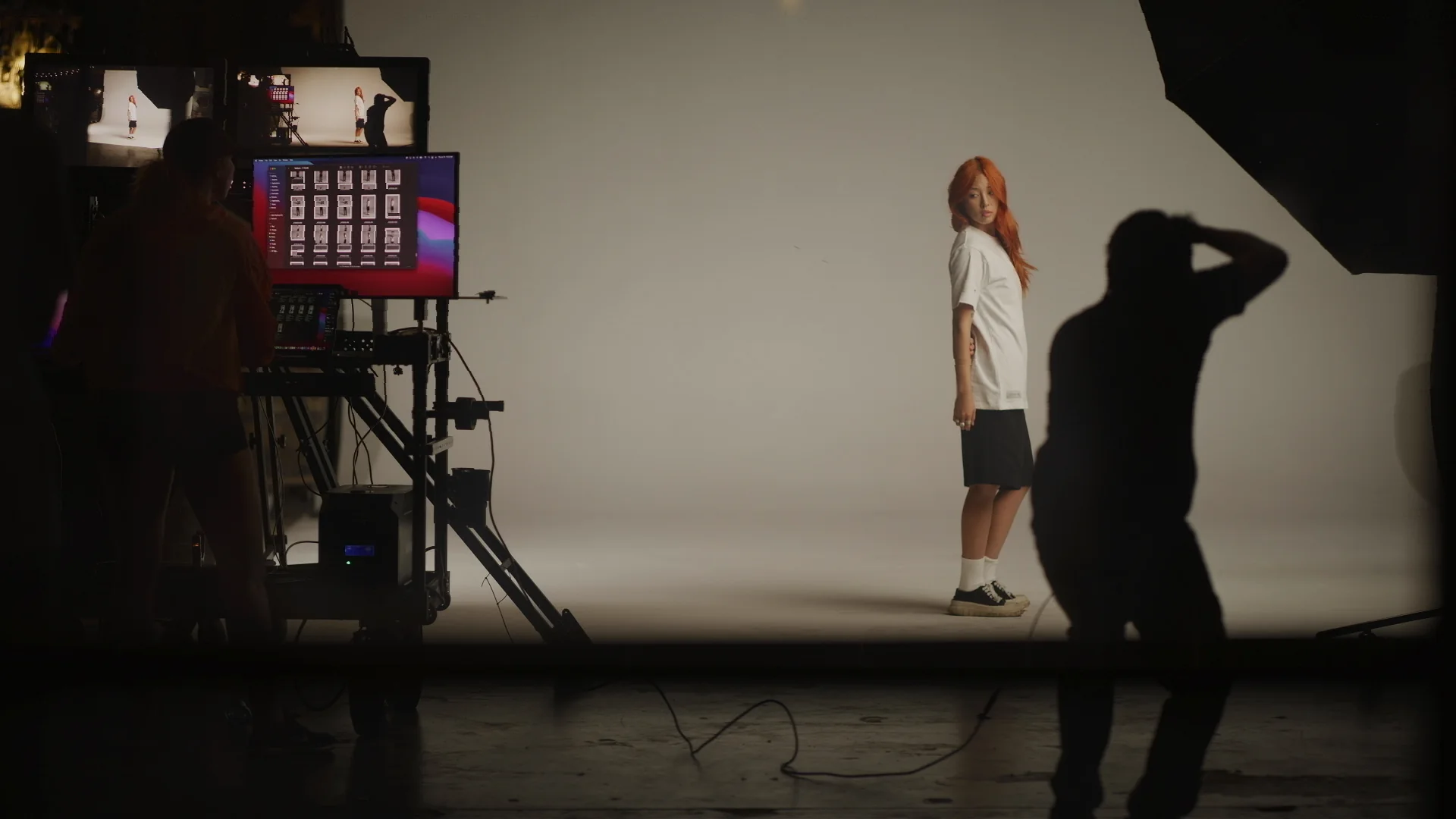
The cyc wall and when you actually need one
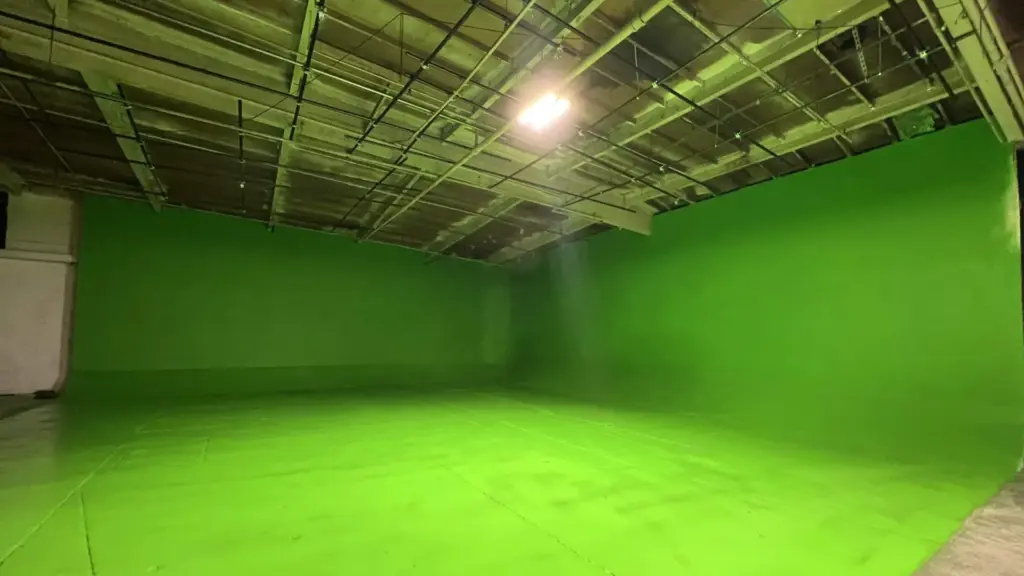
There is a 2,000 square foot floor to ceiling seamless cyclorama here. It is repaintable and we repaint it between bookings on request, which matters more than it sounds like it should. A scuffed cyc is a roto bill in post.
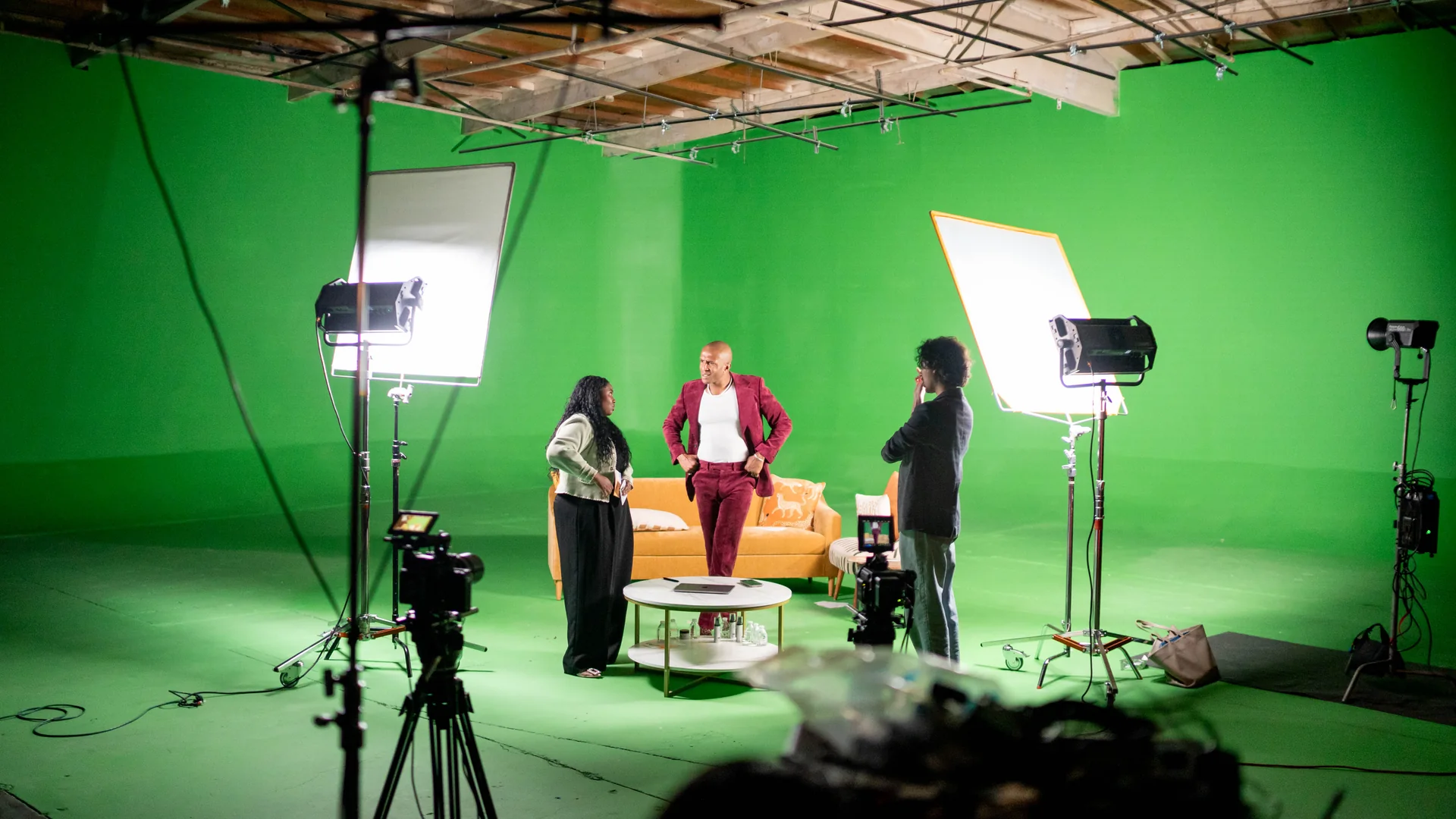
A cyc earns its keep on product photography, full body fashion, VFX plates and anything that needs a true infinity background with no visible corner. It does not earn its keep on a narrative interior or a documentary interview, and productions book one anyway because it feels like the professional choice. If your look is a room, book the room. If your look is a void, book the cyc. We keep a dedicated cyc wall rental option and a separate green screen studio configuration for exactly that reason, because they are different jobs.
Green screen has one requirement that people consistently underestimate. Talent has to stand well off the wall, and that distance is the difference between a clean key and weeks of cleanup. Put someone close to the green and the colour wraps onto their shoulders and through their hair, and every shot after that costs you again in post. Room to back up is the cheapest thing you can add to a VFX budget.
Built-in sets that save a build day
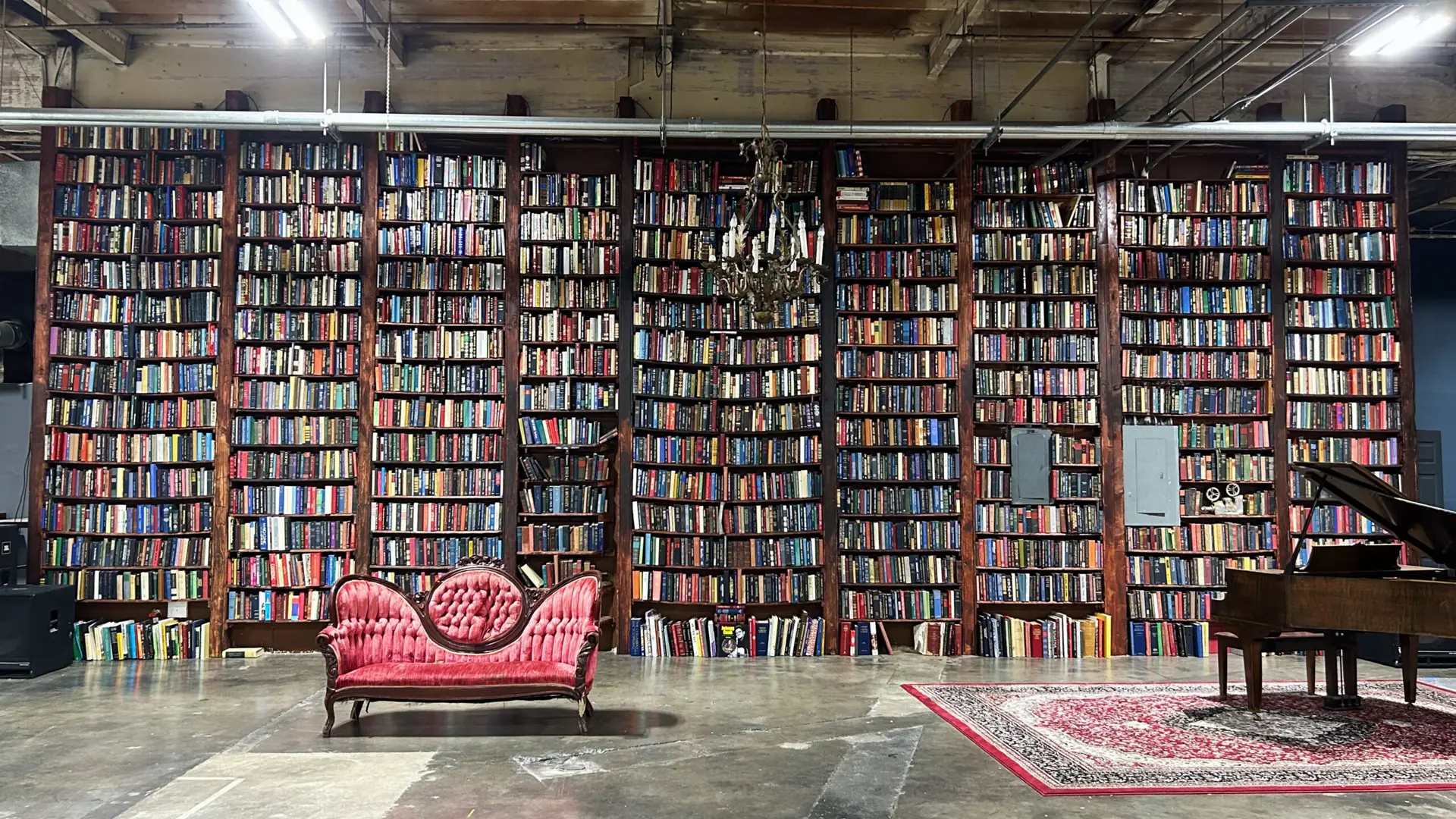
The stage has permanent installations that a surprising number of projects can shoot as is. There is a floor to ceiling bookshelf wall that reads upscale and academic on camera. There is a wooden wall section that goes rustic or modern depending entirely on how you light it. There is a wrought iron spiral staircase that gives you architecture and vertical movement in a frame without building anything. Furniture is available to pull in as needed.
The math on this is simple and it is usually the largest hidden saving in a stage booking. A build day is carpenters, paint, materials, a stage rental day you are paying for while nobody shoots, and a strike. Productions that can shoot against something already standing skip all of it. We see that show up most on interview work, branded content and music videos, and it is why our C&I Brand Day package can run a full shoot day here. The set is already up.
Judge the built-ins on camera, not in person. A wall that looks ordinary standing in front of it can be excellent at an 85mm and a stop and a half of falloff, and a wall that looks great to the eye can be flat and characterless once it is lit evenly. Bring a camera to the scout, or ask for footage that was actually shot on it.
The rooms that are not the stage
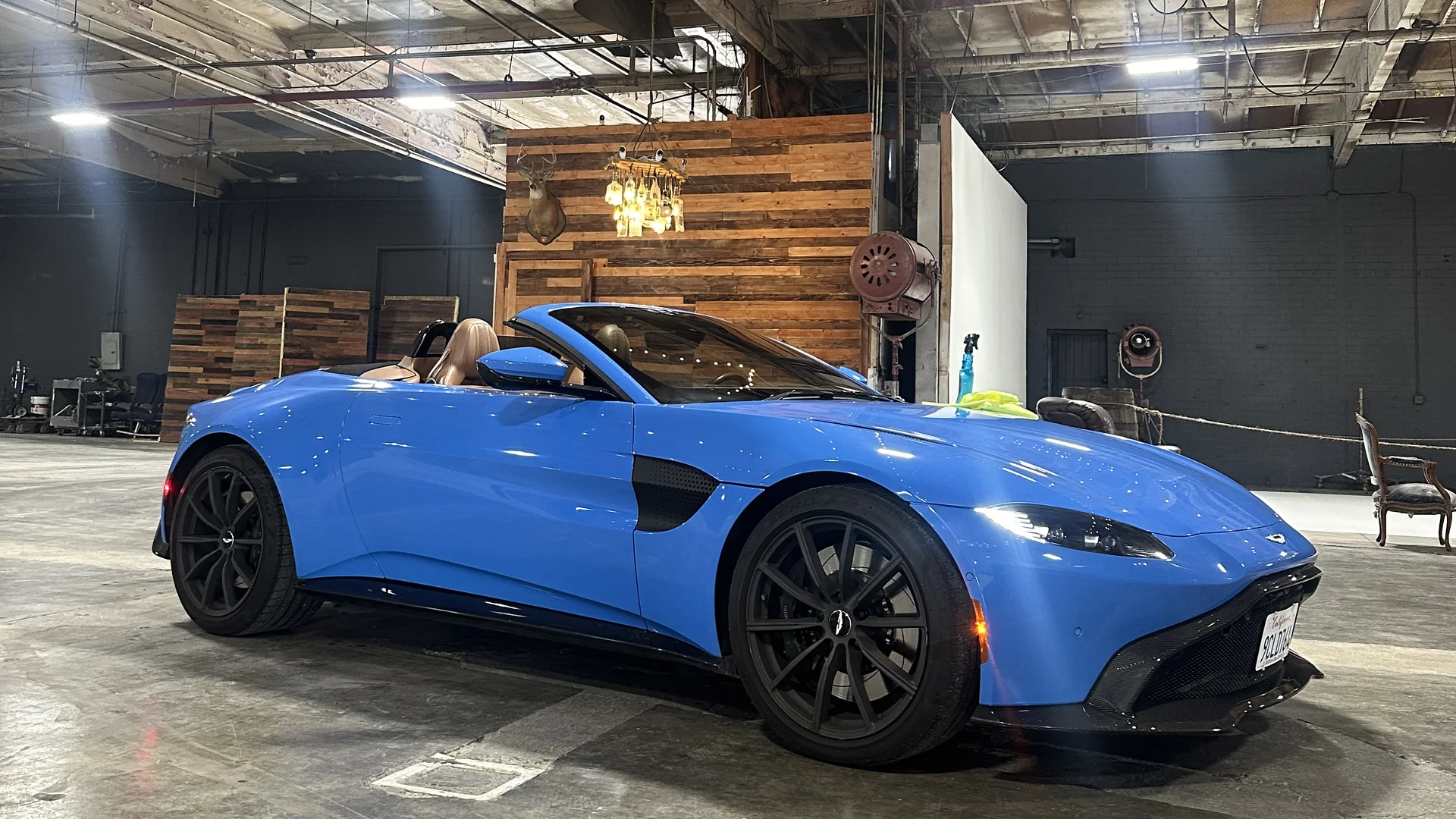
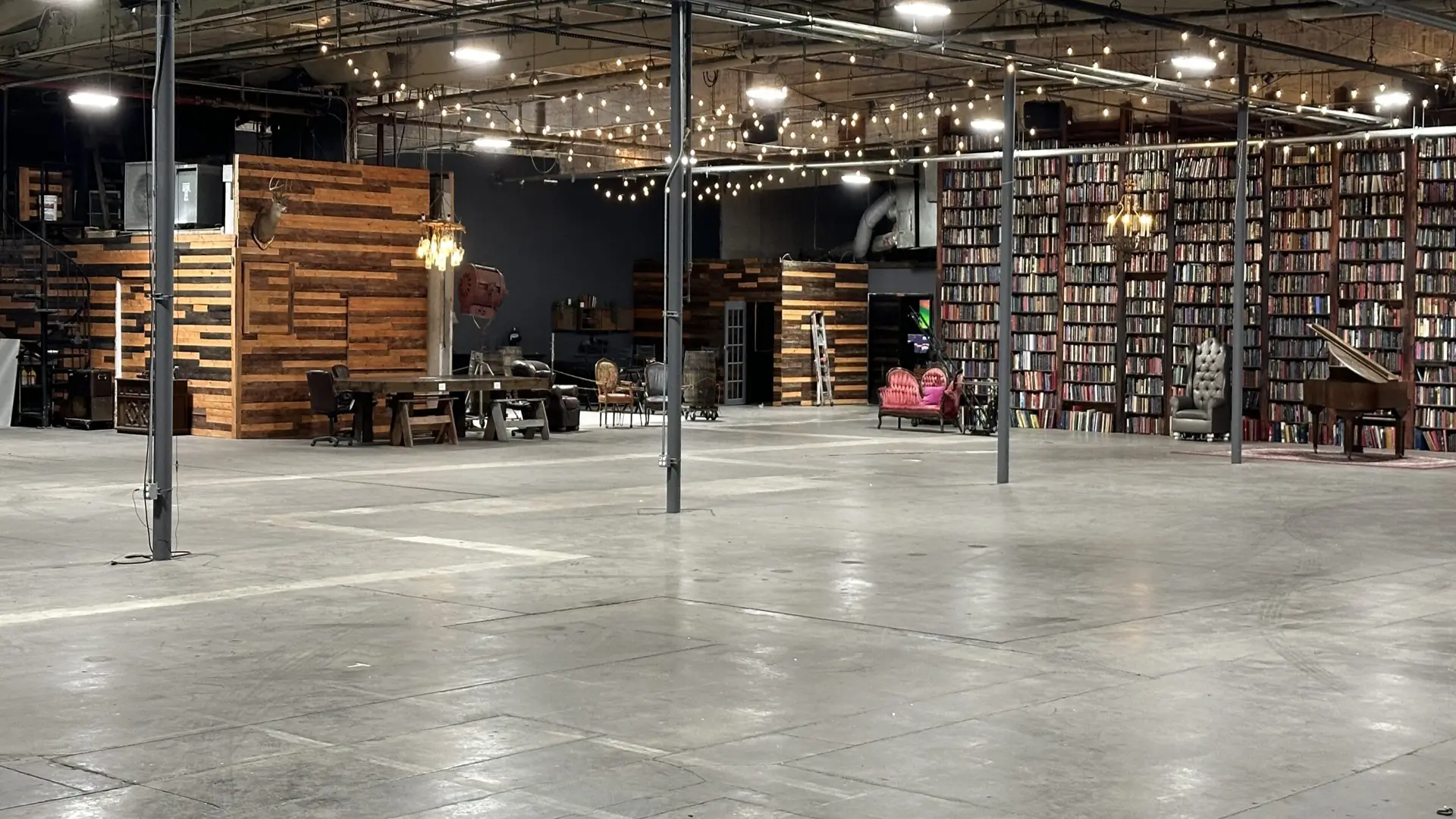
The reason a single booking here can replace a multi location day is that the property is not one room. Behind the main stage is a warehouse section with exposed brick, steel and period fixtures, which is a genuinely different look and not a dressed version of the same floor. Productions shooting anything with grit in it start there rather than building it.
The wood wall section under string lights is the other end of that range, and it is the one that surprises people. It photographs warm and lived in, and it has carried everything from interview two shots to music video coverage without a single flat being built.
Outside there is a gated backlot. It handles exteriors, vehicle work, overflow parking and load staging, and having it gated is the part that matters on a shoot with picture cars or exposed gear. There are also offices, a private client lounge for review sessions and a furnished green room, so the shoot has somewhere to put people that is not the corner of the stage.
Walk all of it before you book. A stage tour that only shows you the stage is not a tour, and the rooms around the floor are usually what decides whether a twelve hour day is comfortable or miserable.
What is available to you
Every Los Angeles studio rental publishes a list like this one and no two of them mean the same thing. Read ours as what you have access to rather than what is bundled into the hourly. The rate covers the space. What your day actually draws on gets scoped and quoted before you shoot, so you are never paying for a package you did not need.
On the property and open to your production is the three phase 300 amp Cam Lock tie in with distro, the ceiling lighting grid with blackout, hardwired gigabit internet and studio Wi-Fi, on site restrooms, a private client lounge for review sessions, a furnished green room with seating and mirrors and outlets for talent, gated backlot parking, drive-in access, and a studio facilitator on the floor from call time to wrap. Tell us which of it your shoot needs and it goes in the quote.
The facilitator is the one to ask about anywhere you tour, here or elsewhere. That is the person who knows which breaker is which and where the extra stands live. Without one, your best boy spends the first hour of the day learning the building on your dime.
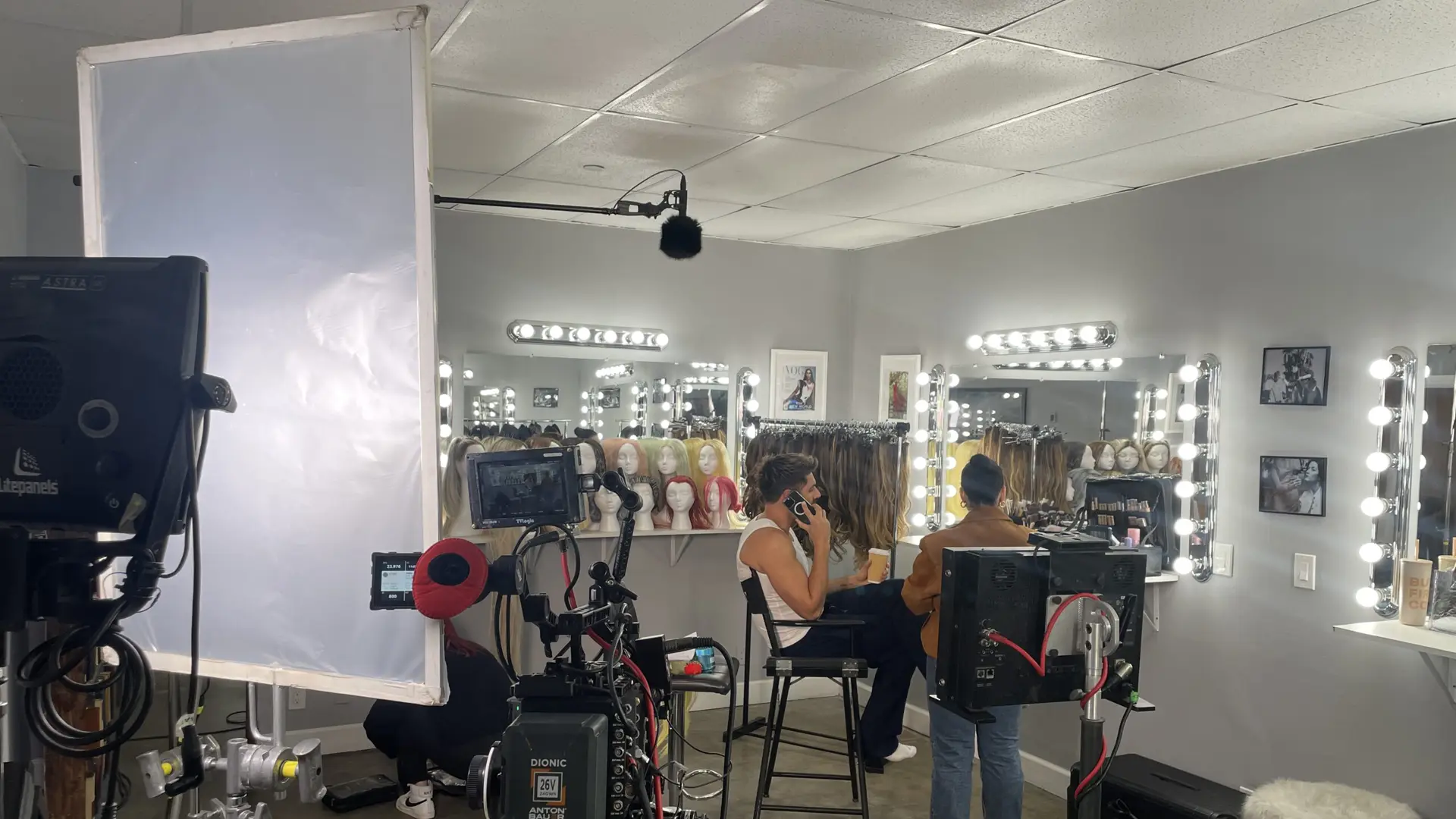
The green room is worth asking for too. Talent holding, hair and makeup and wardrobe all need somewhere that is not the corner of the stage, and a shoot that runs HMUA on the floor is a shoot that is louder and slower than it needed to be.
If your day needs something that is not on this list, ask before you rule it out. Between what we hold in house and the vendors we work with a few blocks away, most requests get sourced and priced in one conversation. Crew, talent and specialty gear work the same way. We scope it, we quote it, and you decide.
How to read a stage before you book it
Tour in person and bring the person who has to make it work. A producer sees the room. A gaffer sees the tie in, a key grip sees the doors and the floor, and a sound mixer hears the HVAC that nobody mentioned. If you can only bring one, bring the gaffer.
Go at the time of day you plan to shoot. Rooms change. A stage that is quiet at 10am can sit under a flight path or next to a loading dock that starts at 4pm, and you will not hear it on a morning tour.
Ask what else is booked. Shared buildings are common in Downtown LA and a neighboring tenant with a hammer is a sound problem you cannot fix in post. Ask specifically whether the stage is exclusive for your block.
Ask to see real footage shot in the space. Not the marketing reel, actual client work. Anyone who runs a working stage has it. We keep ours on the production studio rental page for that reason, and there is a full walkthrough of every room on it.
Ask what is not included, in this order. Power tie in and distro. Parking for crew and for trucks. Load-in and load-out hours, and whether they are billed. Cleaning or restore fees. Overtime after the booked block. A cheap headline number with billed load-in and paid parking routinely works out worse than a higher one that covers both, and none of that shows up until the invoice. If you want a sense of what the rest of a shoot in this city involves beyond the room itself, our Los Angeles video production page walks through crew and gear.
Check the practical geography. We are at 1101 E 18th Street in the Arts District side of Downtown, off the 110, the 101 and the 10, with gated backlot parking. Where a stage sits relative to your crew call and your talent is a real cost, because a crew stuck in traffic for forty minutes is a crew you are paying to sit in traffic.
Mistakes we watch productions make
These are the five we watch cost people money on a Los Angeles studio rental, in roughly the order they happen. Booking the exact hours of the shoot. The shoot is not the day. Load-in, lighting, blocking, breaks, resets and load-out are the day. Book the block that covers all of it or you will pay overtime at the worst possible rate at the worst possible hour.
Booking a stage for a look that a location does better. Not every project belongs on a stage. A restaurant scene shot in a restaurant is usually cheaper and always more convincing than a restaurant built on a floor. Stages win on control and repeatability, not on realism.
Underestimating what the space needs to fill it. A big empty stage on camera reads as a big empty stage. Square footage without a lighting package and something in the background is a liability. Budget the fill, not just the floor.
Skipping the tech scout. Every stage has a quirk. Ours has two doors that mean you should plan which one you load through before the trucks arrive, because turning a grip truck around on the lot costs more time than reading the site plan would have.
Treating the permit question as settled. Shooting on a private stage removes most street permit exposure, but it does not remove everything, and drones, pyro, minors and stunts all carry their own requirements. FilmLA is the authority for what needs a permit in this region, and the California Film Commission is where to check whether your project qualifies for the state incentive before you lock a budget.
Questions we get asked most
How do you quote a shoot day
Tell us the dates, the hours you need on the floor and what the day involves, and we scope it and come back with a number. Load-in and load-out, power, parking and anything you need sourced are all part of that conversation rather than a surprise afterwards. Nothing gets added to your day that you did not agree to first.
How big is the sound stage
30,000 square feet with 25 foot ceilings, a 2,000 square foot seamless white cyc, two loading doors at 25 by 20 and 20 by 20, and a gated backlot for exteriors and parking. It holds multiple sets at once.
Can I drive a vehicle onto the stage
Yes. Both doors open directly onto the stage floor and the front door is 25 feet wide by 20 feet high, which takes most production vehicles, grip trucks and prebuilt set pieces.
Do you rent to outside productions
Yes, seven days a week. You can book the stage on its own with no obligation to use our crew, or bring us in as the production company. Both happen here regularly.
What else can I book on the property
Beyond the main stage there is a podcast studio, a recording booth, editing bays and an event space. The full list lives on our studio rentals page.
Book the stage
If you are weighing a Los Angeles studio rental against a location build, the fastest way to settle it is to walk the floor. Come see the space at the hour you plan to shoot, bring your gaffer, and we will open the doors and turn on the grid so you can judge it properly. Tours run seven days a week and the studio facilitator who would be on your shoot day is usually the one who walks you through it.
Start on the production studio rental page for the full walkthrough and the booking form, or get in touch and tell us what you are shooting. If you want to see the range of work that comes out of rooms like this one first, our work is the place to start, and the Fund Black Tech documentary is a good example of how much of a long form project can be carried by controlled interior space.
If you want a comparison before you tour anywhere, our post on what to look for in an LA film studio and our breakdown of a warehouse studio against a traditional soundstage are both worth reading. If you are casting rather than shooting, we also run casting session space on the same property.