
Video Crew vs Production Company and Which One You Need
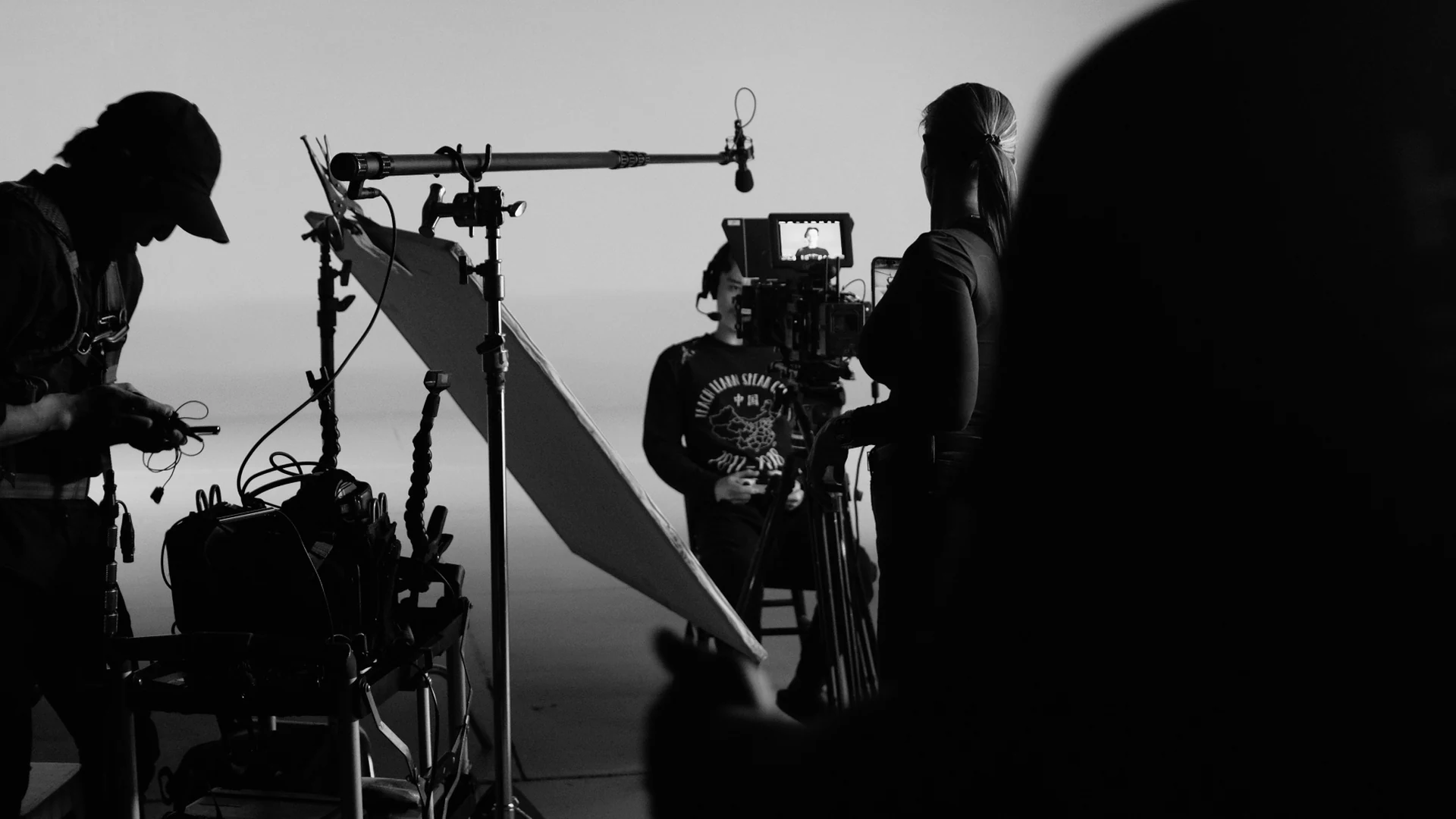
When a business needs a video, the first real decision is not which camera or which city. It is who you are actually hiring. You can book a video crew, meaning the people and gear to shoot on the days you name, or you can hire a production company that owns the whole job from the idea to the delivered file.
Both are legitimate, and both get recommended with total confidence by people selling one of them. This is the honest version of the camera crew vs production company question. What each one gives you, what each one leaves on your desk, and how to tell which your next video needs.
The real difference is who owns the outcome
A crew sells time. You get a camera operator, maybe a sound mixer and a gaffer, for a day or a half day, and they will shoot what you put in front of them very well. Everything around those hours belongs to you. The script, the schedule, the location, the people on camera, the permits, the edit, and the decision about whether the finished video actually works.
A production company sells a finished result. It plans the shoot, hires and manages the crew, handles the logistics, edits and finishes the piece, and answers to you when something goes wrong. You pay for more people and more hours, and in exchange you have one place to send every question.
Neither one is better. They solve different problems, and the mistake most buyers make is paying for one while expecting the other.
What a video crew gives you
Skilled hands for a fixed block of time
A crew for hire is usually booked by the day or half day, with gear either included or listed separately. A one person shooter can cover a simple interview. A two or three person crew adds dedicated sound and lighting, which is the point where footage starts to look and sound professional. Our guide to what a videographer costs walks through the rates role by role.
Flexibility and a lower day rate
Because you are only paying for the shoot, the number on the quote is smaller. That is the main appeal, and for the right job it is a real saving. If you already have a producer, an editor and a clear plan, a crew lets you buy exactly the piece you are missing.
What stays on your desk
Everything a crew does not do is still part of the project. Someone has to write or approve the script, book the location, confirm talent and get releases signed, plan the shot list, run the day, keep the client happy on set, and then turn hours of footage into something people will watch. If nobody on your side owns those jobs, they do not disappear. They just land on whoever is closest when the deadline arrives.
What a production company gives you
One point of accountability
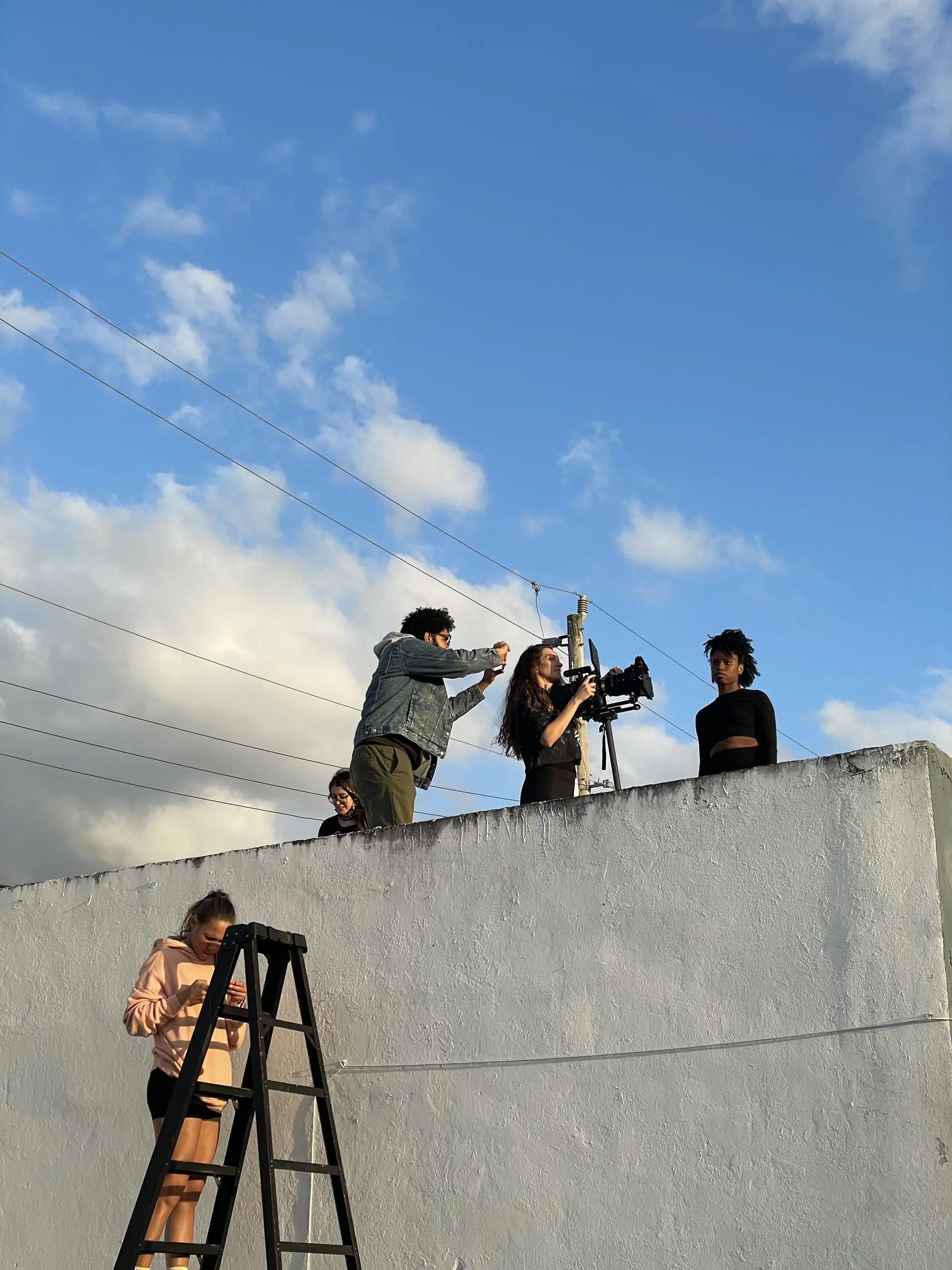
The biggest thing a production company sells is ownership. If the location falls through, the audio is bad or the edit misses the brief, it is the company’s problem to fix, not yours. That single line of responsibility is worth more than most buyers expect until the first time something breaks.
Pre production that shapes the result
Concepts, scripts, storyboards, casting, scouting and scheduling all happen before anyone sets up a light. For our commercial for the video chat app Thundr, we pitched three concepts, the client chose one, and the script and a hand drawn storyboard followed before casting went out as an open call. A crew for hire would have arrived after all of those decisions were already made.
A crew that is assembled and managed
A production company picks the right people for the job and runs them on the day. The director, the camera team, sound, lighting, hair and makeup and the producer all work from one plan, and you get one person to talk to instead of six.
Post production and delivery
Editing, color, sound mix, graphics and every delivery format sit inside the same job. Thundr needed a 30 second commercial and a 15 second cutdown, each in 16×9 for YouTube and 9×16 for social, all built from the same shoot. That kind of delivery list is where piecing vendors together usually falls apart. See what goes into the finish in our post production services.
Camera crew vs production company side by side
| Video crew | Production company | |
|---|---|---|
| What you buy | People and gear for the shoot days | A finished video, start to delivery |
| Who plans the shoot | You | The company |
| Who runs the day | You, or your producer | The company’s producer and director |
| Editing and finishing | Separate hire | Included |
| Permits, releases, insurance | Usually yours to handle | Handled as part of the job |
| Pricing | Day or half day rates | Project budget |
| Best fit | Teams with their own producer and editor | Teams that need the whole job done |
When a crew is the right call
Book a crew when the thinking is already done and you are missing hands, not judgment. That usually looks like one of these.
You have an in house producer and editor
Marketing teams with their own editor often only need someone to capture clean footage. A crew slots into a plan that already exists.
The format is simple and repeatable
A single interview in one room, an event recap, or a monthly series with a fixed look are all jobs a good crew can shoot well without a production company around them.
You are adding coverage to your own production
If you are already running a shoot and need a second camera, a sound mixer or a grip, booking those people directly is the efficient answer. Our guide on how to find a video production crew covers where to look and what to ask.
When you need a production company
Hire a production company when the hard part is everything around the camera. These are the signs.
More than one location or setup
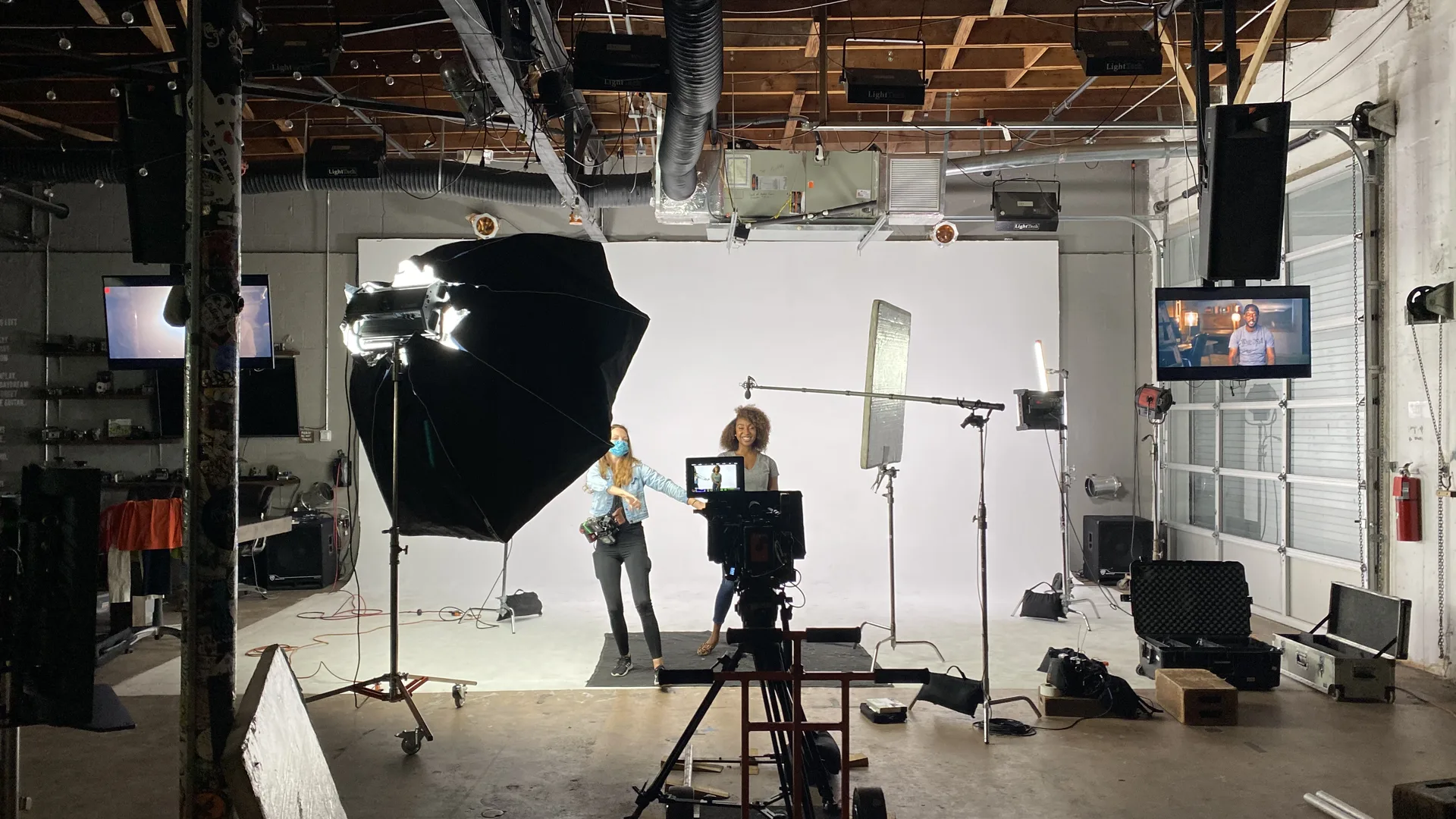
Every extra location adds travel, permits, power, parking and a new lighting plan. Permits alone run through a different film office in almost every city, and the Association of Film Commissioners International is the usual starting point for finding the right one. For 76 Words, we shot three campaign spots across a white cyc testimonial set in the studio and a separate location day on residential streets, and kept the look consistent across both. You can see the result on the Amendment 3 project.
Talent, casting or a script
The moment people who are not your employees appear on camera, someone has to cast them, schedule them, get releases signed and direct their performance. That is production work, not camera work.
The job is long or complex
Our documentary series for Fund Black Tech started shooting in March 2021 and was still picking up footage in 2024. Twelve people sat down for interviews, the largest setup ran five cameras and a separate audio recorder at once, and the footage fills close to 23 terabytes across nineteen drives. A project like that needs someone tracking every drive, every release and every decision for years, not just for a shoot day.
Nobody on your team owns video
If the person managing the project also has a full time job, a production company protects them. The questions, the schedule and the edit notes go to one producer instead of piling up in their inbox.
Hiring a crew, then an editor, then a colorist and a motion designer can look cheaper on paper. In practice the savings shrink. Each vendor quotes their own piece, nobody is responsible for how the pieces fit, and the coordination time comes out of your week. Footage shot without the edit in mind is missing the coverage the editor needs. Audio recorded by one person gets mixed by another who was not there. When something has to be reshot, every vendor is billing again.
None of that means a crew is the wrong choice. It means the real comparison is not day rate against project budget. It is day rate plus your time and risk against a budget where someone else carries both.
Questions that settle it quickly
Before you request quotes, answer these honestly.
Who will write and approve the script?
If the answer is nobody yet, you need more than a crew.
Who will run the shoot day?
Someone has to keep the schedule, manage talent and make calls when things change. If that is you and you have done it before, a crew works.
Who is editing, and when do they get the footage?
If the edit is not lined up before the shoot, it is the most likely place for the project to stall.
How many versions do you need at the end?
One video for one platform is a crew job. A main cut, cutdowns and multiple aspect ratios is a production job.
What happens if something goes wrong?
Know whose problem a lost location, bad audio or a missed deadline will be before you sign anything.
Talk it through with us
We work both ways. Sometimes a client needs a camera team to slot into a plan they already have, and sometimes they need us to take the whole thing from concept to delivery. If you are weighing a camera crew vs production company for your next video, look through our video production services and the work we have produced, then tell us what you are making and we will tell you plainly which one you need.