
Will a Video Production Company Handle Editing and Color Grading?
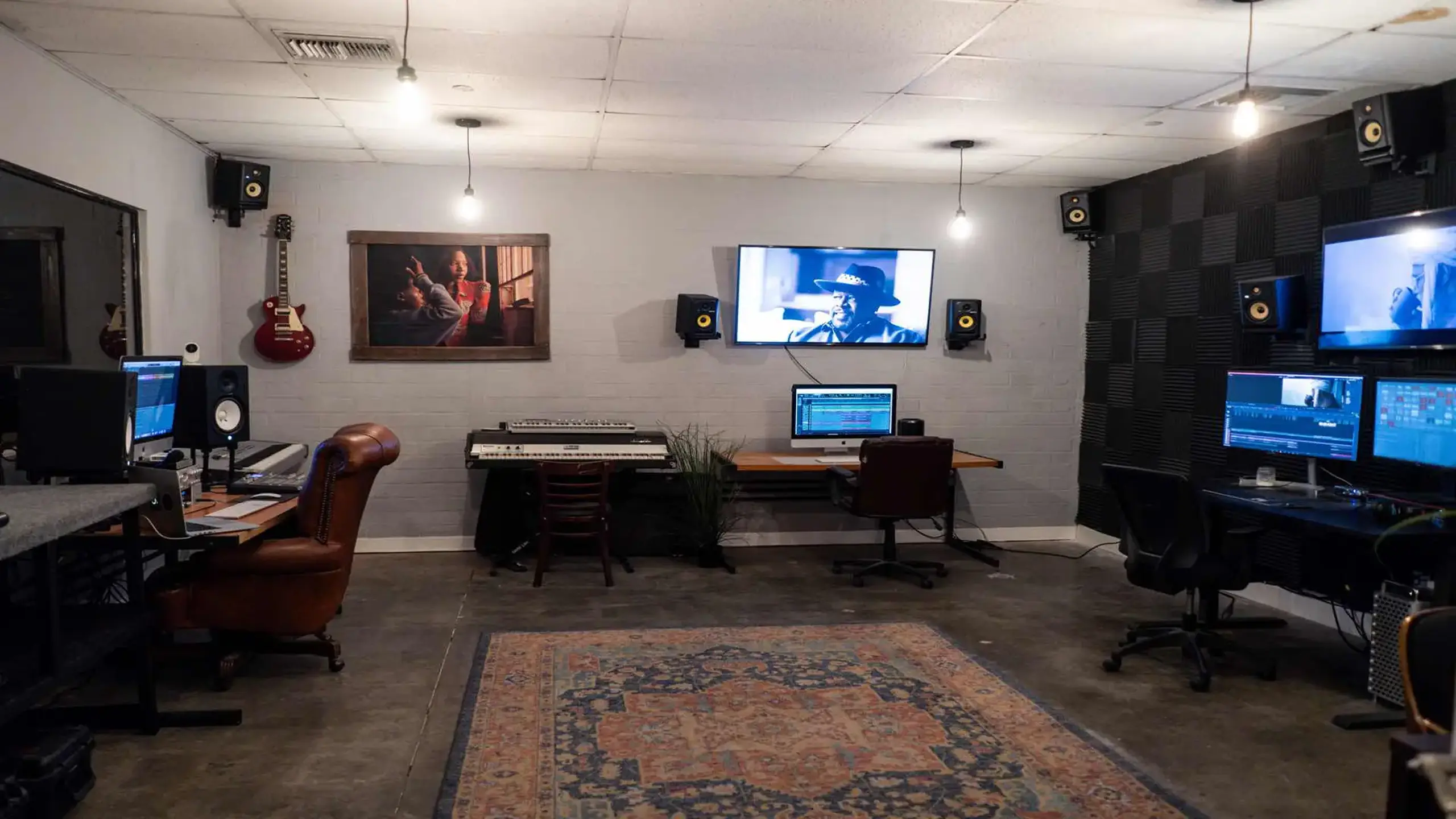
The short answer is yes, most full-service video production companies handle editing and color grading as part of their standard workflow. But “handling” post-production and doing it well are two very different things. Some companies treat editing as an afterthought, a task they outsource to the cheapest freelancer available after the shoot wraps. Others, like C&I, build post-production into the creative process from day one, with dedicated editors, colorists, and sound designers who shape the final product with as much care as the cinematographer shaped the footage on set.
This question matters because where and how your footage gets edited directly affects the quality, consistency, and timeline of your finished video. A video production company that separates production from post creates handoff friction, communication gaps, and a finished product that often feels disconnected from the original creative vision. Understanding what to expect from your production partner’s post-production capabilities is essential before you sign any contract.
What a Full-Service Video Production Company Actually Provides
A genuine full-service video production company covers three phases: pre-production, production, and post-production. Pre-production includes concept development, scriptwriting, storyboarding, location scouting, casting, and scheduling. Production is the shoot itself: cameras, lighting, sound, direction, and everything that happens on set. Post-production encompasses editing, color grading, sound design, music licensing, motion graphics, and final delivery.
The key word is “full-service.” Many companies market themselves as video production companies but only handle the production phase. They will show up with cameras, light a scene, record footage, and hand you hard drives. What happens next is your problem. These are production crews, not production companies. The distinction matters enormously when you are budgeting a project and expecting a finished deliverable.
At C&I, every project moves through our complete pipeline. The production team that shoots your footage works alongside the editors and colorists who will finish it. This continuity means the editor understands the director’s intent, the colorist knows what lighting conditions existed on set, and the sound designer has context for every audio decision. That shared understanding produces better work, faster.
The Editing Process at a Video Production Company
From Raw Footage to Rough Cut
Professional editing begins with media management: ingesting footage, creating backups, organizing clips by scene and take, syncing audio if external recorders were used, and generating proxies for efficient editing. This technical groundwork is invisible to clients but critical. A disorganized media pipeline creates delays and increases the risk of lost footage.
The first creative pass is the assembly edit, where the editor places all usable footage in script order. This is a raw, unpolished version that typically runs 2 to 3 times the final target length. From the assembly, the editor crafts a rough cut that establishes structure, pacing, and story flow. The rough cut is the most important creative milestone in post-production because it reveals whether the footage actually tells the story the director intended.
For a standard brand video or commercial, the rough cut stage takes 3 to 7 business days depending on the complexity of the project and the volume of footage. Documentary and long-form content takes longer because the editorial process involves discovering the story structure rather than following a predetermined script.
Fine Cut and Client Review
After the rough cut is approved directionally, the editor refines timing, tightens transitions, polishes audio edits, and adds temporary music and graphics placeholders. This fine cut is what most clients review in their first formal feedback round. A well-run video production company provides a clear review process: timestamped feedback, a defined number of revision rounds, and turnaround commitments for each revision.
Revision management is where many production relationships break down. Unlimited revisions sound generous in a proposal but create bloated timelines and unfocused outcomes. Professional companies structure revision rounds with clear scope: Round 1 for structural feedback, Round 2 for detail refinements, Round 3 for final polish. Changes beyond the contracted rounds are billed at an hourly rate, which incentivizes decisive feedback and prevents projects from languishing in edit purgatory.
Tools and Technology
The editing software a company uses signals their technical sophistication. Adobe Premiere Pro is the industry workhorse for commercial and branded content. DaVinci Resolve combines editing with industry-leading color grading in a single application. Avid Media Composer remains the standard for long-form entertainment, broadcast television, and feature films. Final Cut Pro has a dedicated following among certain types of content creators.
More important than the software is the hardware environment. Professional editing requires calibrated monitors (not consumer displays), fast storage systems that can handle 4K and 6K raw footage in real time, and processing power for multi-layer timelines with effects. A video production company editing on laptops with consumer monitors will produce results that look different on every screen the client views them on. Our edit suites are built around calibrated reference displays and dedicated storage arrays because technical consistency is not optional for professional work.
Color Grading. What It Is and Why a Video Production Company Should Handle It
The Difference Between Color Correction and Color Grading
These terms get used interchangeably, but they describe different processes. Color correction is the technical step: balancing exposure, adjusting white balance, matching shots within a scene so cuts do not jump between warm and cool tones. This is corrective work that fixes problems created by varying lighting conditions, camera settings, or mixed light sources during production.
Color grading is the creative step: establishing a visual mood, creating a consistent aesthetic across the entire project, and using color as a storytelling tool. A warm, golden grade communicates nostalgia or comfort. A desaturated, high-contrast grade suggests tension or grit. Teal and orange splits create a cinematic pop that audiences associate with theatrical releases. These are deliberate creative choices, not technical corrections.
Both steps are essential. Correction without grading produces technically clean but visually bland footage. Grading without correction produces stylized footage with visible technical errors. A competent video production company executes both as sequential stages in a defined workflow.
Why In-House Color Grading Matters
When a video production company outsources color grading to a freelancer who was not on set, that colorist is working blind. They did not see the lighting setup. They do not know that the DP used a specific filtration for creative effect. They cannot distinguish between an intentional stylistic choice and a mistake that needs correcting.
In-house color grading, where the colorist works within the same organization as the production team, eliminates this information gap. At C&I, our colorists attend production meetings, review reference imagery alongside the DP, and often visit set during key lighting setups. When the footage arrives in the grading suite, they already know what the final image should feel like. That context produces results that a disconnected freelancer simply cannot match.
Technical Requirements for Professional Color Grading
Proper color grading requires footage shot in a log or raw color profile. Standard Rec. 709 footage straight out of the camera has already been processed in a way that limits the colorist’s control. Log profiles (like Sony S-Log3, Canon C-Log3, or ARRI LogC) capture the full dynamic range of the sensor, giving the colorist maximum latitude to shape the image.
The grading environment matters as much as the software. A calibrated reference monitor displaying DCI-P3 or Rec. 709 color space in a light-controlled room is the minimum standard. Ambient light, wall color, and even the colorist’s clothing can affect color perception. Professional grading suites are designed to eliminate these variables, which is why grading done in a converted bedroom with a window behind the monitor produces unreliable results.
C&I uses DaVinci Resolve Studio for all color work, running on hardware with dedicated GPU acceleration for real-time 4K and 6K playback. Our reference monitors are calibrated quarterly to industry standards, ensuring that what our colorist sees is what your audience sees, whether on a cinema screen, a broadcast feed, or a mobile device.
Other Post-Production Services a Video Production Company Should Offer
Sound Design and Audio Post
Sound is half the viewing experience and gets a fraction of the attention in most production budgets. Professional audio post-production includes dialogue editing (cleaning up production audio, removing background noise, normalizing levels), Foley and sound effects (adding footsteps, ambient sounds, and impact effects that production recording missed), music selection or original scoring, and the final mix (balancing all audio elements for the delivery medium).
The final mix is particularly important because different delivery platforms have different audio standards. A mix optimized for theater playback will be too dynamic for social media viewing on phone speakers. A good video production company delivers platform-specific mixes: a full-range mix for broadcast, a compressed mix for web, and a dialogue-priority mix for social platforms where viewers might have the volume low.
Motion Graphics and Visual Effects
Lower thirds, title sequences, animated logos, data visualizations, transitions, and screen replacements are all standard post-production capabilities. For branded content, motion graphics maintain visual consistency with the client’s brand system: correct fonts, colors, animation style, and logo usage.
Visual effects (VFX) range from simple cleanup work (removing a boom mic that dipped into frame, erasing a brand logo from a prop) to complex compositing (green screen replacement, CGI elements, particle effects). Not every video production company has VFX capability in-house, and for heavy VFX work, specialized studios are often more cost-effective. But basic cleanup and compositing should be within any professional company’s standard toolkit.
Deliverables and Format Management
The final delivery from a video production company should include master files in the highest quality format available (typically ProRes 4444 or DNxHR at the project’s native resolution), plus platform-specific exports optimized for every distribution channel. That means H.264 or H.265 files sized and encoded for YouTube, Facebook, Instagram, LinkedIn, TikTok, broadcast, and any other platform where the video will live.
Each platform has specific technical requirements. YouTube recommends different settings than Facebook. Instagram Reels have different specifications than Instagram feed posts. Broadcast delivery requires closed captions, specific frame rates, and audio loudness compliance. A video production company that delivers a single file and tells you to upload it everywhere is cutting a critical corner.
Red Flags When Evaluating a Video Production Company’s Post Capabilities
Not every company that claims post-production capability actually delivers professional results. Watch for these warning signs during the sales process:
No dedicated post-production team. If the same person who operates the camera also edits the footage, that is a one-person operation marketing as a full-service company. Editing and cinematography are different skills, and even talented individuals cannot give both the attention they deserve on the same project.
No post-production facility. Ask to tour their edit suite. If they do not have one, or if “the editor works remotely,” you are paying company rates for freelancer execution. That is not inherently bad, but it should be priced accordingly.
No defined revision process. A video production company that cannot clearly explain their revision structure, how many rounds, what constitutes a round, what happens when scope changes, has not systematized their post workflow. That means unpredictable timelines and budgets.
No reference monitor. If the edit bay has a consumer TV or an uncalibrated computer monitor as the primary display, the color accuracy of every project that leaves that room is compromised. This is a technical fundamental that professional operations do not skip.
No delivery specifications discussion. If the company does not ask where you plan to distribute the video before starting post-production, they are not planning deliverables around your actual needs. They are producing a generic file and hoping it works everywhere.
How C&I Handles Post-Production
Every project at C&I moves through a defined post-production pipeline managed by dedicated department leads. Our editorial team works in Premiere Pro and DaVinci Resolve depending on project requirements. Color grading happens in a dedicated suite with calibrated Flanders Scientific reference monitors. Sound design and mixing use Pro Tools in a treated audio environment.
We assign a post-production supervisor to every project. This person manages timelines, coordinates between editorial departments, handles client communications during the review process, and ensures that deliverables meet both creative standards and technical specifications. The supervisor is the client’s single point of contact through post, which eliminates the confusion that arises when feedback goes to an editor, a colorist, and a sound designer through separate channels.
Our standard post-production workflow includes two rounds of revision at each stage (edit, color, sound), with clear timelines for client review and turnaround commitments for revision implementation. Additional rounds are available and priced transparently. This structure keeps projects on schedule while giving clients genuine creative control over the finished product.
We have built this infrastructure because we believe post-production is where video goes from acceptable to exceptional. The difference between a competent edit and a great one is the same as the difference between a snapshot and a photograph. Technical correctness is the baseline. Creative excellence is the goal.
Questions to Ask Before Hiring
When you are evaluating whether a video production company will properly handle editing and color grading, ask these specific questions:
Who edits the footage? Is it a dedicated editor or the same person who shot it? How many projects is that editor handling simultaneously?
What is your color grading workflow? Do you use a dedicated colorist? What monitoring equipment do you grade on? Is the grading suite calibrated, and how often?
What is included in the quoted price? How many revision rounds? What constitutes a revision versus a new creative direction that triggers additional billing?
What are the deliverable specifications? How many format versions will I receive? Are platform-specific exports included or billed separately?
What is the post-production timeline? When should I expect a rough cut? How long do revision turnarounds take?
Can I visit the edit facility? Can I sit in on the color grading session? (Any company that says no to this is hiding something about their capabilities.)
The answers to these questions will tell you more about a video production company’s actual capability than their showreel. A beautiful portfolio might have been graded by a freelancer who no longer works with them. The operational answers reveal the infrastructure that will actually be applied to your project.
At C&I, we welcome these conversations because they help us set accurate expectations and build production plans that match what clients actually need. Whether you are producing a 30-second commercial, a social media campaign, a corporate brand film, or a documentary, the post-production quality will define how your audience experiences the finished product. Get in touch and let us walk you through exactly how we will handle every frame of your project from set to screen.
Work with C&I Studios
If you are planning a project like this, our team can take it from concept to final delivery. Explore our post-production services, browse our work to see how we tell brand stories, and get in touch when you are ready to start.