
How We Build a Video Production Crew Anywhere in the US
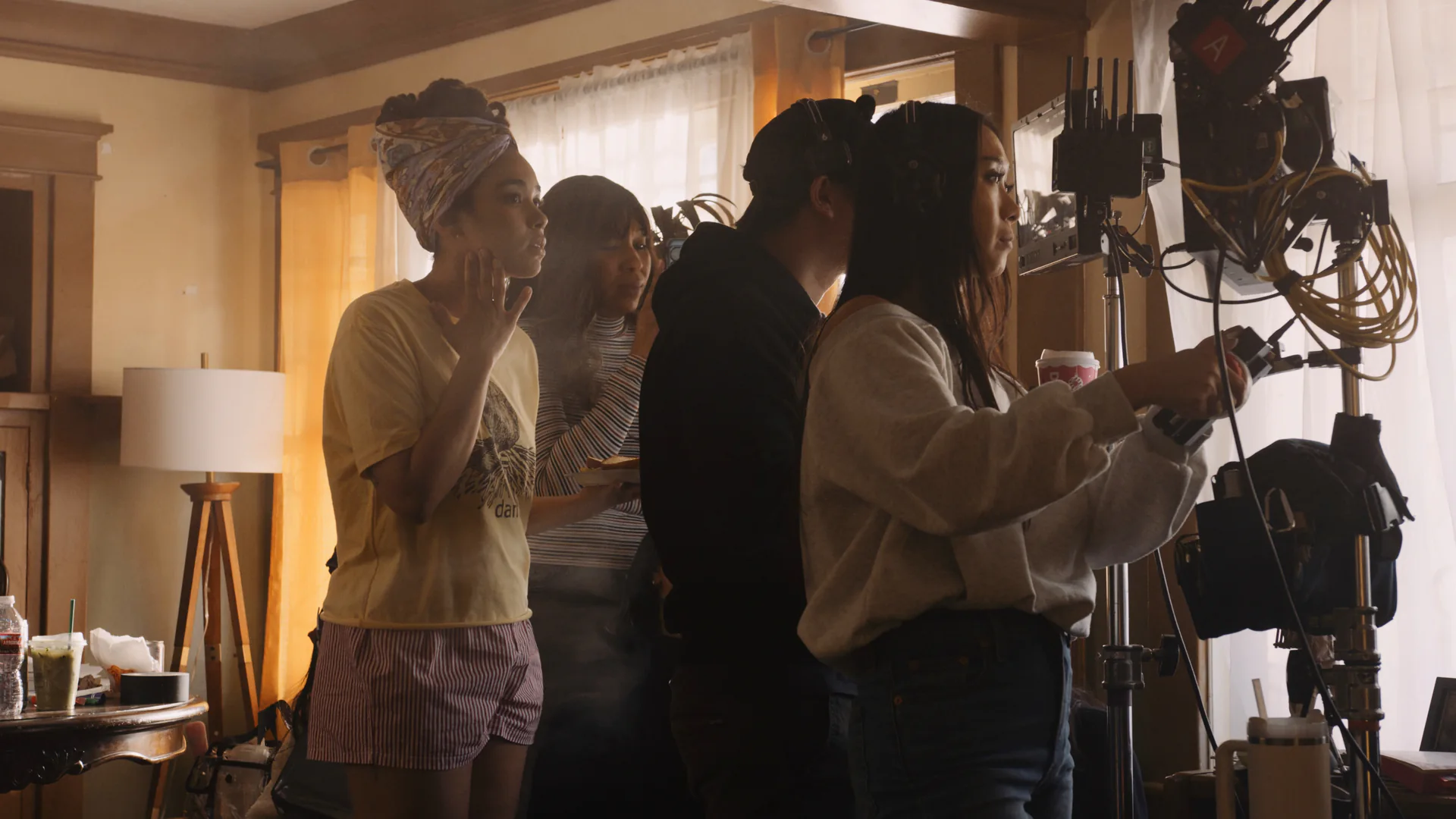
The hardest part of a shoot in an unfamiliar city is almost never the camera. It is the twenty decisions that happen before anyone touches one. Who is holding the boom. Which local gaffer knows the union rules in that building. Whether the freight elevator is booked. A video production crew is not a list of names you assemble on the morning of the shoot, and the difference between a good day and an expensive one is usually decided a week earlier.
We get asked how this works often enough that it is worth writing down. Our only stage is in Los Angeles. Fort Lauderdale and New York are offices, not facilities. Everything else we shoot happens in someone else’s building, in a city where we are the visitors, and that has forced us to get specific about how a video production crew comes together. What follows is the actual process, not a sales version of it.
What a video production crew actually looks like
We have a separate breakdown of every role on a video production crew and what each one costs. This piece is the other half of that. Not what the roles are, but how they actually get filled in a city we do not live in.
Most clients picture a crew as one number. Six people, or twelve, or thirty. In practice a video production crew is three groups that scale independently, and knowing which group a job stresses is how you avoid paying for the other two.
The first group is the camera department. An operator, a first AC pulling focus, sometimes a second AC handling media and slates, and a DIT if the day generates enough footage to need offloads while you are still rolling. On a single-camera interview day that is one or two people. On a multi-camera event it triples fast, because every additional body on a camera needs a body supporting it.
The second group is grip and electric. This is the department that clients most consistently under-budget and most consistently notice when it is missing. A gaffer designs the light. A key grip shapes and blocks it. If the location has bad windows, a low ceiling, or fluorescents you cannot switch off, this department is the reason the footage looks intentional instead of found.
The third group is production. A producer who owns the schedule and the client relationship, a coordinator working the logistics, a PA or two moving people and gear. On a two-day corporate shoot this feels like overhead until the moment a location falls through and someone has to solve it in fifteen minutes without stopping the day.
Sound sits across all three and gets treated as its own decision. A mixer with a boom operator is a different animal from a single mixer running lavs off a bag, and the choice is driven by the room, not the budget. We have never regretted spending on sound. We have regretted cheaply lit interviews we could not fix in the grade and bad audio we could not.
The bench comes before the booking
The reason a shoot in a city we do not live in works at all is that the sourcing does not start when the job does. We maintain a contractor database organized by market and by role, and it is built from two directions. People submit themselves to us through our crew form, and we go looking through industry directories for the roles a market is thin on. Every entry has a verified contact, not a scraped one.
That database is the difference between hiring and guessing. When a job lands in Atlanta on a Thursday for the following Tuesday, nobody is posting in a Facebook group. We are calling a gaffer we have already worked with, and if that gaffer is out, they are the one recommending the replacement. Referral inside a market we already have a foothold in is the single most reliable crewing mechanism we have found, and it is only available to a company that has been putting names in a database for years.
The honest caveat is that depth varies by city. Los Angeles, New York, Atlanta and South Florida are deep in every department. A smaller market might have three people who can gaff at the level we need, and two of them will be booked. That constraint is real, and it changes the schedule rather than the standard. If the right key grip in a market is only available Wednesday, the shoot moves to Wednesday.
How the market gets picked
Before crewing anything, there is a question worth asking out loud. Does this need to happen on location at all.
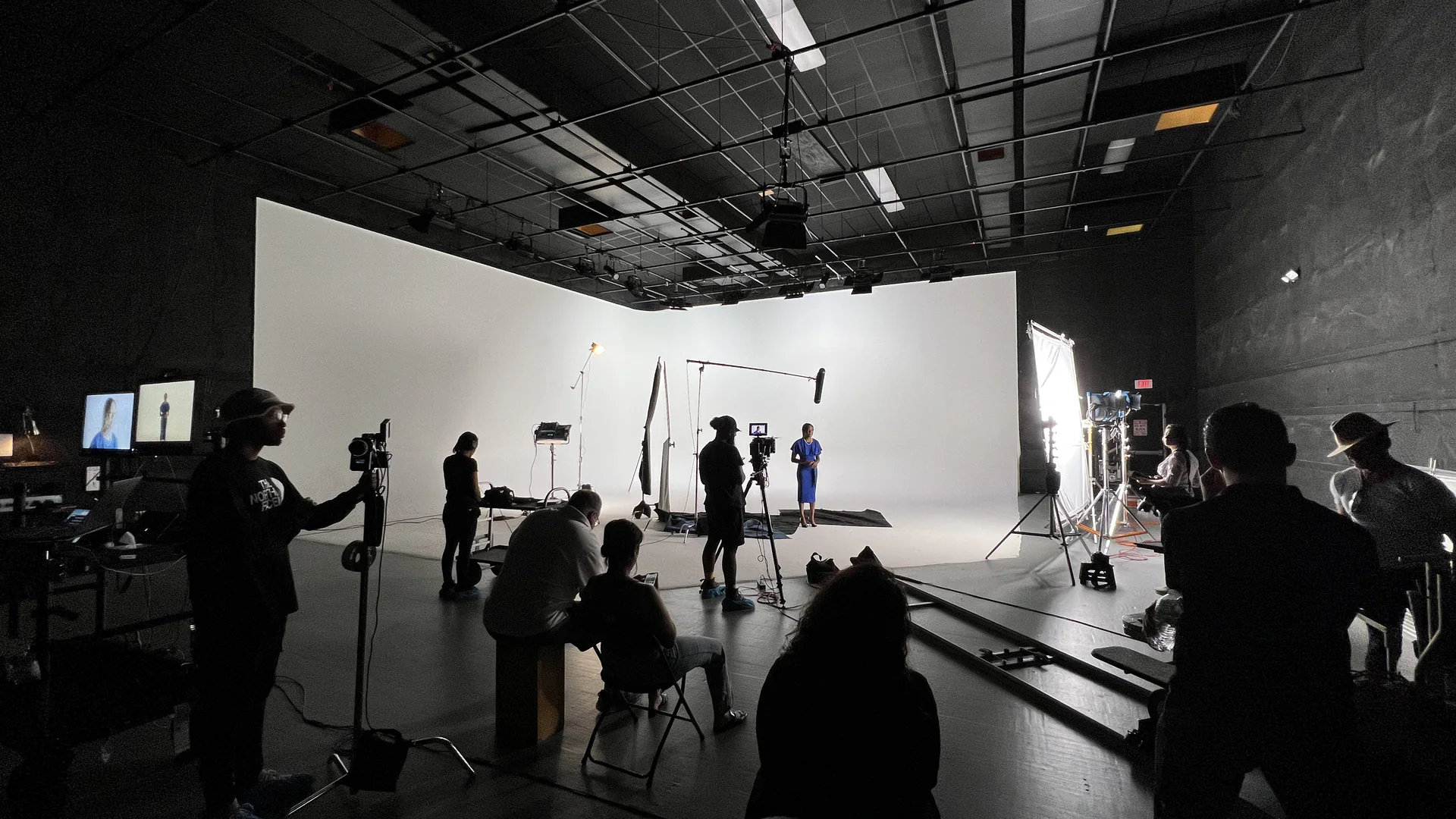
A controlled build belongs on a stage. If the brief is a product film, a set piece, a green screen, or anything where the background is a decision rather than a fact, the cheapest version of that shoot is a studio rental where the walls, the power and the parking are known quantities. We wrote about that tradeoff in more detail in shooting on location versus shooting in a studio, and the short version is that location work buys you authenticity and costs you control.
When the location is the point, the market picks itself, and then the crewing question becomes local versus travelling. We keep sixteen city pages for the markets we work in most, including Los Angeles, New York, Chicago, Atlanta and Miami, because those are the places where a client asking for a video production crew is asking a question we can answer the same day. The wider picture of how we operate across all of them is in our piece on being a national video production company.
What travels and what gets sourced locally
The single biggest cost lever on an out of state shoot is the split between what flies with the team and what is hired in the market. Getting this wrong in either direction is expensive. Ship too much and you are paying freight and excess baggage on stands you could have rented for forty dollars. Ship too little and you spend the first two hours of a shoot day discovering that the local rental house substituted a lens.
| Travels with the team | Sourced in the market |
|---|---|
| Camera bodies, lenses and the specific glass the look depends on | Lighting and grip packages, stands, flags, distro |
| Audio kit, mixer, lavs, the boom the mixer trusts | Trucks, vans and any vehicle that needs local plates and insurance |
| Media, drives and the offload station | Generators, cable runs and anything heavy per pound |
| Key creative roles, usually director, DP and producer | Gaffer, key grip, PAs, and additional operators |
| Monitors and any client-facing playback setup | Expendables, gels, tape, batteries for local gear |
The pattern that has held up for us is that decision-making roles travel and muscle gets hired locally. The DP travels because the look is the reason the client called. The key grip is local because the key grip knows which rental house in that city actually delivers on time. Our post on the real cost of on location shoots goes deeper on the travel side of the arithmetic.
Travel cost itself is more predictable than most clients expect, because the federal government publishes the numbers. The GSA per diem rate tables give a defensible lodging and meal figure for any US county, and using them instead of guessing is the fastest way to make a travel line item something a client can approve without a fight.

The week before anything moves
Crewing is the visible half of pre-production. The invisible half is access, and access is where shoots actually die.
Permits vary so widely by city that the only safe assumption is that you do not know the rule. Some markets want a film permit for a tripod on a public sidewalk. Others do not care until you block a lane. Private buildings have their own layer on top, and a property manager who has never hosted a shoot will say yes on the phone and no when a case of stands comes through the lobby. We ask for the loading dock, the freight elevator hours and the certificate of insurance requirements in the first conversation, every time.
Anything in the air adds a licence requirement. Drone work in the US needs a remote pilot certificate under FAA Part 107, plus airspace authorization if the location sits inside controlled airspace, which most downtown cores do. This is a yes or no gate, not a negotiation, and it needs to be checked at the scout rather than the shoot.
Union status is the last variable. In some markets and on some jobs the crew will be working under an IATSE agreement, which sets the rules on turnaround, meal penalties and department minimums. Those rules are not obstacles. They are a schedule you can plan against, and a producer who knows them writes a call sheet that does not generate penalties.
What a scout is actually for
A scout is not a look around. It is a list of measurements. Where the power is and how many amps it will hold. Where the sun sits at the hour you plan to shoot. What the room sounds like when the HVAC cycles. How far the walk is from the truck to the set, because that number multiplied by the number of trips is the real load-in time. When we cannot scout in person we scout by video call with someone standing in the room, and we ask them to be quiet for thirty seconds so we can hear it.
What the day looks like on the ground
The clearest example we can point to is the film we made when Sunbelt Rentals rang the bell at the New York Stock Exchange. Getting a camera onto that floor is not a permit you file. It is weeks of coordination upstream of the shoot, translating the exchange’s requirements into a plan a crew can actually execute against.
Call time on Wall Street was early enough that the crew was staged and inside the building with time to build rigs, set audio and walk the floor for final blocking before the executive team arrived. That sequencing is the whole job. The bell itself is a handful of minutes, and it does not repeat. During those minutes the work of the video production crew is to be in the right positions, with the right lenses, at the right heights, in the right numbers, so that every angle in the plan is being captured at once.
We ran multiple camera units in parallel to make that possible, and one of them stayed mobile and worked the periphery, because the moments that reveal themselves are the ones a camera has to move toward. Post ran alongside production rather than after it, which is the only way same-day delivery on a two-location shoot is possible at all. That parallel structure is a post production decision as much as a crewing one.
The thing that goes wrong most often
Not weather. Not gear. Time. A schedule built on the assumption that a setup takes twenty minutes when it takes thirty-five will lose two hours across a day, and the two hours always come out of the last item on the list, which is usually the shot the client cared about. The fix is unglamorous. Build the schedule off the slowest realistic setup, not the fastest, and put the most important shot before lunch.
Crewing a shoot that lasts three years
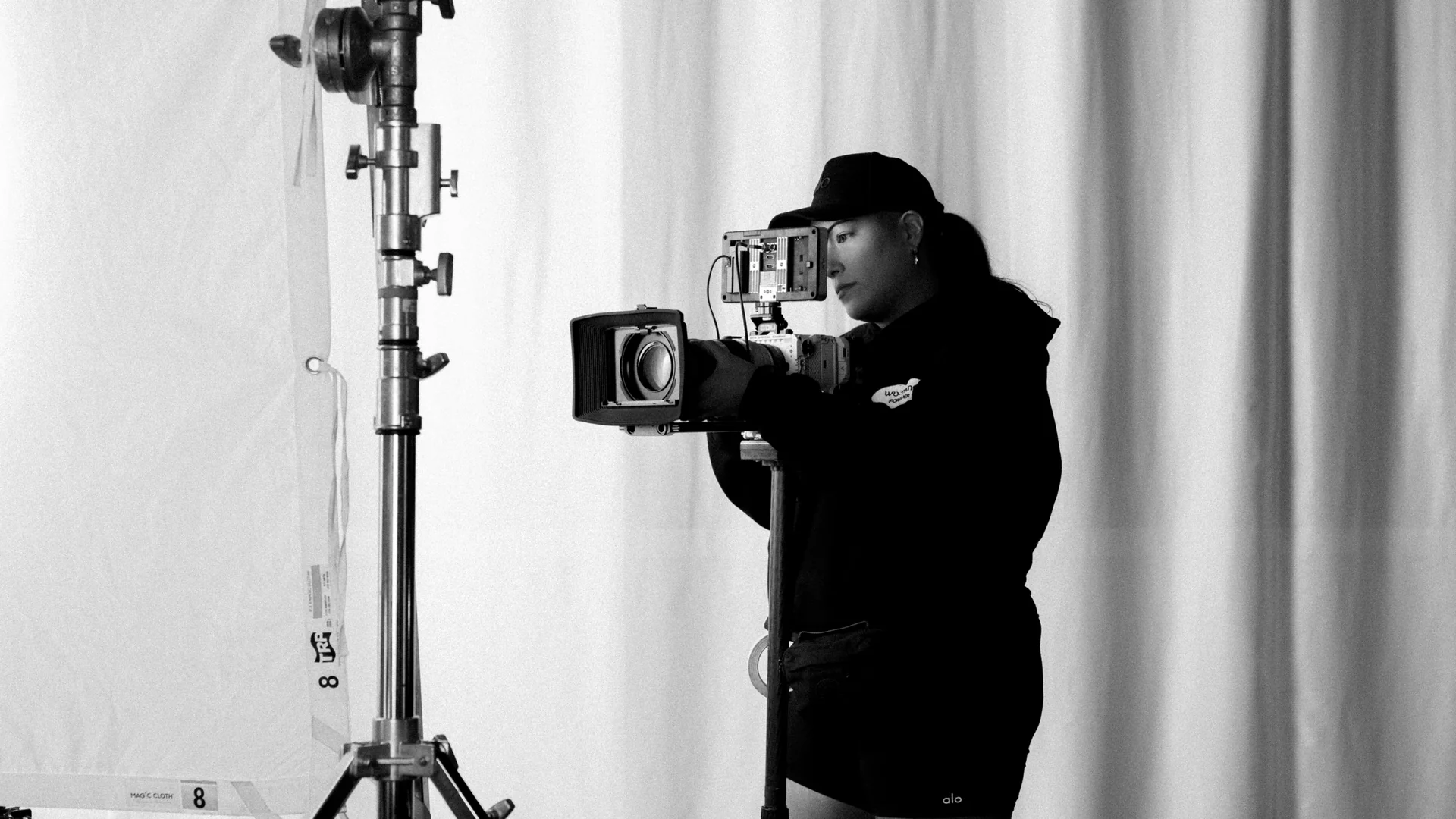
Not every job is a day. Fund Black Tech is a documentary we started shooting in March 2021 and were still picking up footage for in 2024. What came back fills close to 23 terabytes of RED raw across nineteen drives.
A production on that timescale inverts the crewing problem. On a one-day shoot you optimize for the best available crew on that date. On a multi-year documentary you optimize for continuity, because the person who lit the first interview needs to light the last one the same way, in a different city, three years later. The camera package gets locked early and stays locked, even when something better comes out, because matching footage matters more than the newest sensor.
The other thing a long production forces is discipline about media. Nineteen drives is only a manageable number if every card was offloaded with a consistent naming convention and verified checksums on the day it was shot. It becomes an unmanageable number the moment someone improvises a folder name on location. We wrote up the wider process in how to produce a documentary, and the media handling is the part most first-time producers underestimate.
Where the money actually goes
Clients usually arrive with a crew size in mind and a budget that does not match it. It is more useful to work the other direction and decide what the day has to deliver, then let the crew size fall out of that.
| What the day needs | What that costs you in crew |
|---|---|
| One interview, controlled room, single look | Small unit. Operator, gaffer, sound, producer |
| Interview plus b-roll of a working facility | Add a second operator and a PA, or accept a longer day |
| A live moment that does not repeat | Multiple camera units in parallel, one of them mobile |
| Multiple locations in one day | Two units, or a hard call on which location gets the good hours |
| Same-day or next-day delivery | An editor and a DIT working while the shoot is still running |
The line item people try to cut first is the one that costs the most to cut. A day without a dedicated grip and electric department is a day where the camera department is also rigging light, which means every setup takes longer, which means you lose shots. The cheaper version of that day is not cheaper. It is shorter.
For a fuller cost picture with real market numbers, what video production costs in Chicago breaks down a single market end to end, and how to hire a production crew covers the process from the client side of the table.
Questions we get about crewing a shoot
How much notice do you need for an out of state shoot
A straightforward single-location day in a market we work in regularly can come together in under a week. Anything involving a permit, a private building, drone work or a union agreement needs two to three weeks, and the constraint is almost never the crew. It is whoever has to sign off on access.
Do you use local crew or bring your own people
Both, on nearly every job. Creative and decision-making roles travel so the work is consistent with what the client approved. Grip, electric, additional operators and PAs are hired in the market, because local crew knows the buildings, the rental houses and the parking, and that knowledge is worth more than familiarity with us.
Can you shoot in a city that is not on your list
Yes. The city pages exist because those markets come up most often, not because they are a boundary. Sourcing a video production crew in a market we have not worked in before takes longer and starts with referrals from crew we trust in the nearest market we have.
Who is responsible if a location falls through
We are. That is what a producer is for, and it is the reason we resist stripping the production department out of a budget. Backup locations get identified during the scout, not during the crisis.
What is the smallest crew worth hiring
Two people, and only for a specific kind of job. An operator who can also handle sound, plus a producer running the room, works for a straightforward interview in a cooperative space. Below that you are asking one person to light, frame, record audio and manage the client at the same time, and one of those four will suffer visibly.
Bring your next shoot to C&I Studios
If you have a location, a date and a rough idea of what the footage has to do, that is enough for us to build a plan around it. We will tell you where a stage is cheaper than a location, which roles need to travel and which should be hired in the market, and what the access constraints are before they become a problem on the day.
Start with our video production services if you want the wider picture of what we handle, look through Fund Black Tech and the Sunbelt Rentals NYSE film to see how differently two productions can be crewed, and get in touch when you are ready to put a date on it.