
What a Professional Brand Photography Shoot Includes
People ask us what they are paying for when they book a brand photography shoot, and the honest answer is that most of the value happens before the shutter ever fires and long after the set is struck. A good frame is the visible tip of a lot of quiet planning. This is a walk through everything a professional shoot actually covers, start to finish, the way we run it at C&I Studios.
We shoot brands for a living out of our 30,000 square foot stage in Los Angeles, with teams working out of Fort Lauderdale and New York and on location anywhere the job takes us. The point of this piece is not to sell you on a number. We have written about that already. It is to show you the moving parts so you know what a real shoot looks like and can tell a thorough one from a rushed one.
It starts in pre production
Pre production is where a shoot is won or lost. Before anyone touches a camera we sit down with you and pull apart the brief. What is this imagery for. A product page, a paid social campaign, a billboard, a pitch deck, all of the above. Each of those wants a different crop, a different amount of negative space, a different mood, and if you do not decide that up front you end up with pretty pictures that do not fit anywhere.
From the brief we build mood boards and a visual direction, then a budget and a schedule. We confirm the location, whether that is a studio rental on our LA stage or a spot we scout for you. We handle call sheets, permits where a location needs them, and the logistics of getting product, talent, and crew in the same room on the same morning. None of this shows up in a final image. All of it is the reason the final image exists.
The shot list is the real blueprint
The single most useful document on any shoot is the shot list. It names every frame we owe you, in order, with the setup, the crop, the orientation, and the deliverable it feeds. When we photographed the product line for Hubble we built the list around their e commerce grid first, then layered in the lifestyle and hero frames the campaign wanted, so nothing got skipped in the rush of a shoot day. A list like that is also how we keep a half day from quietly becoming a full one.

Who is actually on set
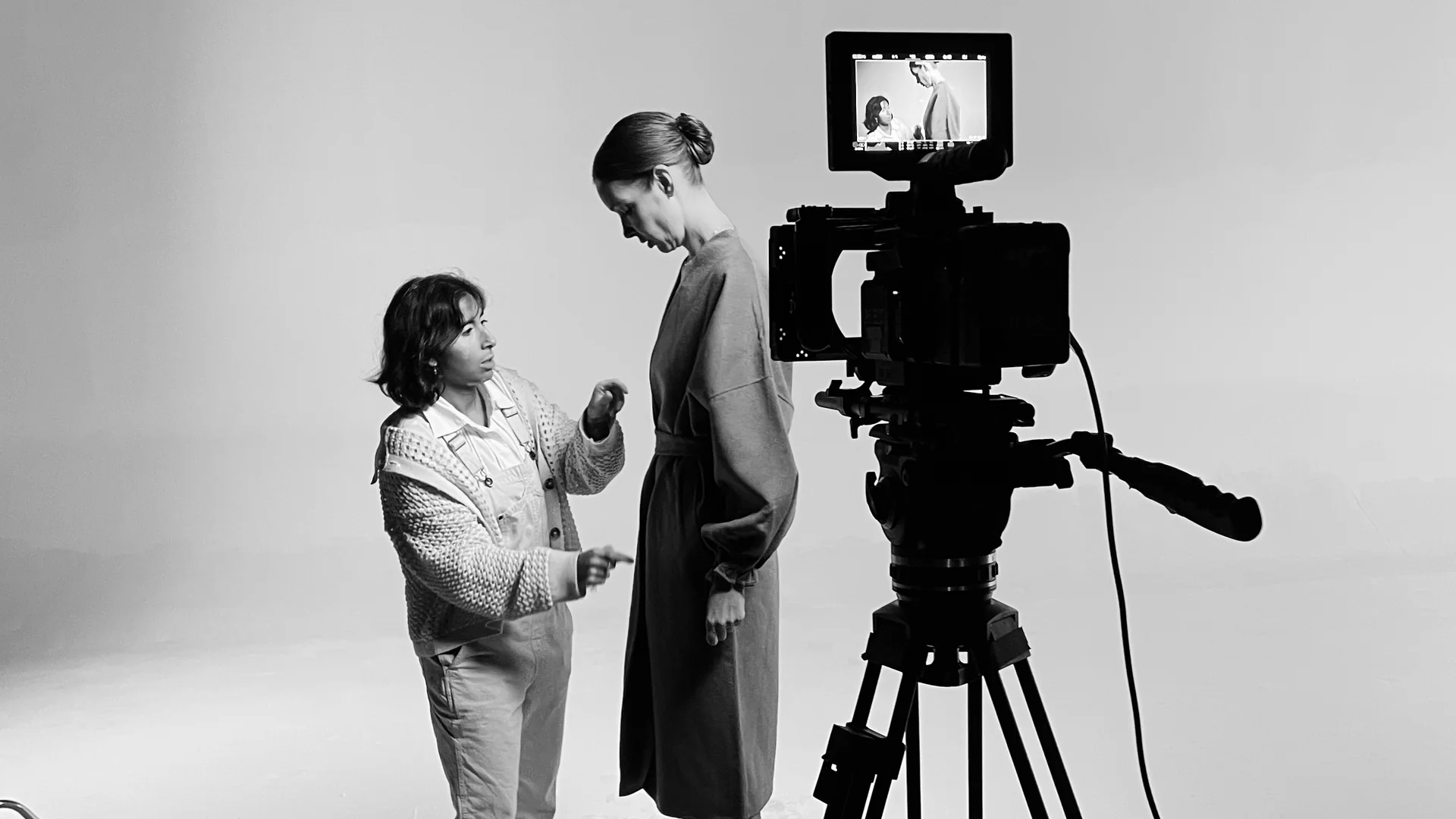
A brand shoot is a team, not a person with a camera. Knowing the roles tells you a lot about whether a quote is serious. On a typical commercial day you will find a lead photographer who owns the look, a first assistant who manages gear, lenses, and tethering, and a digital tech who runs capture, watches focus and exposure on a calibrated monitor, and backs up every card as it fills.
Around them sit the specialists. A gaffer and grip shape the light. A stylist handles wardrobe or props, and on a product day a dedicated prop stylist can make or break a hero frame. A producer keeps the day on schedule and on budget. On our KISS beauty work the retouch lead sat in during capture so we locked skin tone and specular highlights in camera instead of fixing them later, which saved days on the back end. When H&M needed a fast fashion run of looks, a wardrobe stylist and a dresser kept the floor moving so the camera never waited on a change.
Why the digital tech matters
Clients often ask why there is a person whose whole job is the laptop. The digital tech is your insurance policy. They confirm every frame is sharp and correctly exposed before the set changes, they manage color so what you approve on the monitor is what you get, and they run redundant backups so a dead card is never a lost day. For anyone planning a shoot, the detail work in our note on natural lighting versus studio lighting pairs well with understanding this role.
Lighting, lenses, and the setup
Lighting is the craft people underestimate. The difference between a flat catalog snap and an image that sells is almost always in how the light was shaped. A product shoot might run a soft key through a large diffusion panel, a rim light to lift the edge off the background, and a careful fill to control shadow density, all balanced so the surface reads true. A beauty or fashion look leans on softboxes, bounce, and sometimes a hard source for drama.
Gear follows the look, not the other way around. We pick the camera system and lenses for the deliverable, tether to a workstation so the whole team sees each frame at size, and shoot against the right surface, whether that is a sweep, a cyc wall, or a built set. Our LA studio exists so we can build and light these environments without borrowing time on someone else’s floor. If you want the wider picture of how photography fits a campaign, our professional photography services page lays out the formats we cover.
Usage rights are part of the deal
Here is the clause that surprises first time buyers. Photography comes with usage, and usage is a real part of what you are agreeing to, separate from the day itself. Usage defines where the images can run, for how long, and in what markets. A set licensed for your website and organic social is a different grant than one cleared for paid media, out of home, and packaging across several regions for a multi year term.
We write this plainly into every agreement so there are no surprises when a campaign scales. If talent appears in frame, their rights are their own conversation, negotiated and documented before the shoot, not after. Getting usage right up front is cheaper and cleaner than trying to re clear images once a campaign is already live. The American Society of Media Photographers is a solid outside reference if you want to read deeper on how licensing is structured across the industry.
Deliverables and how they get finished
A shoot does not end at wrap. What you receive is a defined set of finished assets, not a dump of raw files. On most jobs the flow runs like this. We present a proof gallery, you select, and we move selected frames into retouching. Retouching is where color is graded for consistency, blemishes and dust are cleaned, products are made pixel true, and each frame is cropped and sized for its destination.
Then we deliver in the formats you actually use, high resolution masters for print, web optimized versions for your site, and correctly sized exports for each social placement. Clients who need both stills and motion often bundle the day with our video production services so a single setup feeds a campaign across formats, and the post production team finishes it all to one look. The table below is a rough picture of how a shoot day maps to what lands in your inbox.
| Shoot phase | What you get |
|---|---|
| Pre production | Brief, mood boards, shot list, schedule, call sheet |
| Shoot day | Captured frames, tethered review, backed up on set |
| Selection | Proof gallery for you to mark favorites |
| Post | Retouched, color consistent, cropped per use |
| Delivery | Print masters, web files, social exports, licensed |
What a realistic turnaround looks like
Turnaround depends on volume and complexity, not on a calendar you set arbitrarily. A tight product set can move from shoot to delivery in a few days. A large campaign with heavy retouching and several rounds of review takes longer, and that is a feature, not a delay. We give you a schedule in pre production and hold to it, and if you have a hard launch date we build the shoot and the post timeline backward from it so nothing gets compressed into a bad compromise.
How this connects to the rest of your brand
Strong brand imagery rarely lives alone. The same shoot often feeds your branding and design system, your website, and your ad creative all at once, which is exactly why the planning matters so much. When we worked with Celsius the stills were built to sit beside motion and graphics in the same campaign, so the whole thing felt like one voice rather than three teams guessing. Brands like Thundr, 76 Words, and Fund Black Tech came to us for the same reason, one team that could carry a look from the first mood board to the final export.
If you are weighing stills against motion for a given goal, our older piece on when to use photography versus video is a useful companion, and for the e commerce crowd the guide to Shopify product photos gets specific about frames that convert.
Working with C&I Studios
A professional brand photography shoot is pre production, the right crew, deliberate lighting, clear usage, and finished deliverables on a schedule you can plan around. When all of that is handled you stop thinking about the shoot and start using the images. If you want to talk through a shoot for your brand, tell us what the pictures are for and we will build the plan around it. You can reach our team through our contact page and we will take it from there.