
What Goes Into a Commercial Video Budget Line by Line
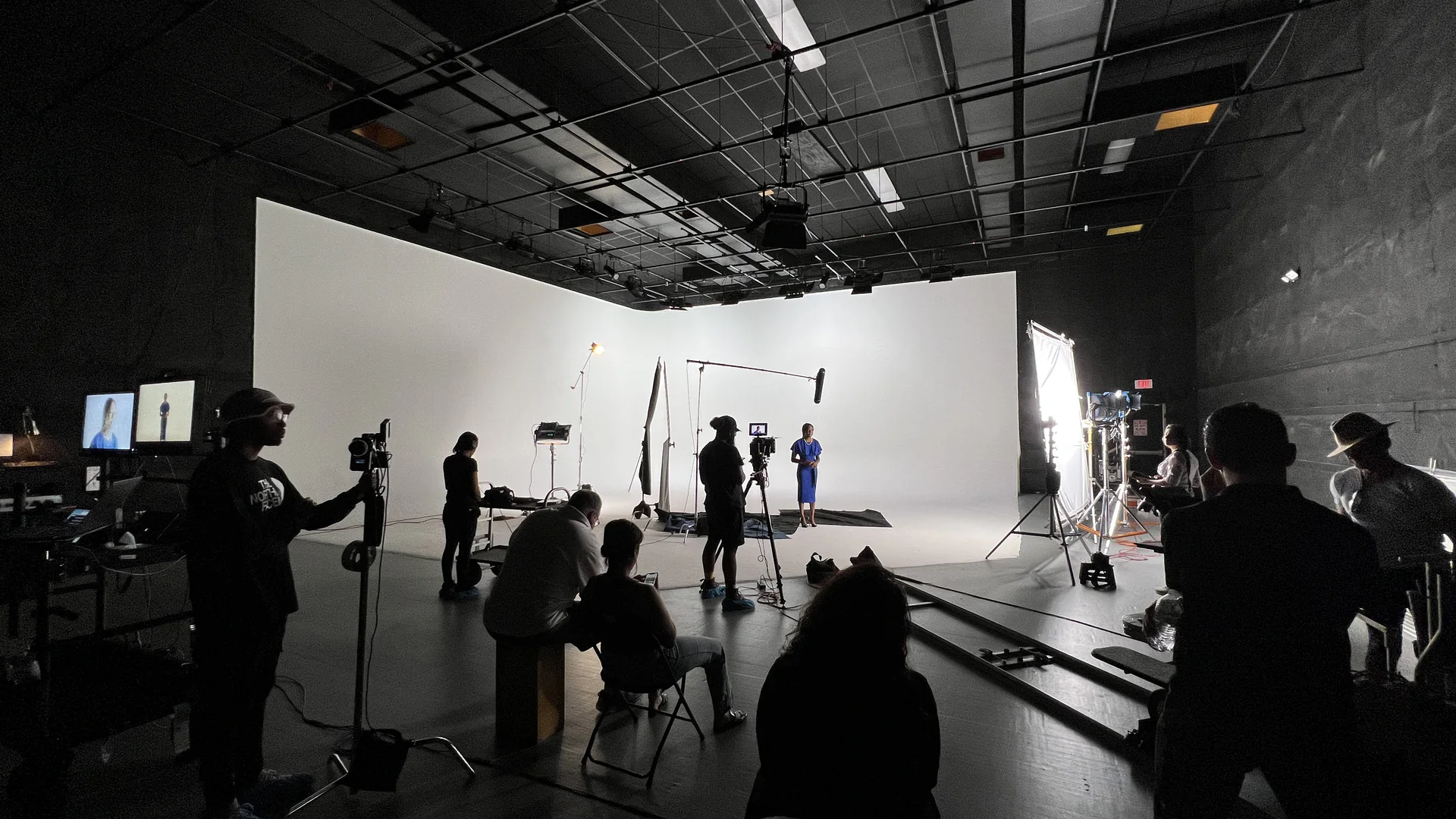
A commercial video budget is not one number. It is a stack of line items, and each line is a decision about what shows up on screen and how long it lasts there. When a brand asks us what a project will run, the honest answer starts with the lines, because the lines are where the money actually goes and where it moves when the brief changes.
We have built budgets for fast moving beverage launches, fashion lookbooks, and founder led brand films, and the shape is always the same even when the totals are not. Below is the anatomy of a commercial video budget, line by line, with what each one buys and why it swings. No numbers here. Just the logic, so when you read your own estimate you know what you are reading. If you want to see how we package the whole thing, our video production services page lays out the engagement.
Why a budget reads as lines, not a lump sum
Brands often want a single figure before a single frame exists, and we understand the instinct. The problem is that a lump sum hides the tradeoffs, and the tradeoffs are the only thing you can actually steer. A line item budget lets you see that an extra shoot day pulls in crew, gear, and location at once, while a second edit version mostly moves post. When you can see the levers, you can make calls that protect the idea and still fit the plan. That is why we ask you to share your budget up front, so we build the lines to fit reality instead of guessing.
Pre production, the line that protects every other line
Pre production is where a shoot gets de risked. It covers creative development, the treatment, the shot list, casting, scouting, scheduling, and the call sheet that keeps a shoot day from unraveling. People new to this line sometimes see it as overhead. It is the opposite. Every dollar that lands here lowers the odds of an expensive surprise on set, where mistakes cost the most.
What moves this line is ambiguity. A tight brief with a clear deliverable and one location is light on pre production. A multi city brand story with talent, wardrobe, and a narrative arc is heavy, because someone has to lock the logistics before a camera rolls. When we produced launch content for Celsius, the pre production load was real precisely because the pace of a beverage rollout leaves no room to improvise on the day.
Crew, the people who turn a plan into footage
Crew is usually the largest living part of a shoot, and it is priced by role and by day. A director, a director of photography, a gaffer, a grip, sound, a producer on the floor, hair and makeup, a production assistant. Each role carries a day rate, and the honest driver here is not glamour. It is how many people the look on screen actually requires. A single founder interview needs a lean team. A choreographed fashion spot with movement and lighting changes needs hands, and those hands are the budget.
Two things move this line hard. The first is shoot days, because every added day multiplies the whole crew, not one person. The second is specialization. A standard operator and a Steadicam operator are not the same line, and a colorist who grades beauty is not the same as a generalist. If you want the full picture of who stands where and why, we broke it down in what a video production crew actually is.
Gear, what the camera and the light actually cost
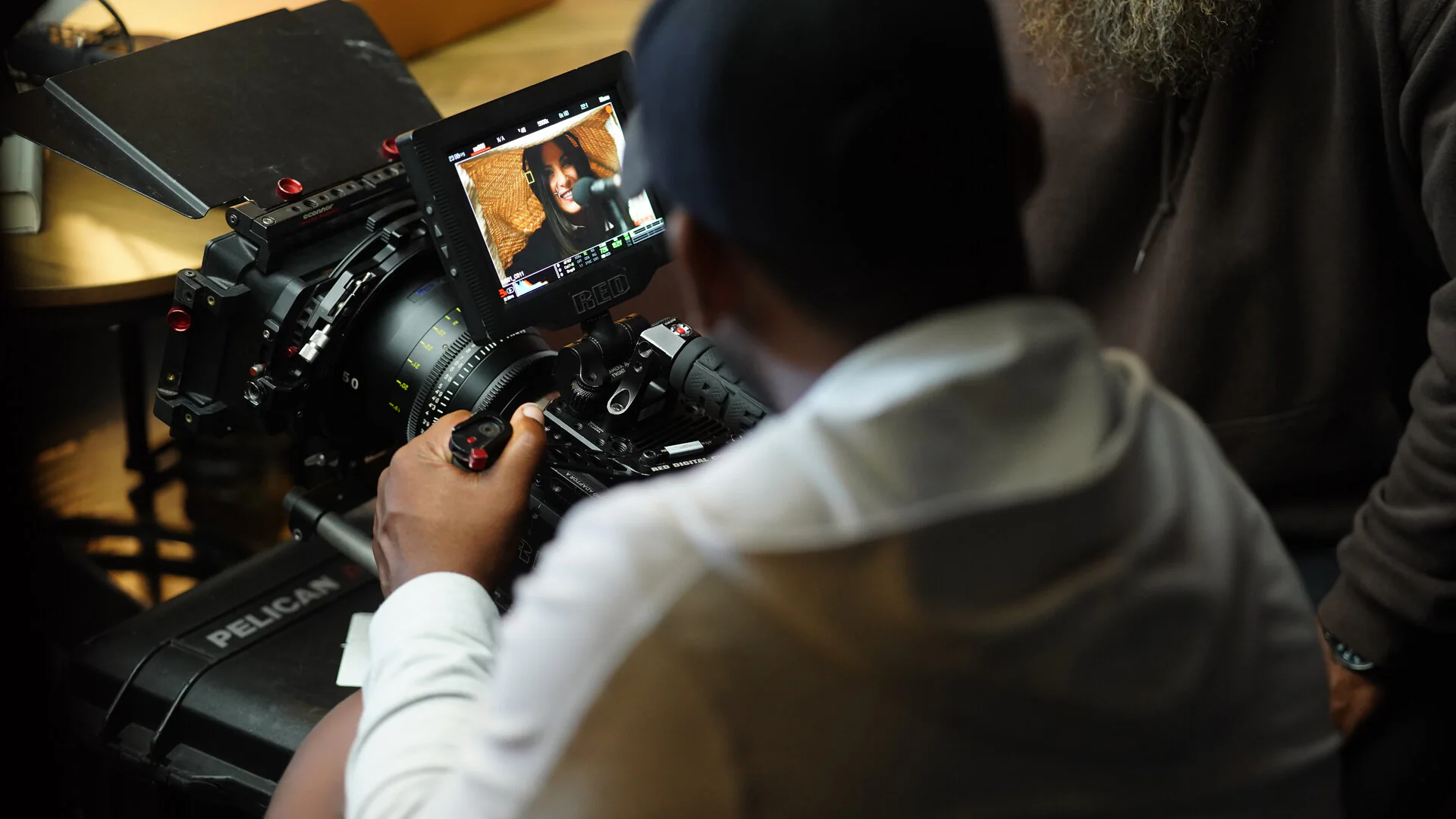
Gear is the camera body, the lenses, lighting, grip, audio, media, and the support that holds it all steady. It is a rental line for most shoots, which is why it flexes with the look rather than sitting fixed. A clean interview on a prime lens and a soft key is one thing. A commercial that needs a large format sensor, a set of cinema primes, and a lighting package that can turn a warehouse into a world is another.
What moves gear is the ambition of the image and the control you want over it. Shooting outdoors at the mercy of the sun is cheap on lighting and expensive on patience. Building light indoors costs more in gear and buys you certainty. There is a reason brands with a hard launch date lean toward control. Our own Los Angeles studio rentals exist partly so that control is a fixed stage and not a daily gamble. For how we keep gear consistent across markets, there is how we build a crew anywhere in the US.
Location, the line that behaves like weather
Location covers the place itself, the permits, parking, power, and the small army of fees that come with shooting somewhere real. A studio is predictable. A practical location is character you cannot fake, and it comes with variables. A rooftop at golden hour reads beautifully and carries permit windows, insurance requirements, and a load in that eats time. A retail floor means shooting around hours. Each of those is a line, and each of them moves with the ambition of the backdrop.
What swings this line is how many places the story visits and how controllable each one is. One location you own is quiet. A travel heavy shoot across three cities turns location into logistics, which pulls crew and schedule along with it. Choosing the right place is a budget decision as much as a creative one.
Post production, where the footage becomes the deliverable
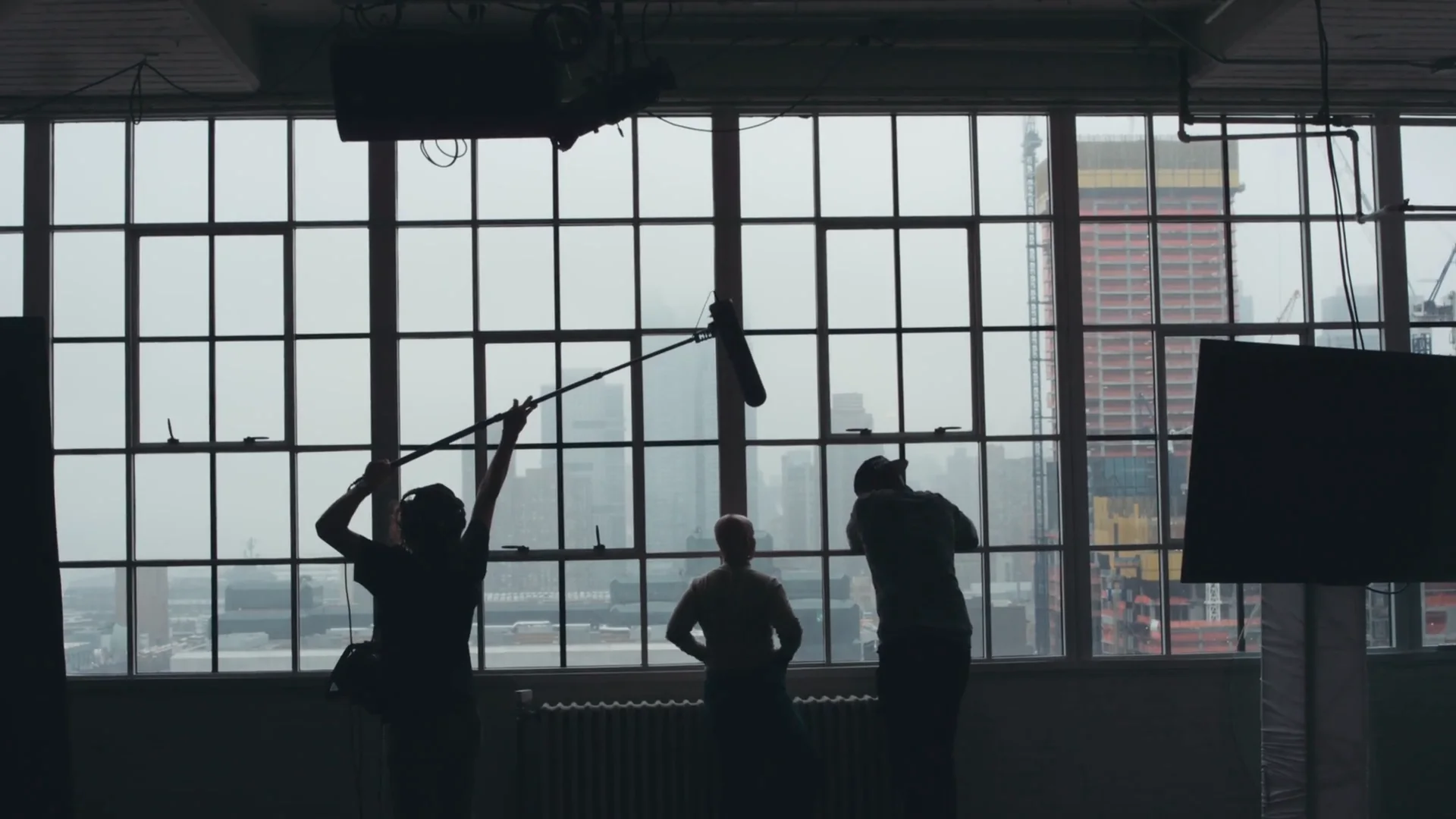
Post is editorial, color grade, sound design, mix, motion graphics, and the versioning that turns one shoot into a campaign. It is easy to underweight because it happens after the exciting part. That is a mistake, because post is where a good shoot becomes a finished piece and a great shoot earns its cost. When we cut brand work for H&M, the edit was where the rhythm of the season came together, not the set.
The line moves with how much you ask of it. A single hero cut is one thing. A hero plus cutdowns for paid social, a square version, a vertical version, captions, and a handful of alternate hooks is a different scope entirely. More versions means more editorial hours, more color passes, and more mastering. If you want the full map of this stage, we wrote what a post production company does, and the service lives on our post production services page. One shoot can also feed a lot of content, which we cover in how to repurpose one brand video.
Insurance, the line nobody loves until they need it
Production insurance covers general liability, the gear, sometimes the cast, and the certificates a location or a city will demand before they let you in the door. It is not optional on a real shoot, and it is not where to cut. A permit office that wants proof of coverage does not negotiate, and a damaged rental without a policy becomes a very bad line item after the fact.
What moves insurance is risk. Drones, stunts, water, fire, minors on set, expensive rented gear, a crowded public location. Each of those raises the coverage the production needs, and the policy reflects it. A static interview in a controlled studio is light here. A moving shoot with aerials and a public crowd is not. The point of the line is simple. It keeps one bad moment from erasing the rest of the budget.
Contingency, the line that saves the project
Contingency is the deliberate margin a sane budget holds back for the things no one can schedule. Weather that cancels a day. A talent swap. A location that falls through the week of. It is not padding and it is not profit. It is the difference between a problem solved quietly and a problem that becomes a renegotiation while the clock runs.
What moves contingency is how much of the shoot is outside your control. A studio day with owned talent needs a thin margin. A location heavy shoot with weather exposure and a hard air date needs a real one. Experienced brands expect this line and read it as a sign the team has been burned before and learned. Skipping it does not save money. It just moves the cost to the worst possible moment.
How the lines move together on a real brief
The lines are not independent. Pull one and the others follow. Add a shoot day and you have added crew, gear, and location in a single move, and post often grows too because there is more footage to cut. Add a second deliverable version and post swells while production barely notices. Choose a controlled studio over three traveling locations and location drops while the look holds steady. This is the real value of reading a budget as lines. You see which lever you are actually pulling.
| Line item | What it buys | What makes it move |
|---|---|---|
| Pre production | Creative, casting, scouting, scheduling | Brief complexity and number of locations |
| Crew | The people who shoot the footage | Shoot days and role specialization |
| Gear | Camera, lenses, lighting, audio, grip | Ambition of the image and control wanted |
| Location | The place, permits, power, parking | Number of places and how controllable each is |
| Post production | Edit, color, sound, versions | How many deliverables and formats |
| Insurance | Liability, gear, cast, certificates | Risk on set and what the location demands |
| Contingency | Margin for the unplanned | How much of the shoot is outside control |
Which line surprises brands the most
Post production, almost every time. The shoot feels like the product because it is the part a client watches happen. The deliverable is built in the edit, and when the version count climbs for paid channels, the post line climbs with it. Naming every deliverable before the shoot is the cleanest way to keep that line honest.
Can we cut the budget without hurting the work
Yes, and the right place to cut is scope, not craft. Fewer locations, fewer deliverable versions, a tighter shoot schedule. Cutting crew or gear below what the look requires does not save money. It shows up on screen and then costs more to fix. We would rather help you narrow the brief than quietly thin the parts that make it good.
Why do two agencies quote the same brief so differently
Because they are reading different lines. One may assume a lean crew and a single version while another plans for a full package and a campaign of cutdowns. Line by line budgets make that visible, which is exactly why we build them this way. A matched comparison is only possible when both estimates show their lines.
Read your estimate line by line with us
A commercial video budget is a set of honest decisions written down, and the brands that get the most from their spend are the ones who read it that way. We are happy to walk through your brief and show you where each line lands and which levers are worth pulling for the goal you have. If that sounds useful, start a conversation with our team on the contact page and we will build the lines around your project. You can also see the range of what we make across film and television production, documentary film production, professional photography, and web and technology. For an outside view of the craft, the American Society of Cinematographers is a good place to understand how much thought goes into the image itself.