Drone Reel
Our Work From the Air
Aerial cinematography does something no other camera position can do. It establishes a place in one move, it shows scale that a ground camera can only imply, and it turns a location into part of the story rather than a backdrop. One aerial at the top of a film tells an audience how big the subject is before anybody says a word.
C&I Studios flies its own drones as part of the production. The same team that lights the interview and cuts the film puts the drone up, so the aerial is planned into the edit from the start instead of being dropped in afterward. What follows is flown work from real productions, over a winter city, open water, a beach at full capacity, a coastline and a rooftop.
Geneva Seal
Shot by C&I Studios for Geneva Seal in downtown Chicago.
Dense downtown is the hardest place to fly. The towers block the satellites the drone uses to hold position, the wind between buildings changes direction floor by floor, and there is nowhere to put the drone down in a hurry. Flying a city like this is a planning job before it is a piloting job.
Height is a choice, not a default. Most of this footage sits at rooftop level and moves through the grid rather than hanging above it, which is what keeps a skyline feeling like a place somebody lives instead of a map.
Denison Yachting
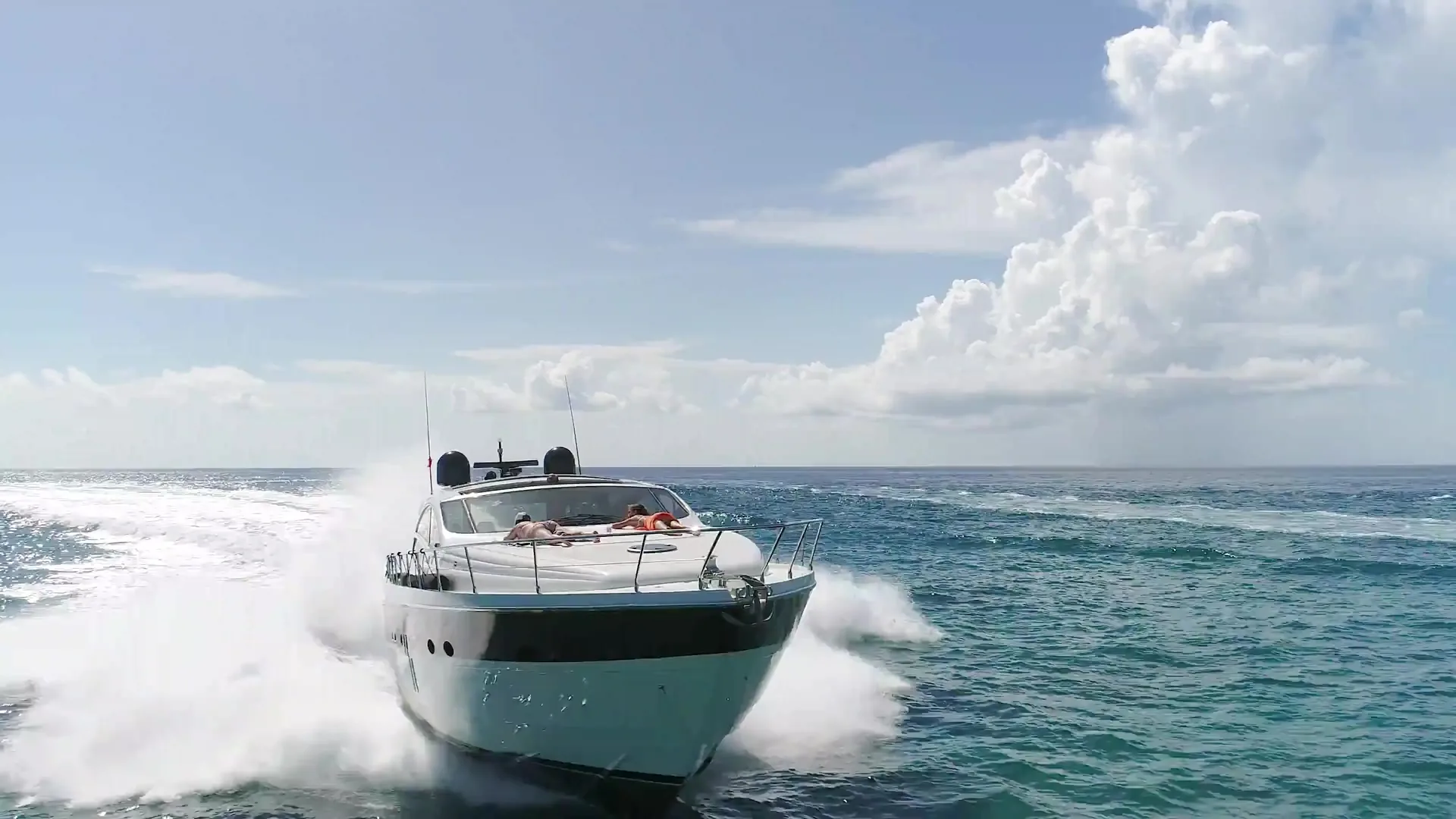
Our aerial unit on the Denison Yachting shoot in the Bahamas.
Following a boat at speed is the shot a drone does that nothing else can. A chase vessel puts a wake and a hull in the frame and cannot hold the line. From the air the subject stays centered, the water stays clean, and the move can run as long as the battery lasts.
Shallow water rewards altitude. Straight down over the flats, the reef and the sand read as color and shape, and the boat becomes the one hard edge in the frame. That shot exists at one height and one sun angle, so it gets scheduled rather than attempted.
AIDS Healthcare Foundation
From our coverage of the AIDS Healthcare Foundation event on Fort Lauderdale beach.
An outdoor event spreads across more ground than any one camera position can take in. From the air the whole site reads at once, the stage and the tents along the sand with the shoreline running behind them, so the scale of the build is clear before the film cuts to anything close.
Event days are flown to a plan. The route is set before the call time, the altitude is held, and the drone works around the schedule on the ground rather than the other way around. Nothing about the aerial unit should be noticeable from inside the event.
Paradisio Del Mar
Flown for Paradisio Del Mar on the South Florida coast.
A building photographed from the ground is a facade. The same building from overhead is a footprint on a coastline, with the approach, the water and the neighboring land all visible at once. For anything sold on location, that context is the product.
Low sun does the work here. Early and late light rakes across the ground and gives roofs, hedges and seawalls an edge, which is what stops an overhead from flattening into a satellite picture.
The Manor
Filmed by our team for The Manor campaign in Fort Lauderdale.
An orbit sounds simple and is not. The drone has to hold a constant radius and a constant height while the camera keeps one point centered, and any correction shows up as a wobble that no edit can fix. It is flown until one take is clean.
Kept whole, a move like this does the job of an establishing shot and a reveal at the same time. The architecture, the scale and the surroundings all arrive in one continuous piece of screen time.
Coastline to Wetland
C&I Studios aerials from South Florida productions with no case study page behind them.
Not every aerial belongs to a campaign. This is footage flown across South Florida on separate productions, beachfront at first light, a wetland from directly above, and a waterway followed at the speed of the boat on it.
It is here because it shows the range rather than a result. Same crew, same drones, three different environments in a single stretch of coast.