
Ptah Quammie has made a big name for himself among photographers, fashionistas, models, and star-studded personalities. His unique style of photography is a transformative experience that melds beauty with science fiction and fantasy, making his work absolutely one-of-a-kind. From fashion photography, he moved into nude photography, which is his true bread and butter. Unlike most, he uses nude photography as a gateway to metamorphosis. If you need help wrapping your head around it, check out his Instagram @artcrazyphotog.
Index Template
The Cities We Shoot In and Why Brands Pick Each
Commercial & Brand
The Cities We Shoot In and Why Brands Pick Each
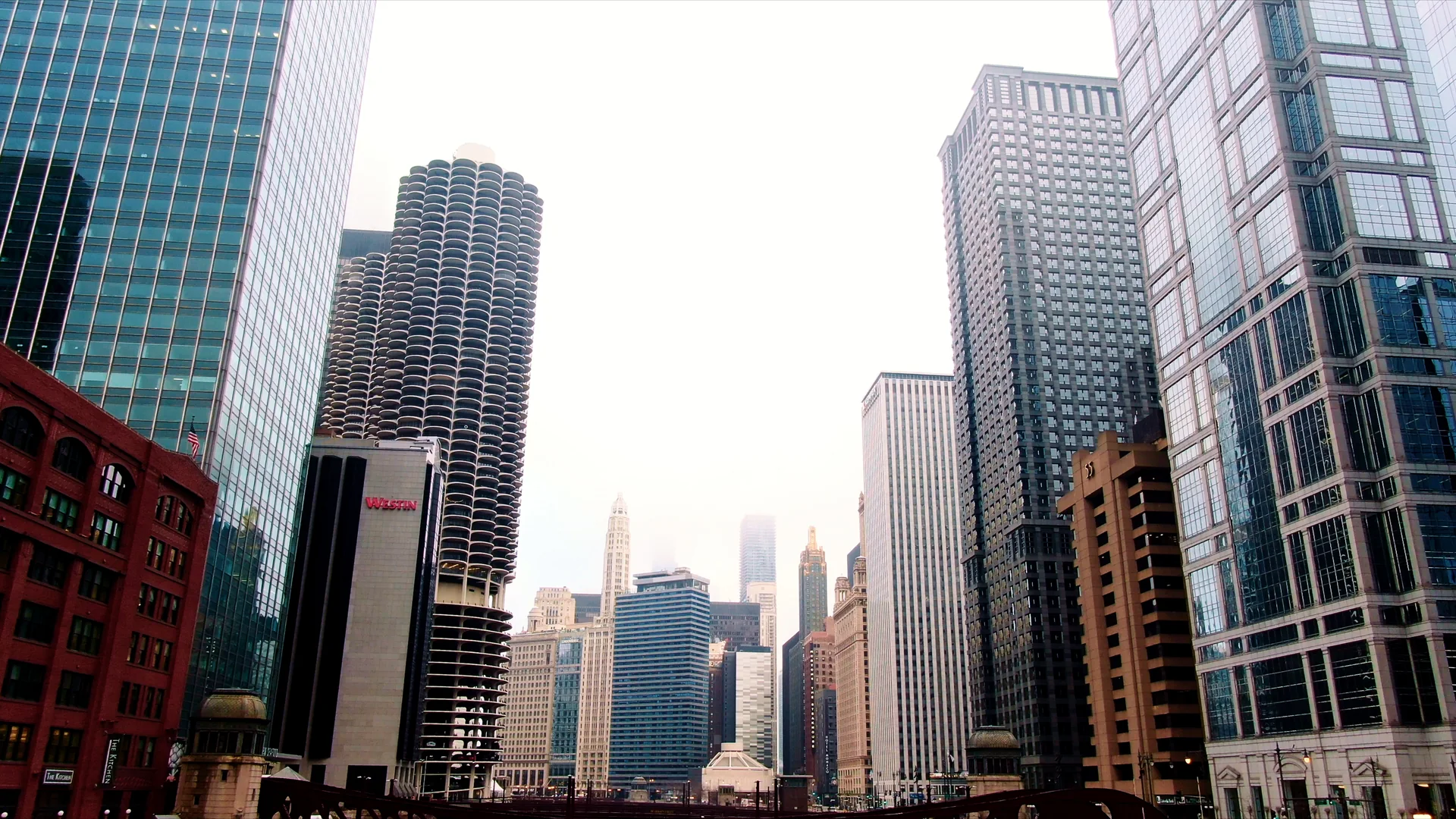
Most brands ask a national video production company where they should shoot before they ask what it will cost. That is the right question in the wrong order, and it is also the more interesting one. The city almost never changes the creative. It changes which crew you can hire on a Tuesday, which permit you need to hold a sidewalk, what the light does in February, and whether a state rebate pays back a slice of the budget. Knowing which market gives a project the thing it actually needs, then being able to staff that market properly, is most of the job.
We keep one stage and a full gear inventory in Los Angeles, offices in New York and Fort Lauderdale, and working crews in every major production market in the country. Below is how we actually think about each one. What it is good at, what it costs you in friction, and the kind of job we would route there.
What a national video production company actually gives you
The phrase gets used loosely. Plenty of companies calling themselves a national video production company really mean a directory. They take the job, then find somebody local and mark up the invoice. You end up managing a stranger through a producer who has never met them either.
What it should mean is narrower. One producer owns the project from the brief to delivery. The creative team, the director, and the post pipeline stay the same no matter which airport the crew flies into. Only the positions that genuinely benefit from being local get hired local. That is the gaffer who knows which stage has a working tie-in, the location manager who has already pulled a permit on that block, the PA who knows where the truck can legally sit for nine hours.
That split matters because it is where budgets get won and lost. Flying eight people to Dallas is expensive and usually unnecessary. Flying two and hiring six is how a national shoot lands at a sane number without the footage looking like somebody else made it. The rule we use is simple. Travel the people who protect the creative, hire the people who protect the day.
Los Angeles has depth on every line item
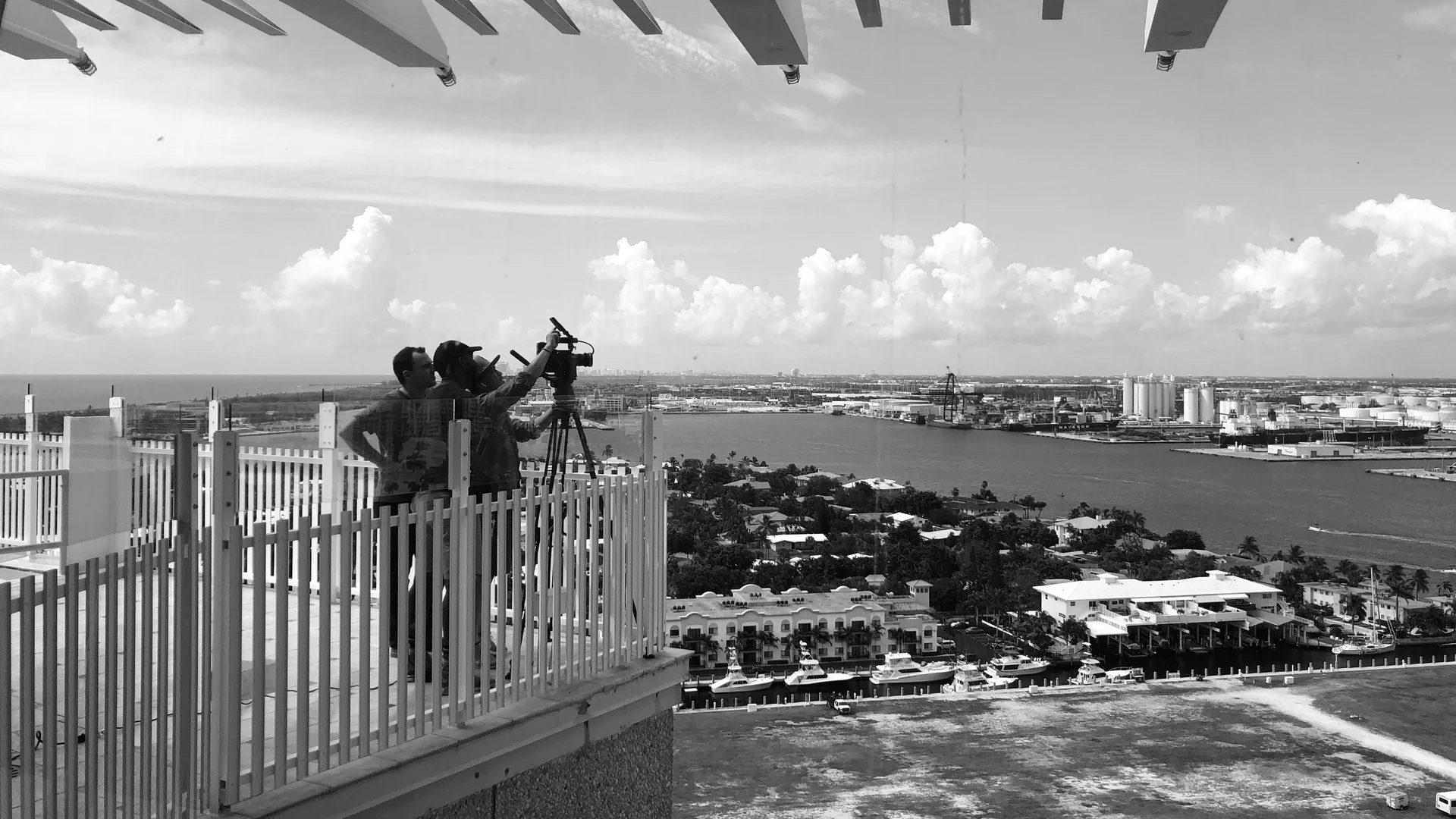
Los Angeles is not the default because of palm trees. It is the default because it is the only market in the country where every department is deep enough that a last-minute replacement is a phone call instead of a crisis. Lose a first AC at 6am in most cities and you have a problem. Lose one in LA and you have a mild inconvenience.
It also means the ceiling on quality is higher. The best colorists, the best sound mixers, the specialty rental houses with the one lens you need. They are all here. Our 30,000 square foot stage is in LA for exactly that reason, and a fair number of projects that start as location shoots elsewhere end up finishing here anyway.
The tradeoff is rate and permitting. Crew day rates run at the top of the national range, and location filming in the city runs through FilmLA, which is efficient but not fast if you decide on Friday that you want a street on Monday. California also runs a competitive incentive program through the California Film Commission, which matters more for scripted work than for a two day brand shoot.
Route work here when it has a heavy build, when it needs controlled stage conditions, when the talent is already in town, or when the post is as demanding as the shoot. Details on the market are on our Los Angeles video production page.
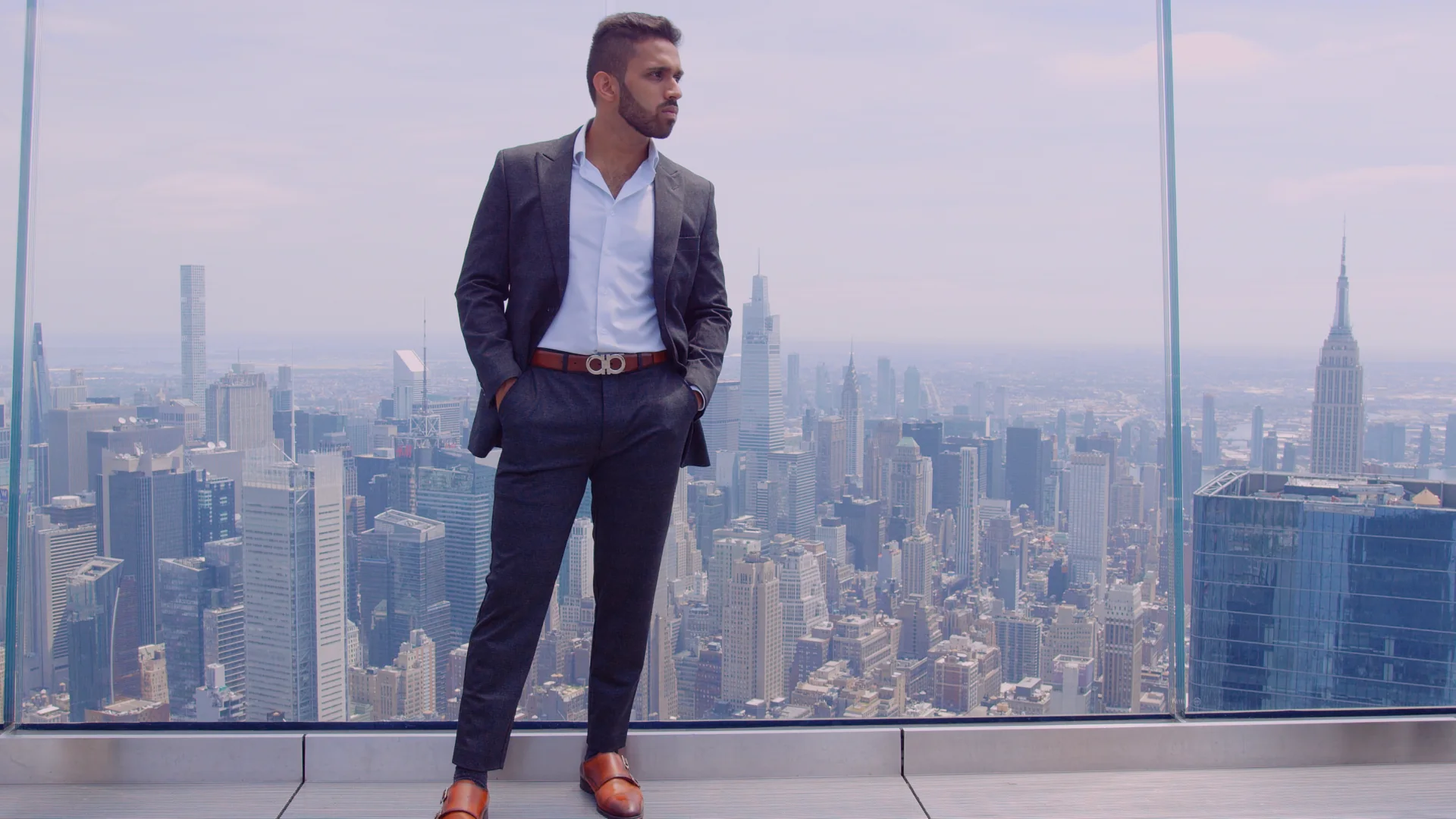
In New York density is the entire pitch
New York sells one thing better than anywhere else, and that is compression. You can shoot a rooftop, a subway platform, a boardroom, and a bodega inside a single day because they are four blocks apart. No other American city gives you that many distinct looks per mile.
The cost of that density is that everything is harder to move. Trucks do not park, elevators are booked, buildings have their own rules on top of the city’s, and a crew that is one person too large stops fitting in the freight. The city’s permit process runs through the Mayor’s Office of Media and Entertainment and it is genuinely well run, but it rewards planning and punishes improvisation.
The other reason clients pick New York is proximity. Finance, fashion, publishing, and most agency decision makers are here, which means the people who approve the work can walk to set. That sounds minor until you have watched a two week approval cycle collapse into an afternoon because the CMO stopped by. Our New York video production page covers the market in detail, and we wrote up a real example when we shot the Knicks championship parade, which is about as unforgiving as New York location work gets.
In Washington DC access is the constraint
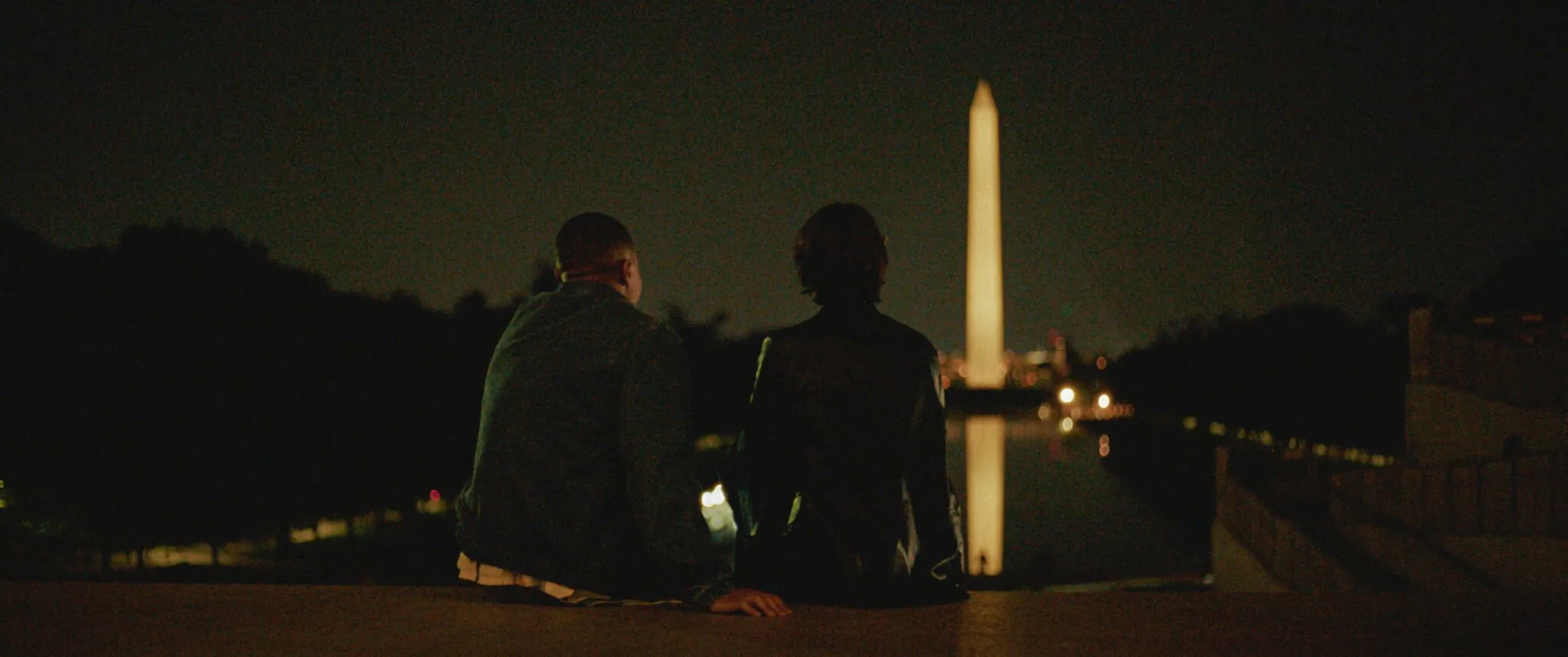
DC is a market where the hard part is almost never the camera. It is clearance. Federal property, monument grounds, secure buildings, and interview subjects whose schedules are set by other people’s calendars all mean the production plan has to be built backward from what you are allowed to do and when.
Brands come here for credibility more than for scenery. Advocacy work, association and nonprofit campaigns, government adjacent contractors, policy explainers, and executive interviews that need to look like they happened where decisions get made. The city photographs beautifully at the margins of the day, and the monument core at night is one of the genuinely distinctive looks in the country.
What we tell clients is to budget more prep time than you think and less shoot time than you think. A DC day with the paperwork done is calm. A DC day without it does not happen. See the Washington DC video production page for the specifics.
Incentives built the Atlanta crew base
Georgia’s transferable film tax credit pulled an enormous amount of scripted production into Atlanta, and the second order effect is the useful part for brand work. The crew base that grew to serve those shows is still there between seasons. You can hire a genuinely senior camera and grip department in Atlanta at rates below LA and New York, which is why so much national commercial and corporate work quietly happens there now.
Stage inventory is real too, not converted warehouse space. And the city gives you a wide range of backdrops inside a short drive. Downtown glass, older brick, suburban, rural, and forest, all within about an hour.
The catch is scheduling. When several series are up at once, the best crews are booked out months ahead and the honest answer is that your third choice gaffer in Atlanta is not the same as your third choice in LA. Book early or shoot in the gaps. Our Atlanta video production page has more.
Chicago is the practical middle
Chicago is the market we recommend most often to brands that have been quoted a coastal number and flinched. Crew quality is high, the city is genuinely photogenic in a way that reads as American without reading as Los Angeles, and the logistics are simply easier. Trucks park, distances are short, and the union and non union paths are both workable.
Weather is the real variable and it is not a small one. A February exterior in Chicago is a different production than a September one, and pretending otherwise is how schedules break. We wrote a full breakdown of what a shoot there actually costs in how much video production costs in Chicago, and the market overview lives on the Chicago video production page.
Miami and South Florida have a look you cannot fake
Light and water. That is the honest reason brands shoot in South Florida, and it is a good enough reason. The quality of light from roughly November to April is hard to match anywhere else in the country, and the coastline, art deco architecture, and Latin American cultural depth give you a visual register that reads as international without leaving the US.
It is also the most efficient bilingual production market in the country. If a campaign needs Spanish and English versions shot the same day with talent and crew who move naturally between both, Florida does that better than Los Angeles does.
Summer is the constraint. Heat and afternoon storms are near guaranteed from June through September, so exteriors get pushed into the first and last three hours of daylight. We keep an office in Fort Lauderdale, so this is a market we are in constantly rather than one we visit. See Miami video production and South Florida video production.
Texas is three markets that are not interchangeable
Clients say Texas and mean one of three very different places.
Dallas is corporate. Headquarters, executive interviews, glass towers, and the deepest business to business client base in the state. If the deliverable is a brand film that has to look institutional and expensive, Dallas is the efficient answer.
Austin is younger and looser. Tech, music, food, and a crew culture that skews documentary. It is the Texas market for anything that needs to feel like it was not art directed to death.
Houston is industrial and technical. Energy, medical, aerospace, ports. Shooting there often means safety training, escorts, and site access protocols before anybody touches a camera, and crews who have done it before are worth the premium. San Antonio rounds it out for historic and Hispanic market work.
Across all three, the same advantages hold. No state income tax pressure on rates, short flights from most of the country, and stage and gear inventory that has grown a lot in the last five years.
The West and the desert
San Francisco is where you go when the client is a technology company and the work needs to be shot where the product is actually built. It is expensive, crew is thinner than LA, and location access in the city is fussier than people expect. Go for authenticity, not for savings.
San Diego is the quiet efficiency play in California. Two hours from LA, so you can drive an LA crew and truck down, with better weather consistency, easier permitting, military and biotech client bases, and a coastline that does not look like Malibu.
Seattle gives you water, evergreen, and grey, and the grey is the point. The soft overcast that frustrates tourists is a natural softbox for exteriors. Strong tech and outdoor apparel client base. Plan around the rain rather than against it.
Las Vegas is the most misunderstood market on this list. Almost nobody shoots Vegas for Vegas. They shoot it because every major trade show in the country happens there, which means the executives, the product, and the customers are all in one building for three days. Conference capture, booth content, and executive interview blocks are what Vegas is genuinely best at, and the desert an hour outside town is a bonus.
Boston and Nashville
Boston is education, healthcare, biotech, and financial services, plus the best concentration of academic and research institutions in the country. The work skews serious and interview heavy, and the historic architecture gives brand films a weight that new construction cannot.
Nashville is a music town that turned into a general production town. The audio infrastructure is world class, which matters more than people assume for any project where sound carries the emotion, and the crew base has broadened well past music video work.
A quick map
| Market | What it is genuinely best at | The thing to plan around |
|---|---|---|
| Los Angeles | Stage builds and crew depth | Top of market rates |
| New York | Many looks per mile and client proximity | Access and parking |
| Washington DC | Institutional credibility | Clearance lead time |
| Atlanta | Senior crew at sane rates | Booked out during series season |
| Chicago | Coastal quality without coastal cost | Winter exteriors |
| Miami | Light and bilingual production | Summer heat and storms |
| Dallas | Corporate and executive work | Sprawl between locations |
| Austin | Documentary and tech culture | Festival weeks price everything up |
| Houston | Industrial and medical access | Site safety protocols |
| Las Vegas | Trade show and conference capture | Venue rules and union labor |
| Seattle | Soft natural light and outdoor brands | Rain schedule |
| Boston | Research and healthcare storytelling | Narrow streets and permits |
How we crew a city we are not sitting in
The process a national video production company runs is boring on purpose, because boring is what keeps quality identical across markets.
It starts with the creative, not the location. Once the brief is locked we know exactly which roles are creative critical and which are execution critical. Creative critical roles travel. Usually the director, the DP, and the producer. Execution critical roles get hired local from people we have actually worked with, not from a database.
Gear follows the same logic. Camera and lens packages travel when the look depends on them. Lighting, grip, and expendables get sourced locally every time, because shipping a grip truck across three states to save nothing is a decision people only make once.
Then we do the unglamorous part. A real tech scout, a call sheet that names every local hire and what they are responsible for, and a pre production call where the traveling team and the local team meet before the shoot day instead of in the parking lot at 6am. A shoot fails in the gap between two teams that have never spoken. Closing that gap is most of the job.
What actually changes from city to city
Four things move, and they move independently.
Rates
Crew day rates are the single biggest swing. Los Angeles and New York sit at the top, Chicago and Atlanta land meaningfully below them for comparable experience, and secondary markets go lower still. This is why the same creative can be a very different invoice depending on where it happens.
Permits
Every city has a film office and every film office has its own lead time, insurance requirement, and tolerance for changes. The variance is not in difficulty, it is in speed. Some cities turn a permit in two days and some need two weeks, and the schedule has to be built around the slower number.
Light and weather
Latitude decides your usable day. A December shoot in Seattle and a December shoot in Miami are not the same production even with the same call time. Northern markets in winter give you a short window and a lot of pressure on the schedule.
Travel load
Every traveling person is flights, hotel, per diem, and ground for the length of the shoot plus a travel day on each end. Cutting the travel party by two people often saves more than any other line item on the budget, which is the whole argument for hiring locally where it does not cost you quality.
How to actually choose
Start with the non negotiable. If the CEO can only give you Thursday, the shoot happens where the CEO is and everything else adapts. If the product lives in one facility, that facility is the location. Most projects have one fixed point and pretending otherwise wastes a week.
If nothing is fixed, ask what the footage has to communicate. Scale and polish push toward LA. Energy and density push toward New York. Institutional trust points at DC or Boston. Warmth and light point at Miami. Value without compromise points at Chicago or Atlanta.
Then check the calendar before anything else. Trade shows, festivals, and series production seasons will double your hotel cost and empty the local crew pool in the same week. Shifting a shoot by ten days has saved more budgets than any negotiation we have ever run.
Frequently asked questions
Does shooting in a cheaper city mean lower quality?
Not if the creative leadership travels. The gap between markets is depth, not ceiling. Atlanta and Chicago both have crews who are as good as anyone in LA. What LA has is more of them, which matters when something goes wrong. Bring the director and DP, hire the rest locally, and the footage will not tell on you.
How far in advance should a multi city shoot be booked?
Four to six weeks is comfortable for a single market. Multi city needs eight or more, mostly because permits and crew availability have to line up in several places at once rather than because the work takes longer.
Is it cheaper to hire a local company in each city?
It looks cheaper on the first invoice and rarely is by the last one. Hiring a different company in every market means different color pipelines, different audio standards, different file naming, and a post team stitching together footage that does not match. Consistency across markets is the reason to use a single national video production company rather than several local ones.
Do state film incentives apply to commercial and brand work?
Sometimes, and the rules differ by state. Most programs were written for scripted film and television, and commercial work either qualifies under a separate category or does not qualify at all. It is worth checking before a market gets ruled out, but we would not build a schedule around it for a two day brand shoot.
Can one project shoot in several cities at once?
Yes, and for national campaigns it is often the right answer. The requirement is a single creative brief, a single set of camera and lighting specs, and one post pipeline receiving everything. Run it that way and a five city shoot cuts together as one piece. Run it as five separate jobs and it will look like five separate jobs.
Bring your project to C&I Studios
We built a national video production company that works this way on purpose. One team, one standard, and whichever city the work belongs in. If you know the market already we can staff it. If you do not, tell us what the footage has to do and we will tell you honestly where it should happen and what the tradeoff is, including when the answer is a city we would make less money on.
Start with our video production services, look at the Los Angeles stage if the project needs a controlled build, or read what to look for when hiring a commercial filming company before you brief anyone. When you are ready, get in touch and we will scope it properly.
Originally published August 28, 2026
The Limitations of AI Video in Commercial Storytelling
Web & Tech
The Limitations of AI Video in Commercial Storytelling
Artificial intelligence has rapidly transformed the way we think about video and content creation. From automating tedious editing tasks to generating full scripts and even virtual actors, AI promises a faster, cheaper path to visual storytelling. For many, it feels like a revolution, one that levels the playing field and removes barriers to entry. But as the novelty wears off, deeper questions begin to surface.
Can AI truly replace the creative decisions, emotional nuance, and strategic intent behind great commercial stories? As more brands experiment with AI video, the limitations are becoming just as visible as the possibilities.
The rise of AI in video creation
Over the past few years, artificial intelligence has steadily made its way into every phase of the video creation process. What began as simple automation in editing software has evolved into full-fledged tools capable of writing scripts, generating lifelike animations, and even producing synthetic actors that mimic human behavior.
These AI-driven platforms are reshaping workflows in both amateur and professional environments, offering rapid output with minimal human input. Tasks that once required teams of specialists can now be executed with a few prompts and an algorithm.
One of the most noticeable impacts of AI is in short-form digital content. Brands now use AI tools to generate entire sequences for social media marketing, from auto-captioned reels to avatar-narrated explainer videos. Internal training departments are also turning to AI to deliver engaging, low-cost modules without needing actors, film crews, or locations. Startups and solo entrepreneurs, in particular, are leveraging AI for basic promotional assets, allowing them to build a multimedia presence without traditional video production gear or a full creative team.
What makes AI video so appealing is its promise of speed, affordability, and accessibility. Businesses that previously avoided video due to cost or complexity now have an entry point. With just a few lines of text, they can create narrated product showcases, looping animations, or synthetic dialogue for tutorials. It’s a paradigm shift, and in many ways, a democratization of content creation.
Today’s AI capabilities include an impressive toolkit: text-to-video engines that animate stories in real time, deepfake generators that mimic celebrity voices or familiar faces, and custom avatars that present information in nearly any language. Add in automated voiceovers and background music selection, and you have a streamlined system for mass-producing video assets at scale. Some platforms even integrate with video & audio live streaming workflows, allowing creators to blend pre-generated content with live interaction. Others are focused specifically on VFX compositing & animation, making it easier to insert effects, transitions, and 3D models with no prior design experience.
While these tools undoubtedly accelerate production, they also raise important questions about originality, quality, and storytelling depth, concerns that become more pressing in commercial environments where emotional engagement and brand identity are key.
The missing human touch in storytelling
As AI becomes more involved in video production, many creators are discovering that something crucial is missing from the final result: human emotion. While AI tools can generate visuals, assemble timelines, and even create dialogue, they consistently fall short when it comes to conveying emotional depth, cultural context, and storytelling instinct, all of which are essential in film & TV production.
In commercial storytelling, connection is everything. Audiences respond to content that feels real, personal, and emotionally intelligent. AI-generated videos, though technically impressive, often lack the subtle details that create that connection.
They follow templates and patterns, but they don’t understand when to pause for dramatic effect, when to slow the pace for reflection, or when to capture a fleeting facial expression that says more than words ever could. These are intuitive decisions, shaped by experience, taste, and intent, and they define the difference between automation and artistry.
Another major limitation is AI’s inability to grasp cultural and social nuance. Commercials and branded films don’t exist in a vacuum; they’re shaped by current events, regional values, and emotional context. A skilled creative team will adjust their tone and messaging to fit the moment.
AI, on the other hand, has no awareness of social undercurrents or shifting audience sentiment. This gap can result in tone-deaf content that alienates rather than engages. In contrast, human-led creative marketing is grounded in empathy, sensitivity, and cultural fluency, qualities that AI cannot replicate.
Legal, ethical, and cultural concerns
As AI continues to gain traction in video production and content creation, a wave of legal, ethical, and cultural concerns has emerged, many of which are still unresolved. While AI tools offer incredible efficiency, they also introduce risks that traditional film & TV production teams have long worked to mitigate through human oversight, contracts, and creative discretion.
One of the most pressing concerns is intellectual property. AI-generated content often draws from vast databases of existing media, some of which may be copyrighted. Without proper attribution or licensing, the output could unknowingly infringe on the rights of photographers, musicians, voice actors, or filmmakers.
This puts brands at risk of legal action, especially when using AI-generated visuals, scripts, or music in large-scale commercial campaigns. Unlike human creators, AI systems don’t understand boundaries, they replicate patterns, not permissions.
There’s also the growing issue of consent, particularly in the use of deep fakes or synthetic actors. Brands exploring documentary film production or realistic avatars must tread carefully. Using someone’s likeness or voice without explicit permission, even if technically reconstructed by AI, can lead to legal battles and public backlash. This is especially sensitive in political campaigns, where manipulated content can spread misinformation or sway public opinion without transparency.
Beyond legality, there’s the matter of ethics. AI systems are trained on massive datasets, but those datasets often reflect bias. If left unchecked, AI-generated content can perpetuate harmful stereotypes, exclude marginalized voices, or present a skewed view of reality.
Commercial storytelling is most powerful when it’s inclusive, nuanced, and intentional, qualities that current AI simply can’t guarantee. That’s why responsible brands still turn to human-led audio engineering and creative marketing teams to ensure authenticity and fairness.
Cultural sensitivity also plays a critical role. AI lacks the ability to understand regional values, historical context, or emotional triggers. A line of dialogue or a visual motif that works in one country could be deeply offensive in another. In global campaigns, this ignorance can lead to disastrous outcomes, from public relations crises to financial losses. Human creatives, on the other hand, apply cultural intelligence to every phase of feature film mastering & delivery, ensuring that the message aligns with the intended audience.
As AI continues to evolve, so too must our understanding of its limitations. Legal teams, ethicists, and creative directors need to work in tandem to set standards, because in storytelling, responsibility matters just as much as innovation.
Where AI clashes with artistic vision
In the world of commercial storytelling, artistic vision is not just a creative choice, it’s a strategic necessity. Brands rely on storytelling that reflects their values, mission, and identity with precision. While AI tools can generate content based on inputs, they lack the ability to craft a cohesive vision across visuals, tone, pacing, and message. This disconnect becomes glaring in professional environments where storytelling must do more than just fill time, it must persuade, resonate, and convert.
One of the core issues is that AI tools are reactive, not visionary. They assemble based on existing data and trends, meaning their outputs are limited to what already exists. There is no originality, no innovation, no instinct to break convention or create something previously unseen. By contrast, human creatives build stories from the ground up, blending strategy, emotion, and concept development to deliver work that is bold, memorable, and tailored to the brand. This is especially important in high-stakes fields like branding & graphic design, where consistency and distinctiveness are critical.
In commercial video, the difference between algorithmic content and intentional storytelling is obvious. AI can structure scenes, but it cannot define a theme or voice. It can simulate a reaction, but it doesn’t understand the narrative arc behind that moment.
Real campaigns are rooted in purpose, a story of transformation, a customer’s journey, a product’s evolution, and these stories need a guiding vision to succeed. Without it, AI-generated videos often feel disjointed, generic, and lacking identity.
There’s also the matter of risk-taking. Human creatives are capable of pushing boundaries, experimenting with style, tone, or structure to challenge norms and capture attention. This level of exploration is essential in campaigns for entertainment, fashion, activism, and art.
AI, however, plays it safe. It operates within the comfort zone of the data it’s trained on, avoiding complexity and controversy. But it’s the ability to handle complexity that makes human-led media marketing consult and artist management & media creation services so valuable in commercial contexts.
For brands looking to make a statement, generate buzz, or connect deeply with audiences, AI simply can’t match the power of a unified artistic vision. It can assist with tasks, but it cannot lead the creative process, because leadership in storytelling still requires a human at the helm.
The technical ceiling of AI video
While AI video tools have made impressive strides in recent years, they still face a hard technical ceiling, one that becomes especially apparent in high-end video production and film & TV production environments. Beneath the surface of sleek, automated workflows lies a series of constraints that limit both quality and creative control, making AI a helpful assistant, but far from a replacement for professional teams.
One of the most glaring limitations is realism. Despite advances in rendering, AI still struggles with facial expressions, lip-sync accuracy, and the subtleties of body language.
The uncanny valley effect, where visuals appear almost human but not quite, remains a persistent issue. This is a major drawback in emotionally driven storytelling, where authenticity is critical. Even with access to powerful video production gear, AI-generated scenes often lack the tactile realism that audiences intuitively expect.
Another technical gap lies in scene composition and cinematography. While AI can suggest or even assemble shots, it lacks the creative instinct to frame a scene with emotional purpose. Human cinematographers consider lighting, movement, depth, and atmosphere to evoke mood, elements that AI tends to approximate with pre-programmed styles. In commercial projects, where visual identity is everything, this difference is often the line between forgettable and unforgettable.
Multi-camera setups, dynamic action scenes, and real-world environments also pose a challenge. AI tools may excel at generating content in controlled digital spaces, but they fall short when it comes to complex, live-action needs. For example, producing a live product launch or a brand short film that integrates video & audio live streaming with custom animation requires human coordination, artistic oversight, and precise timing, things AI isn’t built to handle alone.
Even in the realm of post-production, AI’s capabilities are limited. While it can automate basic tasks like scene detection or voice transcription, it still struggles with more sophisticated editing decisions such as emotional pacing, nonlinear storytelling, or tone modulation. It also lacks the finesse required for professional VFX compositing & animation, which demand both creative direction and technical mastery.
In short, the promise of AI is speed and scalability, not depth, not vision, and certainly not emotional resonance. As brands aim higher with their storytelling, the technical ceiling of AI becomes an unavoidable barrier. Without the craftsmanship of trained professionals, these tools hit a wall, one that no algorithm has yet broken through.
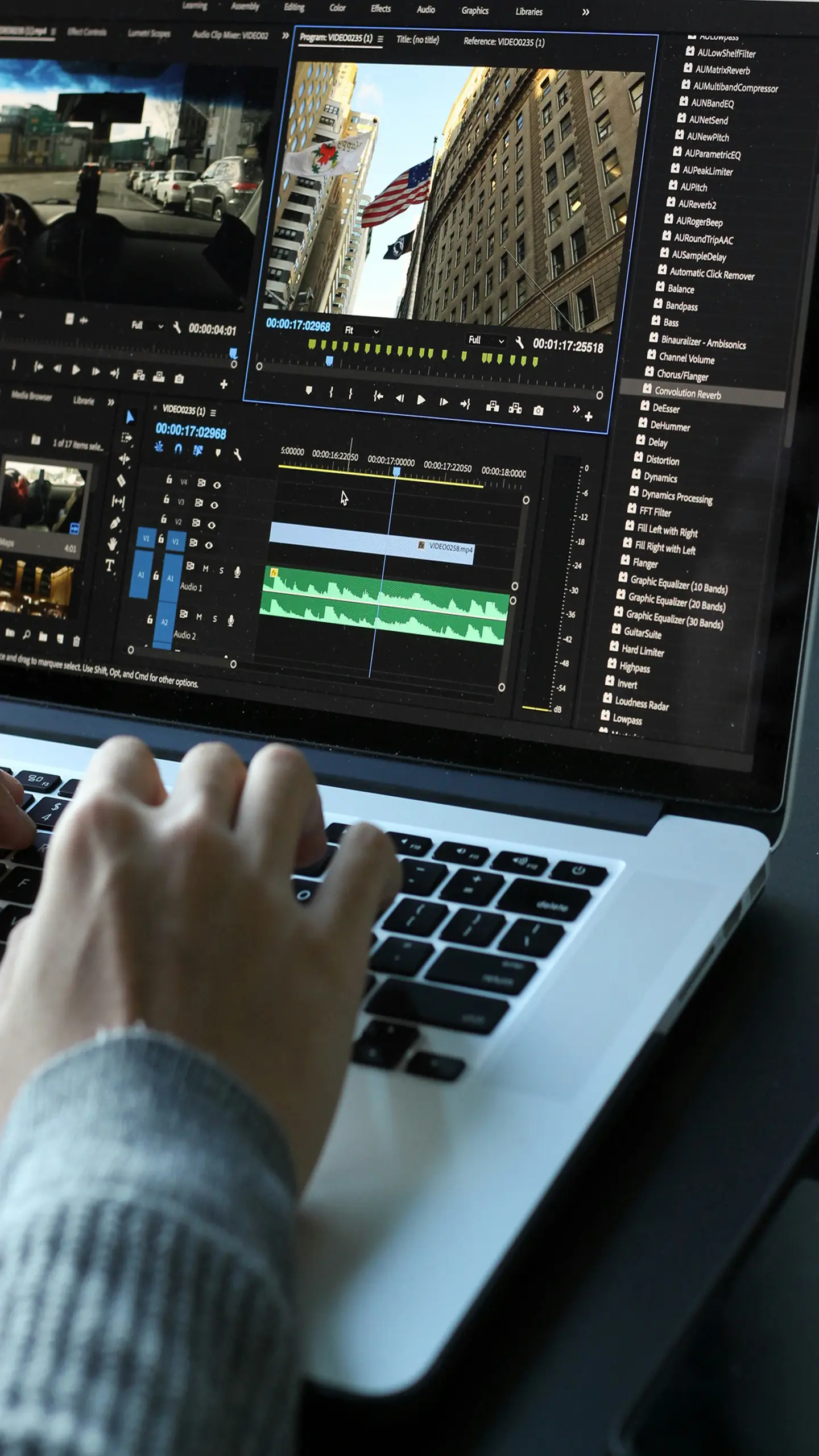
Why human-directed commercials still win
Despite the growing presence of AI in video production, human-directed commercials continue to outperform their automated counterparts when it comes to engagement, impact, and brand alignment. The reason is simple: emotion, intention, and strategy are not programmable. Commercials that move people, that spark curiosity, laughter, or trust, are born from creative vision, not code.
At the heart of every memorable commercial is a team of creatives who understand how to translate a brand’s values into a compelling narrative. Directors, producers, writers, and editors collaborate to craft stories with nuance and structure, elements that AI still fails to replicate convincingly.
This collaborative approach allows for experimentation, feedback, and fine-tuning based on cultural awareness and emotional intelligence. The result is content that feels alive, relevant, and resonant.
One of the key advantages of human-led storytelling is adaptability. In the fast-moving world of creative marketing, it’s not just about producing visuals, it’s about interpreting trends, responding to audience reactions, and evolving ideas mid-process.
Human creators can pivot in real time, embracing spontaneity, improvisation, and innovation. These are the same instincts that lead to iconic campaign moments, the unscripted expressions, bold visual styles, and emotional arcs that stay with viewers long after the ad ends.
Even the technical aspects of storytelling benefit from human leadership. Editors know when to linger on a moment for dramatic effect or cut quickly to build momentum. Cinematographers use light, shadow, and camera angles to build mood.
These are not just mechanical tasks, they’re artistic decisions grounded in experience. That’s why high-end SEO copywriting, film & TV production, and even branding & graphic design still require human input, no matter how sophisticated AI tools become.
Real-world case studies confirm the edge that human direction brings. Brands that have invested in emotionally intelligent, story-driven commercials consistently report higher retention, stronger brand recall, and better conversion rates. Whether launching a new product, building community trust, or driving a call-to-action, these results stem from campaigns crafted with intentionality, not generated in bulk by algorithms.
While AI can support the production process, it cannot lead it. Commercials that succeed in today’s saturated media landscape must be crafted with care, emotion, and purpose. That’s why brands with serious goals still trust people, not programs, to tell their stories.
Blending AI and human creativity
While AI struggles to replace human creativity outright, it can still play a valuable role when paired strategically with experienced creative teams. The most successful campaigns today don’t rely entirely on AI or entirely on humans, they blend both to optimize efficiency without compromising on storytelling quality. In fact, some of the most forward-thinking content creation workflows now treat AI as a creative assistant rather than a creative lead.
For example, AI can streamline the pre-production phase by helping draft rough scripts, generate visual references, or automate subtitle creation. These tasks, while important, don’t require high-level creativity or brand nuance, making them ideal candidates for automation.
This frees up time and budget for the human team to focus on what really matters: refining the narrative, shaping emotional beats, and creating work that truly connects. When used correctly, AI enhances rather than replaces.
AI can also support live-action production workflows by assisting with planning, data sorting, and even web development for campaigns that include a digital rollout. In commercial projects with tight deadlines or limited resources, teams often use AI to test visual styles or simulate edits before committing to a full shoot. This process improves collaboration and allows for more informed creative decisions, without handing over control to the machine.
In post-production, AI’s contributions are similarly useful but limited. Editors may use AI to organize footage, identify best takes, or automatically transcribe dialogue. However, the final cut, including timing, transitions, and emotional flow, is still best handled by a skilled human. Projects that require custom VFX compositing & animation, sound design, or precise motion control often demand a level of detail and artistry that AI hasn’t yet mastered.
From a marketing standpoint, blending AI and human input also enhances consistency. Human creators ensure the brand voice remains clear, while AI tools can help scale the message across platforms like websites, social media, and web hosting environments. Teams can also use AI insights to adapt content for A/B testing or personalize messaging, without compromising the story’s integrity.
Ultimately, the strongest approach isn’t about choosing between AI and humans. It’s about knowing when to automate, when to create, and when to collaborate. In a competitive landscape where authenticity matters, brands that use AI smartly, without losing their human edge, are the ones who stand out.
Bring your commercial to life with C&I Studios
At C&I Studios, we believe AI has an exciting role to play in the future of content, but it’s not a replacement for human storytelling. Commercial productions need more than automation; they need emotion, strategy, and creative intent. That’s where we come in.
We blend cutting-edge technology with real artistic vision to deliver work that connects, converts, and lasts. From concept to delivery, our team brings the experience and insight AI can’t replicate.
Take a look at our portfolio to see how we tell brand stories, explore our video production services, or see how we fold AI into a human led workflow with our AI video services. When you are ready to build something that connects, contact us.
Originally published August 26, 2026
Why Upwork and Fiverr Stopped Making Sense
Commercial & Brand
Why Upwork and Fiverr Stopped Making Sense

You needed a logo or a video or a whole website, and Fiverr made it look like a solved problem. Twenty dollars for a design. Fifty for an edit. It felt like beating the system.
The catch shows up later. Cheap creative work almost always gets paid for twice. Once when you order it, and again when you redo it.
The real problem with Upwork and Fiverr
Low prices are the whole product on those sites. They are the hook that gets you to click. But a rock bottom price is not a favor. It is a filter, and it filters for people whose only edge is being a little cheaper than the next few thousand sellers doing the identical thing.
When the entire pitch is lowest bid, nobody is building something they are proud of. They are closing the ticket and moving to the next one. That is the part that costs you, and it lands on your result, not just your invoice.
Bare minimum is the business model
Pay the floor price and you get the floor amount of effort. The literal words of the order and nothing past them. Nobody asked whether the video actually sells anything, whether the site loads on a phone, or whether a single thing you paid for moves a number for your business.
Why would they. They were paid to deliver a file, not an outcome. The moment it lands they are gone, and you are the one figuring out why it falls flat. Read enough Fiverr reviews and it is the same story on repeat. Done on paper, dead in real life.
You become the project manager
Then there is the day to day. You send a note and wait half a day because the person is asleep on the other side of the planet. You want a quick call and end up the one awake at 2am. You describe what you want across a language gap and a time gap and hope enough of it survives the trip.
That is not a partner. That is you managing a stranger who has no stake in how your project turns out. If you have ever gone hunting for Upwork alternatives at midnight, this is usually why.
AI already ate the commodity work
Here is what actually changed. The throwaway work those platforms were cheap for is the exact work AI now does in seconds. Template swaps. Copy paste jobs. Filler. If fast and cheap is the whole ask, you do not need a marketplace of low bidders anymore. The software does that part for nothing.
What software cannot hand you is judgment. Taste. Someone who reads the brief and says this will not work before a dollar goes into building it. That is the part gig sites were never built for, and it is the only part still worth paying a person to do.
What you actually get from an agency
Here is the part most people miss. The money you were about to hand a gig site usually buys you a real team instead. Sometimes for less.
At C&I Studios you talk to a producer who works your hours and speaks your language. There is a crew behind them, gear in the building, and an edit suite down the hall. The same people who plan the shoot are the ones who color the final cut. Brands like Sunbelt Rentals, Celsius, and Chaumet did not hand that work to the lowest bidder, and you get the same team they do.
| What matters | A cheap gig | C&I Studios |
|---|---|---|
| Who you deal with | A stranger behind a username | A producer and a full crew |
| When they reply | Whenever they wake up | Your hours, a US based team |
| What they optimize for | Closing the order | Whether the work performs |
| Revisions | Charged per change | Part of the process |
| After delivery | Gone | Still your team |
Even on a small budget you are dealing with people who are invested in whether it works, and who are still there the week after delivery. That is the difference between renting a stranger and hiring a team that treats the project like it is theirs.
Affordable is not the same as cheap
Upwork and Fiverr made sense in a world where disposable was the only affordable option. That world is gone. The commodity work got automated and the human work got easier to see. Paying a little for almost nothing was never a deal. It just wore the costume of one.
If you have been searching for an affordable video production company that will not vanish the moment the invoice clears, put the same money on people who care. See our work and judge the difference for yourself.
Frequently asked questions
Is Fiverr or Upwork worth it for business work?
For simple one off tasks they can work. For anything that has to actually perform, like a marketing video, a brand, or a website that converts, you are usually better off with a real agency. Gig workers are paid to finish a contract, not to make the result work for you.
What is a good alternative to Upwork and Fiverr?
Working directly with a creative agency or video production company like C&I Studios. You get a dedicated team, communication in your own time zone and language, and people who are invested in the outcome, often for the same budget or less.
Is it cheaper to hire a freelancer or an agency?
A freelancer usually has a lower sticker price. Agencies often cost the same or less once you count the redone work, the wasted time, and the projects that fail to deliver. Cheap up front is not the same as cheaper overall.
Why is Fiverr so cheap?
Because sellers compete globally on price and cut their rates to win the bid. Low prices pull in high volume and bare minimum effort, which is why quality and reliability are hit or miss.
Can a small business afford a real creative agency?
Yes. C&I Studios works with smaller budgets and scales the project to fit. You still get real people, real communication, and work that is built to perform.
Work with C&I Studios
If you are planning a project like this, our team can take it from concept to final delivery. Explore our video production services, browse our work to see how we tell brand stories, and get in touch when you are ready to start.
Originally published August 19, 2026
360 Video Production Ideas for Brands
Commercial & Brand
360 Video Production Ideas for Brands
360 video production sits in a strange spot in most brand marketing plans. It shows up on the “we should try this” list, gets kicked to next quarter, then reappears when a competitor drops an immersive campaign that racks up two million views on YouTube. Spherical content has been part of production conversations since the first consumer 360 rigs entered working budgets, and the pattern across the industry is consistent: brands that treat 360 as a novelty get novelty results, and brands that treat it as a legitimate storytelling format get real returns.
This post walks through twelve 360 video production ideas that tend to work well for brands in comparable categories. Each item includes the practical considerations that separate a viable 360 concept from a nice-looking demo reel piece. If you are budgeting a campaign and 360 keeps floating to the top of the shortlist, this should give you a framework for deciding which format actually fits.
A quick note before we dig in. 360 video is not a shortcut around good storytelling. If anything, the format punishes weak scripts and rewards strong ones. Every idea below assumes you already have a story worth telling. Format decisions come after that.
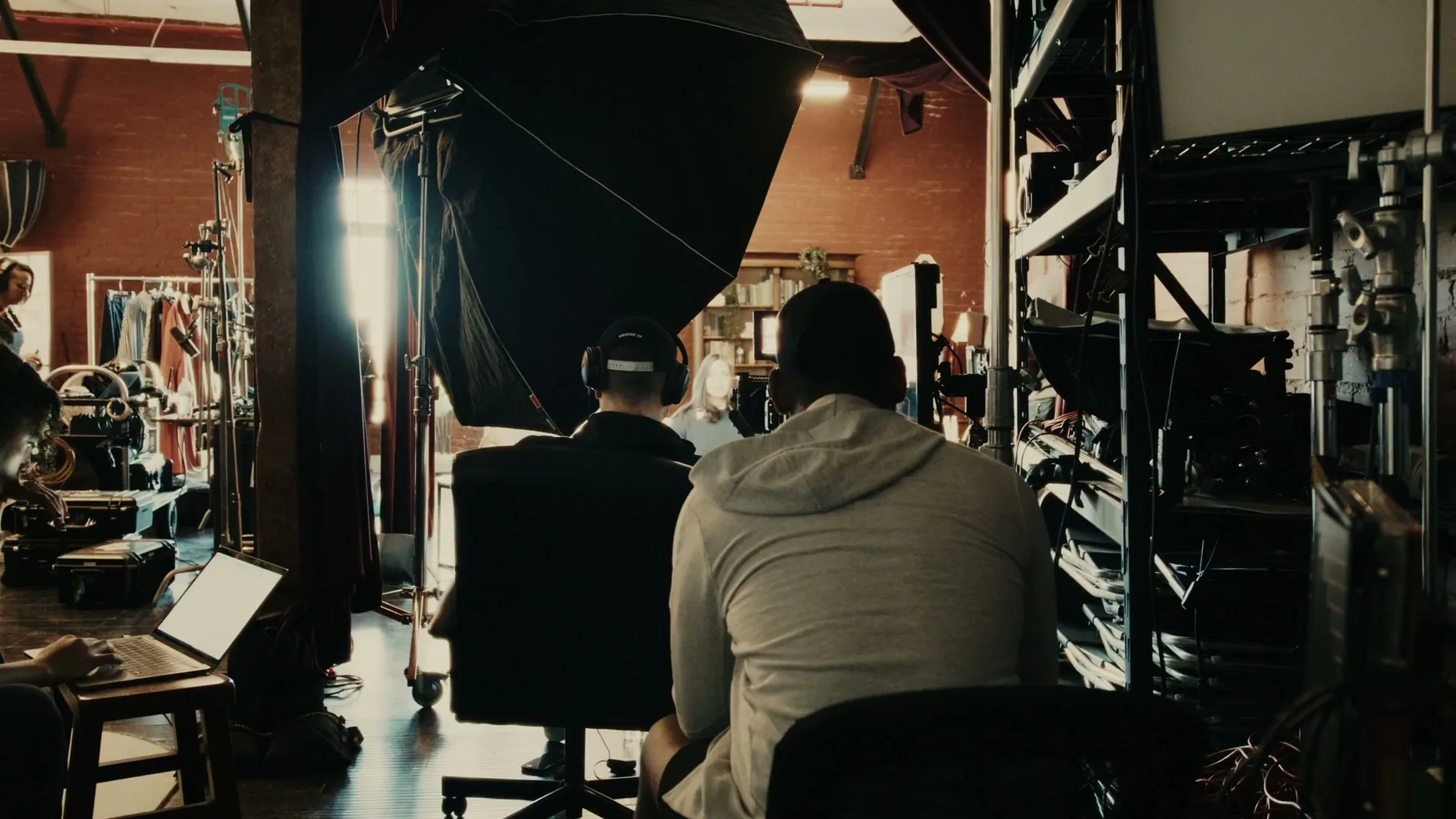
What Is 360 Video Production and Why It Works Differently
360 video production, sometimes called spherical or immersive video, captures a scene from every angle at once. Rather than a single camera pointing at a subject, an array of synchronized lenses records the entire environment around the rig. Viewers then choose where to look, either by dragging on a mobile screen, moving their phone through space, or turning their head inside a VR headset. That control over perspective is the whole point.
The production workflow is not the same as traditional video. Every crew position that would normally sit behind the camera has to hide or be dressed into the scene. Lighting cannot be rigged in front of the lens because there is no “in front.” Sound recording relies on ambisonic mics that capture directional audio to match wherever the viewer looks. Post production stitches multiple camera feeds into a single equirectangular file, corrects seams, then exports for whichever platform the client is targeting.
The technical shift changes how directors approach story. In flat video, the director controls what the audience sees at every frame. In 360, the director suggests where to look and trusts the viewer to follow. Blocking becomes choreography. Sound design becomes navigation. Editing becomes pacing rather than framing. If a production team treats 360 as flat video with a wider lens, the result feels like a fisheye tour. If they treat it as a distinct medium, the result feels like presence.
Twelve 360 Video Production Ideas Worth Shooting This Year
The concepts below are ordered roughly by production complexity, not by which one you should try first. The right idea depends on your category, your audience, and what your creative team is already good at. Our recommendation is to pick one that maps to a specific business objective, not the one that looks most technically impressive.
Immersive Product Launches
Product launches remain one of the strongest use cases for 360 video production. When a brand introduces something new, the audience wants to inspect it, and 360 gives them the closest thing to that experience without shipping units. Automotive launches were the early adopters, and the format has since moved into consumer electronics, luxury goods, and premium beverages.
The trick is to design the launch space around the camera position rather than dropping a 360 rig into a traditional set. The strongest launches build a circular set with the product on a rotating pedestal, control the lighting from below and above the sight line, and choreograph presenters or dancers to move around the product in ways that reward viewers who look in different directions. A well-planned launch can use a single continuous 360 shot with distinct chapters of choreography, and that one capture can feed months of paid social cutdowns. C&I Studios offers video production services that can plan launches from concept through delivery, and 360 has become a standard option to consider in modern launch planning.
Virtual Real Estate and Property Tours
Real estate was the earliest commercial category to embrace 360 video production, and for good reason. Buyers cannot visit every listing in person, and static photo galleries do not communicate the scale or flow of a property. A well-shot 360 walk-through solves both problems in ninety seconds.
The production choices matter more here than in most other categories. Cameras placed at eye level for a tall adult look wrong to a viewer who expects human perspective. Rigs placed too close to reflective surfaces produce ghosting that is difficult to fix in post. Ambient sound, ideally recorded on location with directional mics, sells the presence more than any narration does. C&I Studios provides film production services capable of covering tours for both residential and commercial properties, and the pattern that predicts a good result is planning the camera path before shoot day rather than freestyling on set.
Live Concert and Music Festival Coverage
Live music is where 360 video production really earns its budget. The energy of a crowd, the scale of a stage design, the intimacy of standing near a performer, none of that translates to a fixed rectangular frame. A 360 capture of a headline set gives fans who missed the show something closer to being there, and it gives sponsors a piece of content that lives well beyond the event weekend.
The main production challenge is rig placement. A single fixed 360 camera in a fixed spot gives one perspective for the entire show. Most concert 360 productions handled by a music video production team use two or three synchronized rigs, one on stage right, one in the pit, and one in the crowd. Editing between those positions gives the viewer variety while preserving the immersive feel. Audio is captured with ambisonics on stage and stereo from the sound board, then mixed together in post.
Behind-the-Scenes Studio Walk-Throughs
Behind-the-scenes content is one of the most reused categories on brand YouTube channels, and 360 video production turns it into something worth clicking. Viewers get to look around a working set, notice the crew hustling to reset a lighting rig, spot the client rep sitting in video village, and feel the actual pace of a shoot day. That transparency does more for a brand’s creative credibility than any polished sizzle reel.
A large sound-treated studio like our Los Angeles stage is well suited to hosting these shoots. A large facility with multiple stages and sound treatment can give clients the option to include a 360 tour of the space as part of their case study package. A studio rentals operation can handle the logistics for productions that want to shoot both flat and 360 coverage on the same day, and the shared crew usually keeps the day rate reasonable.
Automotive Showroom Experiences
Auto brands know that 360 video production sells cars for buyers who cannot walk into a dealership. Sitting in the driver’s seat, walking around the exterior, looking at cabin materials up close, these are the moments that push a buyer from consideration to test drive. Manufacturers with premium models have been leaning into immersive content in their launch cycles for the last three years.
The challenge in automotive 360 is lighting. Cars are reflective, cabins are dark, and mixing daylight balance with tungsten trim lights produces color shifts that are hard to correct in post. Cars are typically best shot in controlled studio environments with color-corrected LED panels rather than on location. The cabin coverage is done separately with a smaller rig positioned in the driver’s seat. Post stitching joins the exterior and interior into a single navigable experience.
Corporate Campus and Office Tours
Corporate recruiting videos have moved past the montage of high-fives and standing desks. Candidates want to see the actual space, the actual teams, the actual pace of work. A 360 video production tour of a headquarters or a regional office answers those questions in ways that a talking head interview cannot. Recruiting teams that have added immersive tours report meaningful drops in candidate no-shows after adding immersive office tours to the application flow.
A corporate video production team is well positioned to approach these projects as documentary work rather than promotional content. The tour follows a real employee through a real day, the camera captures the office as it actually looks, and the edit does not hide the awkward corners. That authenticity is what makes the format work for HR use cases, and it is worth resisting the urge to stage the tour to look busier than the office actually is.
Fitness and Training Content
Fitness apps and connected equipment brands have adopted 360 video production for a specific reason: the format lets subscribers feel like they are in a class rather than watching one. Peloton and its competitors have experimented with 360 rides. Boutique studios have used the format to promote signature classes to remote members. The engagement lift on immersive fitness content, based on published platform data, is consistent enough to justify the added production cost.
Shooting fitness in 360 requires an instructor who can perform in the round. Traditional fitness videos have a clear front where the instructor faces the camera. In 360, the instructor is surrounded by potential viewer perspectives. The best fitness shoots rotate the instructor’s orientation throughout the class so every viewer angle gets direct engagement at some point during the session.
Sports and Stadium Immersion
Broadcast sports rights limit what most brands can do with league content, but the format opens up for stadium-level immersive experiences, minor league coverage, and youth sports. A 360 view from a pitcher’s mound, a driver’s cockpit, or a defensive lineman’s stance is content that fans will click on every time. Sponsors get logo real estate that reads well from any viewer angle, which is a rare property in modern advertising formats.
Combat sports, motorsports, and youth basketball are all strong fits for the format. The rigs go on tripods for boxing, boom mounts for basketball, and helmet cameras for motorsports. Post production has to smooth out the motion for viewer comfort, because 360 content that induces nausea is content that gets closed within ten seconds. A careful post team stabilizes aggressively and tests every cut in a headset before delivery.
Restaurant and Hospitality Tours
Restaurant marketing is a category where 360 video production has not been fully explored, and we think that gap is opportunity. Diners choosing a reservation want to see the room, the kitchen theater, the bar, and the outdoor space. A ninety-second 360 tour of a flagship location does more for booking rates than a Michelin-quality food photo. Hotel brands have been quicker to adopt the format for suite and amenity tours, and the results they report line up with what has been observed for restaurant brands.
The production requirements are lighter than most 360 categories. Restaurants and hotels have controlled lighting, no moving vehicles, and predictable acoustics. A full property tour can typically be shot in one day with a two-person crew, then delivered as both a 360 master and a set of flat cutdowns for social. It is an efficient use of a shoot day, and the delivery bundle covers most of the property’s video needs for the following twelve months.
Fashion Runway and Retail Coverage
Fashion houses have used 360 video production at runway shows for almost a decade, but the format has evolved past the front-row-view novelty. Contemporary fashion 360 content is shot from multiple positions around the runway, edited into a curated experience that gives the viewer both the model’s perspective and the audience’s. Backstage coverage in 360 has also grown, giving brand followers access to a space they used to be locked out of.
Retail 360 is a newer category. Flagship stores and pop-up activations are using immersive video to promote in-store experiences to shoppers who might not visit in person. For retail brands, a strong creative services approach starts with the space itself: the format works best when the store design has visual density worth exploring. Sparse, minimalist retail spaces do not photograph as interestingly in 360 as they do in flat coverage.
Nonprofit and Cause Storytelling
Nonprofit fundraising leans on story, and 360 video production gives donors a level of presence in the field that flat video cannot match. A 360 tour of a refugee camp, a rural clinic, a disaster response site, or an environmental restoration project puts the donor inside the situation. The ethical considerations are real, and the production team must work with the nonprofit’s field team on consent and dignity, but the fundraising impact when the format is used responsibly is significant.
Our documentary film production group would approach nonprofit 360 content the same way we approach every documentary: story first. The story comes first, the format serves the story, and the production team stays out of the way. Nonprofits that have invested in the format report it becoming a permanent part of their annual campaign strategy, especially for major donor cultivation events where headsets can be handed out and used in the room.
Trade Show and Conference Booth Experiences
Trade shows are expensive, and most attendees only visit a fraction of the exhibit floor. 360 video production gives exhibitors a way to extend the booth experience to buyers who could not attend, to media covering the show, and to internal stakeholders who need to see the activation. Sponsors have started asking for 360 capture as a standard part of trade show budgets, and vendors that can deliver both flat and immersive coverage on the same day have an advantage on the bid.
Booth 360 works best when the space is designed with the camera position in mind. Empty booths photograph as empty, so brands invest in demos, live product interactions, and staff who are trained to work in the round. An event photography team is well suited to handling the flat coverage on trade show shoots, and adding a 360 camera to the same crew is an efficient upgrade rather than a separate production line item.
Production Approach. What Changes When You Shoot in 360
Every crew member on a 360 shoot has to unlearn habits. There is no boom position that stays out of frame. There is no video village on set. Lights cannot fly overhead unless they are dressed to fit the scene. The director has to work from a monitor tent placed off-camera, watching a rectangular preview of a spherical capture that only tells part of the story.
Rig selection matters more than gear enthusiasts admit. High resolution is important because 360 video is sliced by the viewer’s field of view, so an 8K master delivers roughly 2K to whatever section the viewer is looking at. Frame rate matters for motion comfort, which is why 60fps has become standard for anything with movement. Stitching software has improved to the point that most modern rigs produce publish-ready files with minimal manual correction, but complex shoots still benefit from a stitcher on the post team.
Audio in 360 is where a lot of otherwise strong productions fall apart. Ambisonic microphones capture directional sound, so when the viewer looks left, the audio appears to come from the left. Skipping ambisonic capture in favor of a standard stereo mix breaks the illusion in a way that is hard to describe but easy to feel. Ambisonic mixing is specialist work; it draws on the same discipline that audio engineering services teams apply to broadcast projects, and the difference in viewer feedback is measurable.
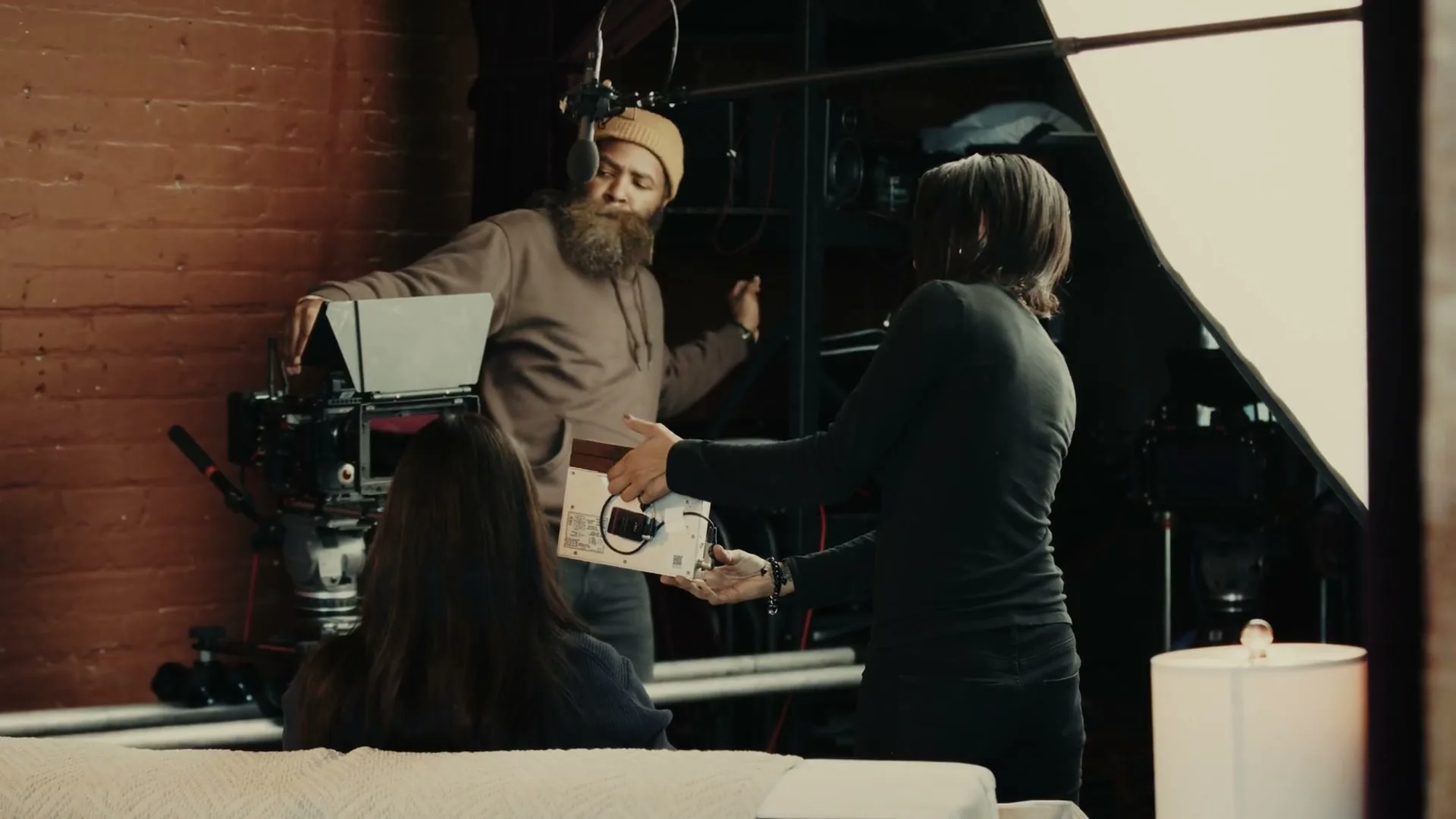
Common 360 Video Production Mistakes
Stalled 360 projects tend to share the same failure patterns. First, brands assume that a wider capture solves a weak story. It does not. A boring 360 video production is more boring than a boring flat video, because the viewer has to do the work of looking around, and asking a viewer to work harder for a story that does not reward the effort is a fast way to lose them.
Second, brands underinvest in post production. Stitching, color correction, ambisonic mixing, headset testing, and delivery to multiple platforms takes real time. Cutting the post budget produces a video that stitches poorly on seams, has inconsistent color across the frame, and gives viewers motion sickness in the first thirty seconds. Budget roughly the same post hours for a 360 project as for a broadcast commercial; that is a reasonable ratio for post production services on comparable finishing work, and cutting it is how seams, color shifts, and motion sickness make it to publish.
Third, brands publish 360 content without a distribution plan. A great 360 video that lives on a homepage that nobody visits is a waste. The format works when it is embedded in a campaign that drives traffic to the experience. The format earns its budget when paired with a social cutdown strategy, a paid media plan, and a retargeting flow that pulls viewers back for the full immersive experience after they engage with the flat version.
How to Brief a 360 Video Production Team
The best 360 briefs answer three questions clearly. What is the viewer supposed to feel, what should they remember, and where will they see this content. Vague briefs produce vague videos, and the immersive format punishes vagueness more than flat video does. If a brief cannot answer those three questions in a single sentence each, the project is not ready to move into pre-production.
An in-person kickoff for 360 projects, when the client team is available, is worthwhile because the shorthand that develops in a working session shortens the feedback cycles later. The kickoff covers reference gathering, competitive review, technical spec confirmation, distribution plan, and shot list drafting. Remote clients get the same kickoff over video call with pre-sent reference decks, and the outcomes tend to be comparable.
The technical spec conversation catches problems early. Delivery to Meta Quest headsets requires different encoding than delivery to YouTube 360, which requires different encoding than delivery to a WebGL player embedded on a landing page. Getting those specs locked before the shoot avoids re-encoding delays later. A delivery-spec checklist walked through at kickoff, a standard practice that content creation services teams should apply on every project, is what prevents surprise post-production budgets.
Measuring ROI on 360 Video Content
The measurement problem is what stops a lot of brands from investing more in 360 video production. Traditional video analytics were built for rectangular content. View counts, view-through rates, completion rates, and click-through rates all apply to 360 content, but they miss what makes the format valuable. If you measure a 360 video the same way you measure a fifteen-second pre-roll, the 360 video will always look like a worse investment on paper.
The metrics that matter for immersive content include heat maps of viewer attention, average look-around time, headset session duration, and brand recall lift measured through post-view surveys. YouTube surfaces some of this data in its analytics dashboard. Meta provides more detailed engagement metrics for Facebook and Instagram 360 content. Industry bodies such as the Interactive Advertising Bureau publish measurement guidance for immersive media that is worth referencing when building a measurement plan.
We recommend that clients treat 360 video production as a brand awareness and consideration lever rather than a direct response tool. The category performs on recall and preference metrics, not on immediate conversion, and setting the wrong KPI at the start of a campaign guarantees disappointment at the end. A capable social media marketing services team can help brands build measurement frameworks that fit the format rather than forcing the format into a legacy attribution model.
Work with C&I Studios
If you are planning a project like this, our team can take it from concept to final delivery. Explore our video production services, browse our work to see how we tell brand stories, and get in touch when you are ready to start.
Originally published July 3, 2026
New York Video Production: Inside the Knicks Parade
Post & VFX
New York Video Production. Inside the Knicks Parade
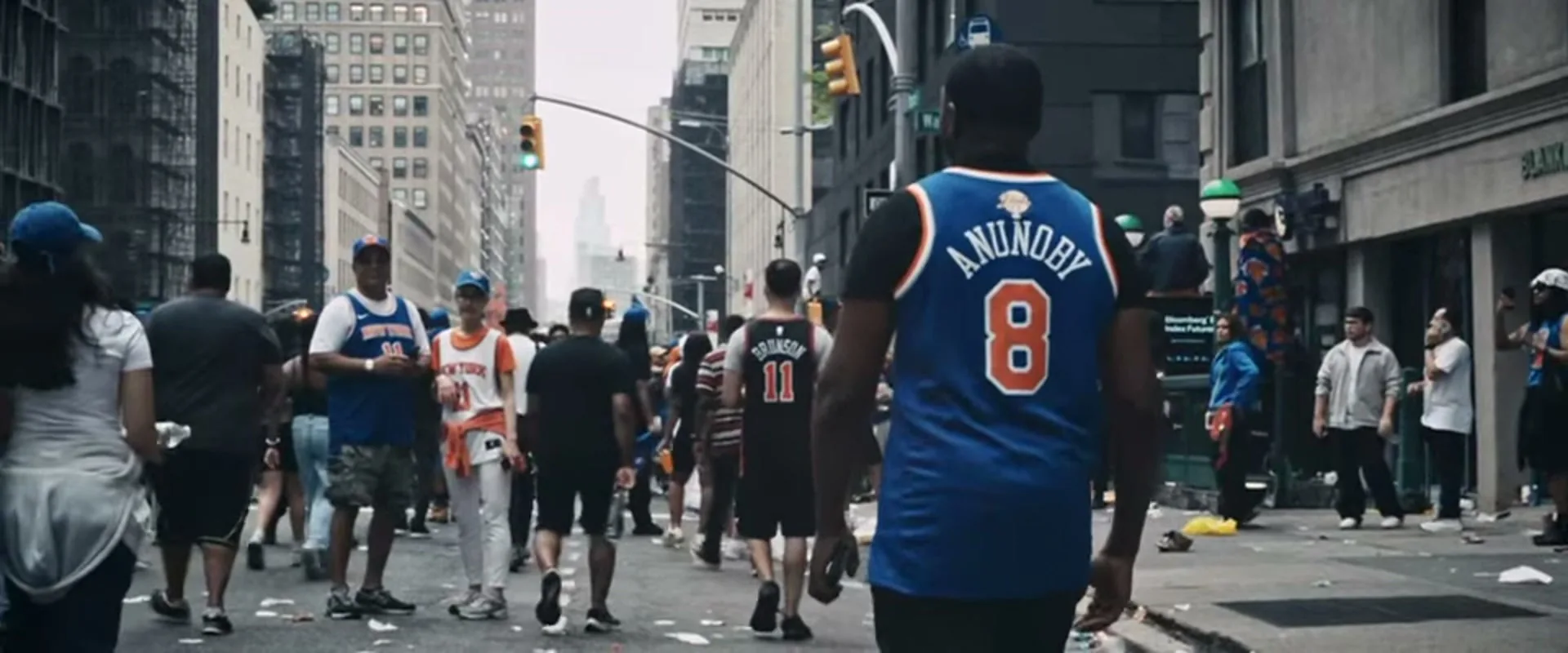
The Knicks won their first championship since 1973, and on June 18 the city threw them a parade up the Canyon of Heroes. Our lead editor, Mike Kruger, was there. Not on assignment. Mike lives in New York and he is a Knicks fan, so he went the same way a couple million other people went: for himself. He brought a camera because that is what he does, grabbed a few minutes of the day, and cut it together for fun.
What came back is a small, useful lesson in New York video production. Not because it is some grand statement, but because it shows what a professional editor does to ordinary footage even when nobody is paying for it. The clip is a social post. Two minutes, made for a feed. The reason it is worth a closer look is the instinct behind the cut, not the day it captured. We are putting it on the blog for the same reason we would walk a client through a rough cut: it is the clearest way to show what we actually do for a living.
Here is the post. Judge the footage against any other parade clip from that day, then notice what the edit is doing underneath it.
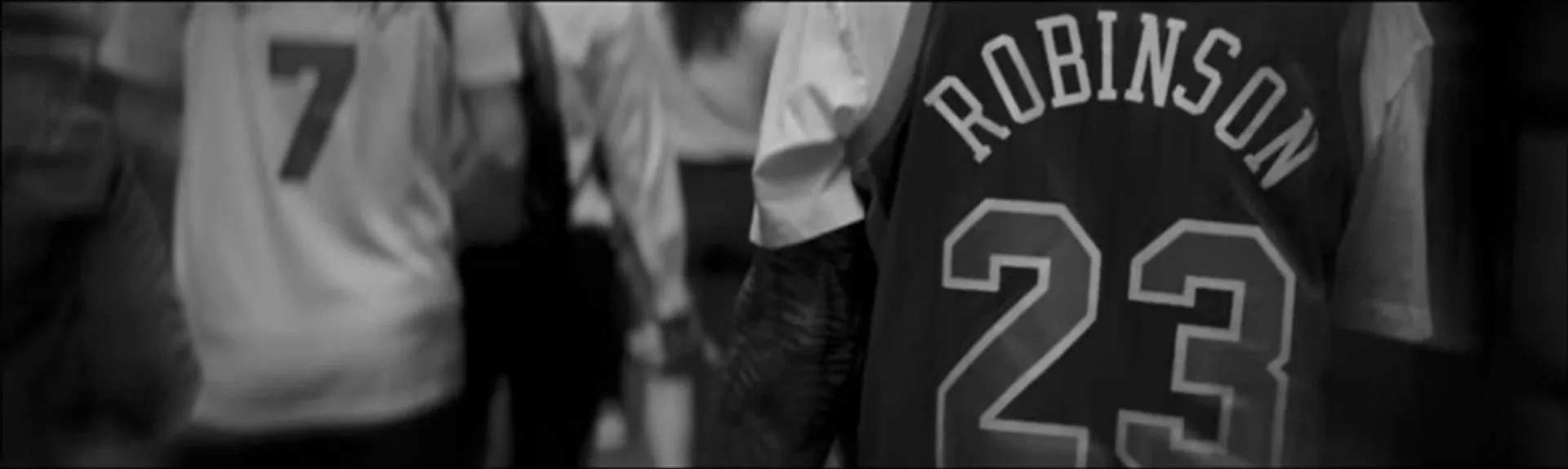
Personal Footage. Personal Instinct.
Let us be honest about what this is. Mike did not produce a documentary. He did not roll up with a crew, a permit, and a shot list. He stood in a crowd with one camera and shot what caught his eye, the way anyone with a phone did that morning. The footage is personal, not commissioned.
The difference shows up later, in the part nobody watching ever sees. Mike is a professional editor. He doesn’t just switch off the way he approaches real work, so a personal parade video got the exact treatment a paying client gets: deliberate pacing, a real color grade, sound that was actually mixed instead of left raw. That is the whole story here. Same instinct, no brief. A trained editor cannot un-know how to build a cut, and that habit is the thing worth selling.
We could dress this up as a brand film and most people would not catch the difference. We are choosing not to, because the honest version is the more useful one. A studio that oversells a phone video is a studio that will oversell your project too. What actually happened is simpler and better: a professional spent an afternoon as a fan, then could not resist doing the job right. If you want to know how we treat the work you pay for, watch what we do with the work nobody asked us to make.
The Edit Is the Job, the Camera Is Not
Most people think production is the camera. It is not. Anyone standing on Broadway that day captured the parade. Phones, point-and-shoots, a few thousand stories posted within the hour. The footage was everywhere and most of it was forgettable, because footage is raw material, not a finished thing.
The work happens after, in post-production, where a pile of clips becomes something with a shape. Mike came home with roughly 110 minutes of usable footage. The finished post runs about 110 seconds. That ratio, 60 to 1, is the job. Deciding what to throw away is harder and more valuable than deciding what to shoot, and it is exactly the skill that does not turn off when the shoot is personal.
Why a Fan in the Crowd Got Shots a Crew Might Miss
There is a real production lesson buried in the fact that this was personal. A hired crew on a parade route spends half its attention on logistics: where to legally stand, how to move a million people deep, when to wrap. A fan who actually cares about the day is doing something a call sheet cannot buy. He is anticipating. Mike knew which way a Knicks crowd would surge, which corner would catch the falling ticker tape, and which kid climbing a subway railing was about to throw his arms up, because he felt the day the way the crowd felt it.
That instinct is the part of New York video production you cannot fake or fly in. We watch it play out on event work constantly. The shooters who catch the moment before the moment are the ones who understand the room, not the ones with the longest gear list. A parade has exactly one take. You either read it in real time or you go home with three hours of the back of someone’s head. Proximity and genuine attention beat a bigger rig almost every time, and the footage in this post is the proof.
What the C&I Treatment Actually Means
When we say Mike gave it the professional treatment, we mean a specific set of decisions, the same ones we make on brand work every week.
The cut was built in DaVinci Resolve, the same platform we finish client films on. The first pass threw out everything that was merely nice. A parade hands you endless pretty shots, and pretty is the enemy of a two minute piece. What survived was arranged so the energy climbs the way the day did, from the quiet of the side streets to the noise on Broadway. Pacing follows the crowd, not a metronome. When the sound builds, the cuts tighten. When the piece needs air, a shot holds a beat past comfortable so the next one lands.
Watch the first five seconds and the discipline is right there. A lazy edit opens on the biggest, loudest shot it has, spends its best moment immediately, and then has nowhere to go. Mike opens quiet and lets the day earn its volume, so by the time the color and the crowd arrive, you have somewhere to land. That restraint is learned. It is the difference between a clip that peaks in the thumbnail and a piece that holds for two full minutes, and it is the same call we make on every paid New York video production we finish.
The look is a deliberate color grading choice, not a filter. The cut moves between hard black and white and bursts of Knicks blue and orange. Black and white pulls a frame down to light, texture, and feeling. Color comes back only where it earns the moment, so the team colors hit harder for having been withheld. Then there is the sound design, which does half the work nobody credits. The mix leans on the real audio of the day, horns and chants and the low roar of a crowd, shaped to rise and fall with the picture. An audience feels a cut with its ears before its eyes register it. None of that is luck, and none of it is visible. That invisible craft is the entire reason post-production exists.
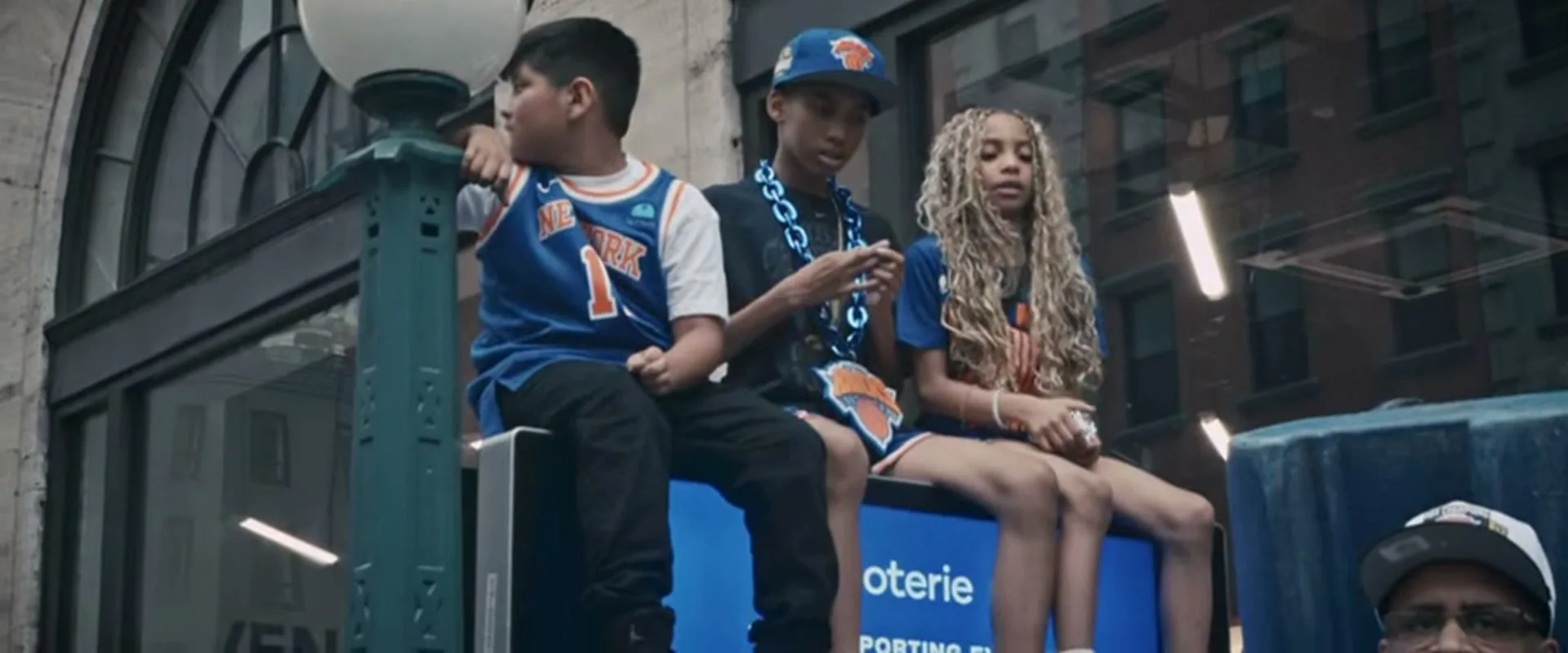
Footage Versus a Finished Cut
If you take one thing from this, take this table. It is the difference between the clips on everyone’s phone and the post Mike actually published.
| Element | Raw footage | After the edit |
|---|---|---|
| Length | 110 minutes | 110 seconds |
| Structure | A pile of moments | A build with a payoff |
| Color | Mixed, inconsistent | Black and white with chosen color accents |
| Sound | Raw and peaky | Mixed to move with the picture |
| Result | Scrolled past | Watched to the end |
Every row is a person making a decision. That is the work, whether the subject is a parade, a commercial, or a documentary.
None of this required a celebrity budget. It required someone who knew what to keep and what to throw away, plus the patience to grade and mix instead of exporting the first assembly and calling it done. That unglamorous middle is the part of New York video production that decides whether anyone finishes the video, and it is almost never the line a brand pays the most attention to on a quote. It should be. The shoot buys you raw material. The edit is what people actually watch, share, and remember, and it is the only stage where a mediocre day can still become a strong piece.
The Same Discipline, Scaled to Client Work
Strip the Knicks out of it and you are looking at our actual process. We define the story and the deliverables first, because the edit should be designed before a single frame is shot. We capture against that target instead of hoping the coverage adds up later. Then the real value gets added in finishing: edit, color, sound, graphics, and delivery in every format a campaign needs, from a hero cut down to a feed of social pieces.
Mike got to skip the planning because he was a fan with a camera, not a producer on a clock. He could afford to shoot loose and find the story in the edit because the stakes were a fun post. On paid New York video production we do not gamble like that. We plan the cut so the camera only ever captures what the final piece actually needs, which is how a budget stays honest and a deadline stays real. The instinct that shaped a two minute parade clip is the same one that shapes a national campaign. The only thing that changes is the brief and the budget behind it.
New York Video Production, On or Off the Clock
Mike shot this off the clock, but the instinct is the same one we sell. New York video production is a specific discipline. The city does not give you control, it gives you energy, and the trade only pays off if the person holding the camera and the person cutting it know what to do with both. Light changes block to block. Sound is never clean. Crowds, permits, and closures turn a simple move into a problem. Knowing how the city actually behaves is half the job, and it is not something you can brief into a stranger in a morning.
People ask what a piece like this costs. Off the clock it cost Mike an afternoon and a memory card. On the clock, the variables are crew size, shoot days, how much finishing the edit needs, and how many deliverables come out the other end. We break the real numbers down in our guide to video production in New York City. What does not change is where the value sits. You can spend a fortune on a shoot and lose it in a weak edit, or shoot lean and win in post-production. For most of our clients, planning the edit before the shoot is the highest return decision in the budget. We also handle the social media side so the same story shows up natively wherever the audience already is.
The Knicks post is the smallest possible version of all of it. One person, one camera, one afternoon, and a trained eye in the edit. Scale that up with a crew, a plan, and a real finishing schedule and you have what New York video production looks like when a brand is footing the bill. The instinct does not change. The production around it does.
Frequently Asked Questions
Was this a C&I production?
No. Mike Kruger is our lead editor, he lives in New York, and he went to the parade as a fan on his own time. He shot it and cut it for fun. We are sharing it because it is a clean example of what professional editing instinct does to personal footage.
Can you edit footage we already shot ourselves?
Yes. A large share of our post-production work is client shot material that needs a real edit, color, and sound to become finished. We do not need to have been on the shoot to make it land.
How long does a short cut like this take?
A tight two minute piece from a single shoot usually takes a few days of finishing once the footage is logged. The length of the cut is not the length of the work. Color and sound are where the hours go.
Do you only work in New York?
No. We run New York video production out of our New York office and operate a studio in Los Angeles, and we produce on location anywhere a project calls for it.
What does New York video production actually include?
For us it is the whole arc: planning and pre-production, the shoot with the right crew and gear, and the finishing most people forget is even happening. A complete New York video production hands you delivery ready files in every format you need, not a drive of clips you now have to figure out yourself.
Why black and white for a celebration?
Black and white pushes emotion to the front and makes the returns of team color hit harder. It fit this story. The right look always follows the feeling you want the viewer to leave with.
Sources: NBA.com parade coverage and the DaVinci Resolve finishing platform.
Work with C&I Studios
If you are planning a project like this, our team can take it from concept to final delivery. Explore our post-production services, browse our work to see how we tell brand stories, and get in touch when you are ready to start.
Originally published June 20, 2026
Uncreative Radio Ptah Quammie EP: 207
UNCREATIVE RADIO
PTAH QUAMMIE | EP 7
TV-MA | 32 min
MORE EPISODES
Joshua: "How did you get into nude photography?"
Ptah: "I just asked to..."
We’re on Uncreative Radio with Ptah Quammie, a renowned South Florida fashion photographer!
Ptah Quammie has made a big name for himself among photographers, fashionistas, models, and star-studded personalities. His unique style of photography is a transformative experience that melds beauty with science fiction and fantasy, making his work absolutely one-of-a-kind. From fashion photography, he moved into nude photography, which is his true bread and butter. Unlike most, he uses nude photography as a gateway to metamorphosis. If you need help wrapping your head around it, check out his Instagram @artcrazyphotog.
This. Is. Quarantine vs. Routine with Ptah Quammie.
In this episode of Uncreative Radio with Ptah Quammie, a.k.a. “Art Crazy,” we’re taking a trip inside coronavirus happenings to share some unique insights on how you can generate a dollar during these uncertain times.
It goes without saying, but pretty much everyone in the world is in a similar predicament. We’re unemployed. We’re isolated. And we’re bored. Well, not all of us are bored. Not exactly.
Despite our professions, we’re all being forced to think outside of the box to keep our businesses afloat. This holds especially true to those of us in the creative industry. We’re having to be more resourceful during this economic lull, offering services and tapping into overlooked avenues we would not normally pursue. In a way, this is a silver lining. Innovation is a healthy practice in business management and development… Just so long as you know how and when to pivot.
In this episode of Uncreative Radio, Ptah Quammie is sharing the unique ways he’s navigating the coronavirus crisis, as well as ways in which you can turn a dollar in the absence of your usual workload.
Tune in this Thursday, April 9th at 6PM for a lesson on coronavirus business management with keynote speaker, Ptah Quammie. Class is in session.
For more original series and inspiring videos, check out our Youtube Channel. Here, you can stay up to date on the latest happenings inside the studio and check out art you won’t find any place else.
#UNCREATIVERADIO
We Live. We Speak. We Create.
Disclaimer: The views and opinions expressed on this radio show and/or podcast are solely those of the show’s hosts, producers and contributors. These views and opinions do not necessarily represent those of C&I an idea agency, nor C&I Studios Inc., and/or any/all contributors to this website.
Related Reading
Uncreative Radio Leo Brooks EP: 206
UNCREATIVE RADIO
LEO BROOKS | EP 6
TV-MA | 17 min
MORE EPISODES
"So, what had happened was... I started touring with Lauren Hill after highschool."
We’re on Uncreative Radio with Leo Brooks, a 2x Grammy Award Winning Country Music Artist!
Leo Brooks is a rare breed in country music. Why you ask? Well, we don’t often meet black country music artists… Nonetheless, those with two Grammy Awards under their belt buckle. So, yeah, this is quite the treat!
In fact, the last black guy we remember crossing over into the country music genre must’ve been Nelly. But that was just a phase, so it doesn’t fully count. Leo Brooks, on the other hand, is the real deal and country music is his life.
This is a special episode of Uncreative Radio. Rather than delve into political, social, and environmental issues, we’re listening to the sounds that Leo Brooks lives by. So, if you came here for coronavirus banter, you’ll be disappointed.
Leo Brooks’ roots tie back to Honduras, where both his parents grew up. Apparently, Country Music has a strong influence in Honduras (surprise, surprise), which explains Leo Brooks’ natural attachment to the genre.
After speaking with Leo for a bit it became clear that he was destined for the Country Music stage. Do you believe in fatalism? It’s kind of hard not to after listening to Leo’s story. But let’s remove fatalism from the equation for just a moment. Let’s chalk up Leo’s many successes to sheer determination, talent, and perseverance (which are most certainly key ingredients in his rise to fame). What are the chances he would have become just another name in the crowd? What is the possibility that he was destined for great things elsewhere?
Of course, we’ll never know, but speculation is fun, so humor us…
In the absence of fatalism, one must question if they’re on the right path…
It’s easy to look back on one’s life and criticize decisions that were made. But in the present, we’re not offered such a luxury. **Curse you linear timeline!** So, how do we know we’re walking the right path? Is it a genetic driver — some inherent chemical reaction assuring us to continue forward? Or is it something less subtle? Perhaps it’s pure chance?… But where’s the fun in that…
If you’re on the path and want to know if it’s the right path then tune-in for Uncreative Radio with Leo Brooks. The insights he’s sharing from his journey may be the guiding light you’ve needed all along.
If you want to keep up with Leo Brooks and his outstanding career, then follow him on Instagram at @leo-brooks. Oh, and if you’re eager to learn more about navigating the music industry, then check out Uncreative Radio with Miami Music Mogul, Abebe Lewis!
#UNCREATIVERADIO
We Live. We Speak. We Create.
Disclaimer: The views and opinions expressed on this radio show and/or podcast are solely those of the show’s hosts, producers and contributors. These views and opinions do not necessarily represent those of C&I an idea agency, nor C&I Studios Inc., and/or any/all contributors to this website.
Related Reading
Uncreative Radio Aniela McGuinness EP: 205
UNCREATIVE RADIO
ANIELA MCGUINNESS | EP 5
TV-MA | 26 min
MORE EPISODES
Fuck your happy ending. They're just as fake as the American Dream.
We’re on Uncreative Radio with Aniela McGuinness!
Aniela McGuinness is a successful actor turned writer and she’s here to tell us why your “happy endings” are crap.
Aniela McGuinness started her career in show business at C&I Studios. Before moving in front of the camera she was a guru behind the scenes. In fact, after many successful years in Hollywood, her career has come full circle. She is currently behind the scenes on Broadway, taking her hard-earned skills to all new heights. You can keep up with Aniela and learn more about her exciting career by following @anielamcg on Instagram.
On this episode of Uncreative Radio with Aniela McGuinness, Josh Miller and Aniela are reconnecting…for the first time since she quit!
Both Josh and Aniela share a passion for film. But not the same passion that you or I would share. Theirs is grounded in many tireless nights, constant travel, annoyances, difficult people, and… a thought-provoking final product. Whereas, ours is likely grounded on the couch in front of an HBO originals series.
There is this notion that “life imitates arts” — that an event in the real world is an expression of creative work. Perhaps the phrase is referring to every other type of art except for American media, because in the American film industry most every story has a happy ending, but in real life that is most certainly not the case.
We are not bound to the happy ending syndrome. We like telling real stories about real people. Take our most recent short film, for instance. Christmas Eve has a rich ending but it is most certainly not a happy ending. It’s real, it’s truthful, and it’s the right ending for the story we were telling.
Aniela McGuinness is also skeptical of happy endings. What are they leaving out? We suppose, that if you took someone’s entire life and removed all of the hardships, shameful moments, anxieties and so one, you may have a beautiful story with a happy ending. But that’s just a snapshot of an entire life. It’s a fallacy. Is it even worth telling a story the omits the true human condition?
Perhaps this is why Aniela McGuinness left film behind for Broadway… In this episode of Uncreative Radio, we’re digging deep into storytelling and the people who create the fables of our time. Why do the people who write a lot about happy endings rarely experience them for themselves? Why do we cling to happiness when the reality of it rarely exists? And why, oh why do people think acting is a glamourous profession?
You’ve got questions. We’ve got answers. Tune in on Thursday, March 5 at 6 PM ET for Uncreative Radio with Aniela McGuinness to find out what the hell is going on Hollywood.
#UNCREATIVERADIO
We Live. We Speak. We Create.
Disclaimer: The views and opinions expressed on this radio show and/or podcast are solely those of the show’s hosts, producers and contributors. These views and opinions do not necessarily represent those of C&I an idea agency, nor C&I Studios Inc., and/or any/all contributors to this website.
Related Reading
Season 2 Episode 4 “Analyzing The Hustle”
UNCREATIVE RADIO
DJ FLY GUY | EP 4
TV-MA | 31 min
MORE EPISODES
Analyzing The Hustle: Why You Either Got It Or You Don't
What is the hustle? Is it a 9 to 5? A bi-weekly paycheck? Or is it a modern-day hunter-gathering type of game?
We’re on Uncreative Radio with DJ Fly Guy, a.k.a Rashaan Alexander, analyzing the hustle.
“The hustle” is often characterized by the decade. It has changed colors many times throughout American history. Most often, it is not cast in the best light. But today’s day and age has introduced a new mindset. The hustle isn’t bootlegging, smuggling, trapping, or rapping. It’s waking up every single day driven by a single purpose: doing what you were put on this earth to do.
Or as Lorenzo (played by Rober DeNiro) in a Bronx Tale wisely said, “It don’t take much strength to pull a trigger but try getting up every morning day after day and work for a living, let’s see him try that, then we’ll see who the real tough guy is, the working man is the tough guy.”
For DJ Fly Guy, that means creating art that speaks to our generation; it means wielding failure as a weapon for future success; it means taking a chance day in and day out. And you know what, he isn’t afraid to do it.
For those that don’t know DJ Fly Guy, he is a child of hip-hop. From an early age, he was inspired to leave his mark on the world through art. For a time, his outlet was rapping. But perspective changed that ambition. Or, rather, it molded his mindset and guided him to use his true god-given talents.
It’s difficult to pinpoint exactly where the hustle started for DJ Fly Guy. Was he born with it? Some of us are. Was it an outcome of nature and nurture? Family has a way of inspiring the best in us. Was it a product of geography? New York does indeed breeds some of the world’s best artists? Or was it something he cultivated throughout his entire life?
Tune in on Thursday, February 27th at 6 PM for Uncreative Radio with DJ Fly Guy to find out what inspires his hustle.
And if you’re following a similar path in life, perhaps his wisdom will inspire you to stick to the path. Today’s hustle is a hard road to travel. But more importantly, it’s a misleading one. Don’t believe the things you see and read online. Don’t shape your worldview around Instagram reality. These things can poison your ambition. Instead, listen to your heart. Better yet, listen to Uncreative Radio with DJ Fly Guy.
If you want to learn more about Rashaan Alexander and his hustle, you can catch him DJing at LIV in Miaimi. Follow him on Instagram to find out his upcoming performance dates. But we recommend tuning into his podcast.
Oh, and if you think this is all a hyperbole and that you will reach success by following the status quo and posting your unconventional life on social media, then perhaps you need a wakeup call. Rob Richardson will give you one.
#UNCREATIVERADIO
We Live. We Speak. We Create.
Disclaimer: The views and opinions expressed on this radio show and/or podcast are solely those of the show’s hosts, producers and contributors. These views and opinions do not necessarily represent those of C&I an idea agency, nor C&I Studios Inc., and/or any/all contributors to this website.
Related Reading
Season 2 Episode 3 “America Has An Infectious Disease”

UNCREATIVE RADIO
ROB RICHARDSON | EP 3
TV-MA | 42 min
MORE EPISODES
America Has An Infectious Disease (and no it's not coronavirus)
Let’s talk about America’s corporate system and how it’s bleeding into politics and infecting our democracy.
We’re on Uncreative Radio with Rob Richardson, the Executive Producer and Host of the “Disruption Now” podcast, an influential platform encouraging visionaries to disrupt the status quo in positive ways.
If you believe there is nothing to disrupt; if you believe that our system is fair; if you squander your vote because it doesn’t matter then you need to tune in on Thursday, February 20th at 6 PM ET. Rob Richardson and Joshua Miller will wake you up to the harsh reality you’ve been choosing to either ignore or be complacent to.
So who are you?
Do you believe there is nothing to disrupt?
Huh, strange. Then why are so many working Americans living in poverty? Are you aware that poverty compounds instability?
Can’t pay for a cavity filling. Take care of it next year. Can’t pay for a crown. Take care of it next year. Can’t pay for a root canal. Take care of next year. Can’t pay for a cancer screening. Well, now you’re up shit’s creek.
Poverty breeds poverty. That is the way the system works and it’s designed to distract you from creating real change. Prove us wrong.
Do you believe that our corporate and political system is fair?
Then why are forces constantly at work to prevent you from voting?
Access to voting is shrinking. Your voice is shrinking.
If you’re too poor to miss work to go cast your voice. The corporate system has stripped you of your power. If you’re a felon who has paid for your crimes, too bad! No vote for you! Did your usual voting precinct close without notification? Too bad, this is rural America!
Do you squander your vote because the system is rigged?
Well, you’ve been tricked. If the system was rigged, how in the world would a black man with the name Barack Hussein Obama be elected President of the United States for two terms? Riddle me that!
It’s time to wake up to the world. There is always a force at work attempting to diminish your power. You can’t allow that to happen. Fortunately, Rob Richardson has a solution and he’s sharing it with Joshua Miller on this empowering episode of Uncreative Radio.
It begins with adopting the Entrepreneurial Mindset. Watch Thursday’s episode with Rob Richardson to learn the steps needed to take back your power.
The working community, especially people of color and women, can no longer rely on protests to carry their message. They need to work under a collective mindset to propel the wheels of power. Or as Rob Richardson says, “Protests are only an arrow in the quiver of what we are aiming to achieve.” The rest of your power lies in the entrepreneurial mindset. It’s time for you to embrace yours.
Episode 3 of Uncreative Radio with Rob Richardson airs Thursday, February 20 at 6 PM ET.
#UNCREATIVERADIO
We Live. We Speak. We Create.
Disclaimer: The views and opinions expressed on this radio show and/or podcast are solely those of the show’s hosts, producers and contributors. These views and opinions do not necessarily represent those of C&I an idea agency, nor C&I Studios Inc., and/or any/all contributors to this website.
Related Reading
Season 2 Episode 2 Everybody’s Racist
UNCREATIVE RADIO
TIFFANY LANIER | EP 2
TV-MA | 22 min
MORE EPISODES
Joshua Miller is on-air with Keynote Speaker Tiffany Lanier in Episode 2 of Uncreative Radio!
Where do you stand on racism? Where do you stand on politics?
If you have an opinion on one, you must have an opinion on both. Why? Because our political and social climate has blended racism with politics. It’s divisive. And that is the strategy.
Argue against this train of thought all you want but there is no denying the backlash of Obama’s presidency. Just look at who we’ve had to put up with since 2016. He didn’t get there by accident. You can wish him out office all you want. But what good will that do anyway? You have to act to create change. But you’re comfortable and the next episode of The Outsider is airing on Sunday, so we get it.
Just now that as you’re sitting there comfortably the people who showed up to support Donald Trump are turning out again in 2020. They’re blending racism with politics and they’re wielding it against us.
Where did all of this hatred and division begin anyhow?
Things were looking good for a time. We had the first black president of the United States who led our country for two consecutive terms. We were looking good. We were feeling united. So, where did we take a wrong turn?
This begs the question of activism… how can it produce the opposite results; how can it give the bigots a taller platform to shout from. We’re talking about Trayvon Martin and the #BlackLivesMatter movement. Did it flush out the bigots? Were they pulling a war carriage carrying an orange-faced mongrel in the wake of their stupidity?
If you have questions, we have answers. If you want to know what the heck is going on, then tune in on Thursday, February 13th for Uncreative Radio with Tiffany Lanier.
We’re backtracking a decade to where her activism began to pinpoint the wrong turns we have made as a society and to measure up Facebook’s role in the age of disinformation.
This is Season 2 of Uncreative Radio and things are getting real.
A little bit about Tiffany Lanier
Tiffany Lanier is a Keynote and Motivation Speaker. She has a long history as an activist, fighting for political freedom while arguing the efficacy of your voting power. She has swayed between right and wrong and corrected herself. She sets her pride aside to embrace hard truths and inspire others to do the same.
You can check out Tiffany Lanier on Instagram, listen to her podcast A Modern Visionary, or hire her as your next Keynote Speaker.
Whatever you do, “Live Purposefully and Lead Consciously.”
Peace.
Uncreative Radio Season 2 airs every Thursday at 6 PM ET. This is your source for unscripted, uncensored truths. So, ditch the fake news and the social media crap. Tune-in and gain some perspective.
#UNCREATIVERADIO
We Live. We Speak. We Create.
Disclaimer: The views and opinions expressed on this radio show and/or podcast are solely those of the show’s hosts, producers and contributors. These views and opinions do not necessarily represent those of C&I an idea agency, nor C&I Studios Inc., and/or any/all contributors to this website.
Related Reading
Season 2 Episode 1 Money Doesn’t Make The Man
UNCREATIVE RADIO
CHARLIE VILLANUEVA | EP 1
TV-MA | 28 min
MORE EPISODES
We’re kicking off season 2 of Uncreative Radio with special guest Charlie Villanueva!
Charlie Villanueva is a longtime friend of the studio. We’ve worked with him on a number of projects in the past, and most recently on our History Matters series where he shares the life and legacy of Michael Jordan.
In this episode of Uncreative Radio, Charlie V joined us in the studio to discuss his life’s passion, the culture of the sport and the players who made the greastest impact on his game.
But that’s not all… we’re also discussing life after basketball and the change in responsibilities that come with retirement.
According to Charlie V, “Money doesn’t make the man.”
And he’s correct. But many people who see early success don’t realize this simple fact until it’s too late. Charlie V did. He knew that basketball would not last forever and so he set himself up for success and prosperity when the time would come to hang his jersey. He had a plan and he put it in motion. Athletes or young stars who fail to see the innevitable put themselves at a disadvantage later in life. Charlie V shares many valuable lessons with us, so be sure to tune in on February 6th at 6 PM ET.
Join us for episode 201 of Uncreative Radio to see what Charlie V has been up to and to hear about his life and career after basketball.
Be sure to follow Charlie V on Instagram and give him a shoutout for joining us on Uncreative Radio!
Click here for more episodes of Uncreative Radio or to catch up on Season 1.
#UNCREATIVERADIO
We Live. We Speak. We Create.
Disclaimer: The views and opinions expressed on this radio show and/or podcast are solely those of the show’s hosts, producers and contributors. These views and opinions do not necessarily represent those of C&I an idea agency, nor C&I Studios Inc., and/or any/all contributors to this website.