
Choosing a documentary production company is one of the most consequential decisions a brand, nonprofit, or filmmaker can make. Unlike a commercial or a social media clip, a documentary asks your audience to invest real time and genuine attention. The production company you partner with will either honor that investment or squander it—and the difference is almost always visible on screen within the first sixty seconds.
We have been making documentary-style content and full-length documentary films for years, working with organizations ranging from scrappy nonprofits to Fortune 500 companies that need something deeper than a thirty-second spot. That experience has given us a fairly clear-eyed view of what separates the companies that consistently deliver compelling stories from those that produce polished-looking work that somehow never lands.
This post breaks down everything you need to know before signing a contract with any documentary production company—what questions to ask, what capabilities to verify, and what red flags to run from fast.
Why Documentary Production Is a Different Animal
Documentary filmmaking is not simply a longer version of commercial video production. The skill sets overlap, but the disciplines are distinct. A great commercial director understands control—every frame is choreographed, every word is scripted, every second is optimized for persuasion. A great documentary director understands surrender—how to create conditions where truth emerges on its own, and how to capture it before it disappears.
That does not mean documentaries are unplanned. The best documentary production companies are obsessive planners. Pre-production on a documentary can take months: researching subjects, building trust with interview participants, scouting locations, developing a story architecture, and anticipating the footage you will need to construct a coherent narrative in the edit room. The planning is just different. You are preparing to respond intelligently to reality, not manufacture a version of it.
The post-production process is also substantially more complex. A typical commercial might have a locked edit within a few days. A documentary edit can take weeks or months, because you are often working with dozens of hours of interview footage, archival material, b-roll from multiple shoots, and music that has to carry emotional weight across an entire arc. Our post-production services team treats documentary editing as a narrative craft, not a technical assembly job.
Sound design matters enormously, too. Audiences will forgive imperfect visuals before they forgive bad audio. A trusted audio engineering team that understands the emotional texture of documentary storytelling is non-negotiable.

What a Great Documentary Production Company Actually Offers
The market is full of video production shops that have added “documentary” to their service list without meaningfully investing in the expertise it requires. Here is what genuine documentary capability looks like in practice.
1. A Developed Story Sense, Not Just Technical Skill
Technical competence is the floor, not the ceiling. Any credible production company can put a sharp image on screen and record clean audio. What separates documentary-grade storytellers is their ability to identify what a film is actually about—which is almost never the literal subject matter.
A documentary about a neighborhood bakery is rarely about bread. It is about resilience, or family, or the quiet stubbornness of small businesses in the face of gentrification. The production company you hire needs to be able to find that layer and build toward it deliberately. Ask any company you are considering to walk you through how they developed the narrative arc on a past project. If they talk exclusively about equipment and logistics, keep looking.
2. Strong Pre-Production Infrastructure
Pre-production on a documentary is where the film is made or broken, and most of that work is invisible by the time the cameras roll. It includes deep subject research, written treatment documents, interview question frameworks, location agreements, release forms, music licensing strategy, and contingency planning for when reality does not cooperate with your outline.
Our team runs full film production services that include a structured pre-production phase built specifically for non-scripted, reality-based content. We do not show up and wing it. That said, we leave deliberate flexibility in the schedule because the best documentary moments usually happen off-script.
3. Interview Direction That Gets Real Answers
Interviews are the spine of most documentary work, and bad interview technique produces wooden, useless footage. Getting a subject to give you authentic, emotionally present answers on camera is a genuine skill. It requires building rapport before the camera is on, asking questions that invite narrative rather than yes-or-no responses, knowing when to let silence breathe, and recognizing the moment when someone is about to say something genuinely important.
The best documentary directors are essentially skilled journalists and therapists at the same time. When you review a production company’s reel, watch the interview footage closely. Do subjects seem natural and engaged, or are they clearly reading from a mental script and waiting for the question to end?
4. Access to Professional Facilities Without Sacrificing Flexibility
Documentary work happens everywhere—in cramped kitchens, corporate boardrooms, outdoor locations in questionable weather, and occasionally in controlled studio environments. The documentary production company you choose needs to be comfortable and competent across all of those settings.
Our 30,000 square foot facility in Fort Lauderdale gives us a home base for controlled shoots, complex lighting setups, green screen work, and high-end interview environments. But our crews work equally well in the field. That combination—studio-level infrastructure with genuine location filmmaking experience—is something a lot of smaller shops simply cannot offer. You can see more about our capabilities through our Fort Lauderdale production hub.
5. Multi-City and Multi-Region Reach
Documentaries often follow stories wherever they lead. A film about a national nonprofit might require shoots in multiple states. A brand documentary for a company with international operations might need crews on two continents. Working with a production company that has genuine infrastructure in multiple markets eliminates the logistical friction and quality inconsistency that comes from cobbling together local crews in every new city.
Beyond Fort Lauderdale, we maintain offices and active crews in both Los Angeles and New York City, which covers most of the major production markets in the United States. For international shoots, we have a network of vetted partner crews that operate to our standards.
6. Sophisticated Post-Production Capabilities
A documentary edit is one of the most demanding workflows in all of video production. You might be working with sixty hours of footage to produce a forty-five-minute film. Finding the story inside that material requires not just technical editing skill but genuine narrative judgment—knowing what to cut, what to keep, and what order things need to be in for the emotional arc to function.
Color grading for documentary work is also nuanced. The palette needs to feel authentic to the subject matter—gritty and desaturated for a heavy social issue film, warm and intimate for a human-interest story. Music supervision and original score composition, sound design, archival photo animation, motion graphics for context—all of this lives in post-production, and all of it shapes how the finished film feels.
Our post-production team handles the full pipeline in-house, which means the people editing your film were often present at the shoot and understand the material from the inside out.
7. Distribution Strategy Built Into the Process
A documentary that no one sees is a documentary that does not exist. Too many production companies treat distribution as someone else’s problem, handing over a finished file and considering their job done. The best documentary production companies think about distribution from day one, because the intended platform and audience shape every creative decision—aspect ratio, runtime, pacing, music licensing, captioning, and more.
Are you targeting film festivals? Streaming platforms? Internal corporate distribution? Social media? Each context has different technical specifications and different storytelling norms. A festival film can afford a slower, more contemplative pace. A documentary intended for LinkedIn distribution needs to hook viewers within the first ten seconds and probably needs a condensed cut under eight minutes.
Our team works alongside our social media marketing and advertising services teams to make sure that documentary content is optimized for wherever it is going to live—not just technically, but strategically.
8. A Track Record With Real Clients and Verifiable Work
This one sounds obvious, but it is worth saying explicitly. Any production company you seriously consider should have a portfolio of completed documentary or documentary-style work that you can actually watch. Not mood reels, not spec work, not behind-the-scenes montages. Finished films with real clients who will take your call.
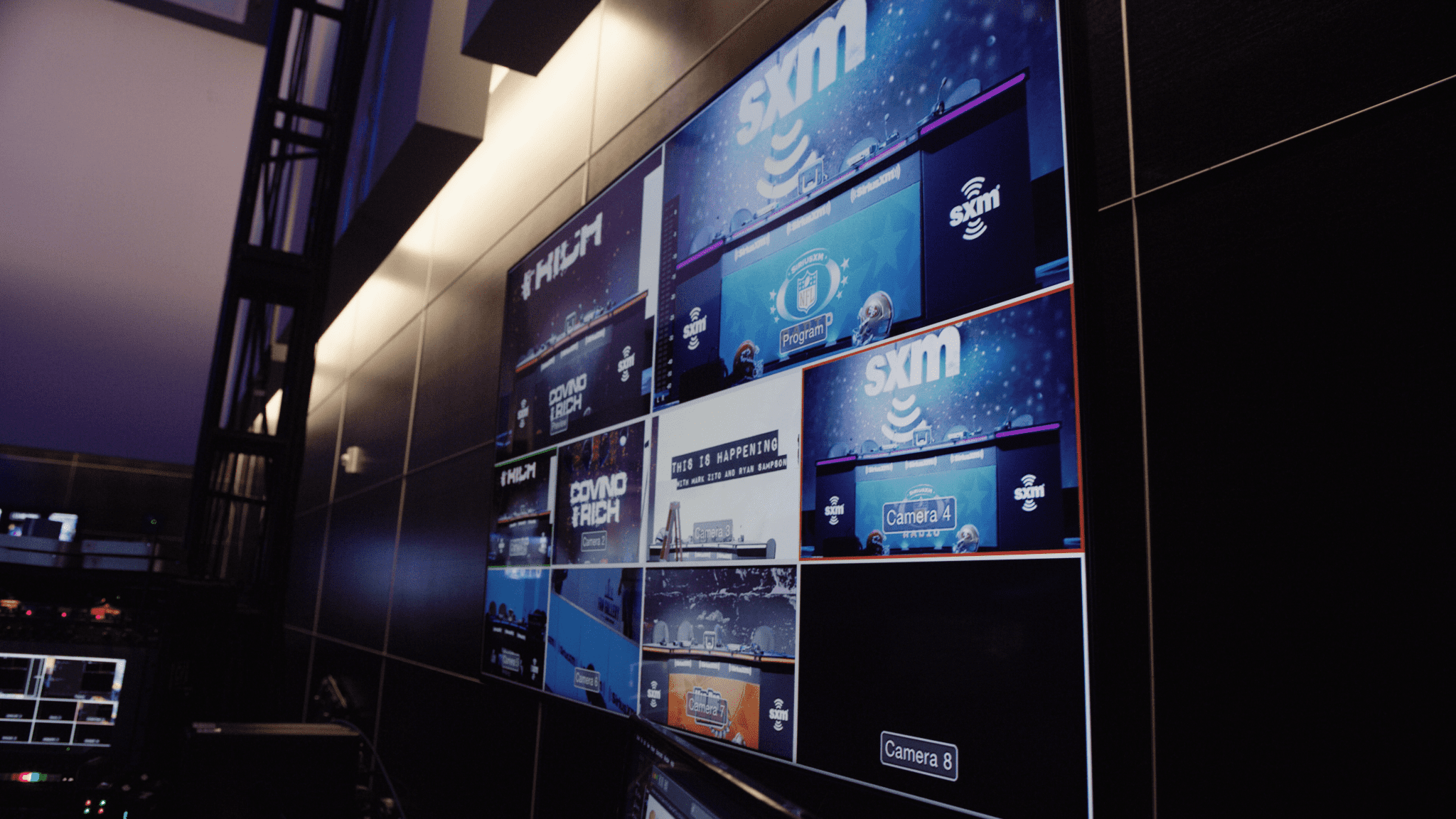
Our clients have included Nike, Coca-Cola, AT&T, the NFL, NBC, H&M, Calvin Klein, and SiriusXM, among many others. You can review our work directly at our portfolio. If a company is evasive about their past clients or cannot show you finished work, that is a serious red flag.
Questions to Ask Before You Hire Any Documentary Production Company
Armed with the criteria above, here is a practical set of questions to bring into any initial conversation with a prospective production company. These are not gotcha questions—they are genuine diagnostic tools for understanding whether a company’s capabilities match your project’s needs.
Can You Show Me a Complete Documentary You Have Produced?
Not a highlight reel. Not a trailer. A full film, start to finish. Watching complete work tells you how a company handles pacing, structure, tonal consistency, and the middle of a story—which is where most documentaries succeed or fail. Highlight reels can hide a multitude of weaknesses by showing only the best thirty seconds from every project.
Who Will Actually Be Directing My Film?
At many production companies, especially larger ones, the person you meet in the sales meeting is not the person who will direct your film. The director is one of the most important variables in documentary quality. Ask to meet them specifically. Review their work specifically. Understand their aesthetic sensibility and storytelling philosophy before you commit.
How Do You Approach Story Development in Pre-Production?
Listen for specific processes: treatment writing, subject research, story architecture frameworks, pre-interview calls with subjects. If the answer is vague or centers entirely on the shoot itself, the company may not have the pre-production discipline that documentary work demands. According to the International Documentary Association, pre-production planning is consistently cited by experienced documentary filmmakers as the single highest-leverage phase of any project.
What Is Your Editing Ratio Typically?
Editing ratio refers to how many hours of raw footage you capture relative to your finished runtime. A documentary with a 1:30 ratio (thirty hours of footage for a one-hour film) is not unusual. Understanding how a company handles this ratio tells you about their shooting discipline, their editorial process, and their realistic timeline expectations. Companies that claim very low ratios either are not capturing enough coverage or are not being honest.
How Do You Handle Music Licensing?
Music licensing for documentary work is a minefield that has derailed many otherwise excellent projects. Songs that seemed clearable at the outset can become impossible to secure—either because rights holders refuse or because the licensing fee is prohibitive. Ask how the company approaches this risk. Do they work with original composers? Do they use cleared music libraries? Do they have relationships with music supervisors? And critically—who bears the financial risk if a clearance falls through in post-production?
What Deliverables Are Included and In What Formats?
Distribution requirements in 2024 are genuinely complex. A single finished documentary may need to be delivered in a DCP format for theatrical screening, a ProRes master for archival, an H.264 compressed version for streaming, a vertical cut for social media, and a captioned version for accessibility compliance. Make sure the contract clearly specifies what you are getting and in what technical formats. Surprises in this area are expensive.
The Business Case for Documentary Content in 2024
Beyond the artistic dimension, there is a compelling business argument for investing in documentary-style content that a lot of brands are still underestimating. Audiences are increasingly skeptical of traditional advertising. Ad-blocking software is used by roughly 42% of internet users globally, and the ones who do see ads are developing what researchers call “banner blindness”—a trained ability to simply not process promotional content.
Documentary content bypasses that skepticism because it does not feel like advertising. It feels like a story. When a brand produces a genuine documentary about the people behind their product, the communities they serve, or the problems they exist to solve, audiences engage with it differently. They share it. They remember it. They form an emotional association with the brand that no banner ad or thirty-second pre-roll is capable of creating.
This is not a speculative hypothesis. Nike’s short documentary work has consistently outperformed their traditional advertising in earned media value. The Dove “Real Beauty” campaign, which incorporated documentary-style filmmaking, is widely studied as one of the most effective brand content campaigns in modern advertising history. The pattern holds across industries and audience demographics.
Our video production services include a full documentary production pathway specifically designed for brands that want to build this kind of deep audience relationship. And our documentary film production page walks through how we approach this work from initial concept through final delivery.
Red Flags That Tell You to Walk Away
We have covered what to look for. Here is what to run from.
Vague reel with no completed films. If a company cannot show you a complete documentary, they have not made one. A highlight reel assembled from commercial and branded content shoots is not evidence of documentary capability.
One-size-fits-all pricing with no discovery process. Documentary projects vary enormously in scope, subject matter, shoot complexity, and post-production demands. A company that quotes you a fixed price before understanding your project in detail is either cutting corners you do not know about yet or will be coming back with change orders throughout production.
No mention of rights, releases, or clearances. Documentary work is legally complex. Subject releases, location agreements, archival footage licensing, music clearances—any production company that does not raise these issues proactively in the early conversations is either inexperienced or hoping you will not think to ask until it is too late.
Resistance to showing you the director’s specific portfolio. Company reels are curated compilations. The director assigned to your project has their own body of work. If a company is reluctant to show you that specific work, it likely means the director they intend to assign you is less experienced than the company’s overall reel suggests.
No post-production plan discussed until after the shoot. Documentary post-production needs to be planned before the cameras roll. The editorial approach, the structure of the story you are building, and the pacing decisions you intend to make in the edit should all influence what you shoot and how you shoot it. A company that treats post as a separate phase to think about later has a workflow problem.
What Working With C&I Looks Like
We are not going to pretend we are the right fit for every documentary project. Some films require specialized expertise we do not have—deeply investigative journalism, for example, or international conflict zone reporting. But for brand documentaries, nonprofit impact films, corporate history projects, event-based documentary content, and issue-driven short films, our team has the depth and the infrastructure to deliver something genuinely excellent.
C&I Studios operates out of a 30,000 square foot production facility in Fort Lauderdale, with offices in Los Angeles and New York City. Our team includes experienced documentary directors, cinematographers who have worked in both controlled studio environments and demanding field conditions, and an in-house post-production pipeline that handles editing, color, sound, and motion graphics without farming work out to external vendors who have never met your subjects or been on your shoots.
The brands we work with—Nike, Coca-Cola, AT&T, the NFL, NBC, H&M, Calvin Klein, SiriusXM—trust us with complex, high-stakes projects because we have demonstrated consistent results. That consistency comes from process discipline in pre-production, genuine storytelling craft in production, and rigorous quality standards in post.
If you are beginning the search for a documentary production company, we would genuinely enjoy a conversation about your project. Not a sales pitch—a real conversation about what you are trying to make, who you are trying to reach, and whether what we do matches what you need. That kind of honest early dialogue is how good documentary partnerships start.
You can reach our team directly through our contact page, or explore the full scope of our production capabilities at our video production services overview.
Final Thought
Documentary filmmaking is having a genuine cultural moment. Streaming platforms have mainstreamed long-form non-fiction content. Audiences are hungry for authentic stories and increasingly resistant to manufactured ones. Brands that understand this—that invest in documentary-grade storytelling rather than treating it as a premium version of advertising—are building durable audience relationships that outlast any single campaign cycle.
The documentary production company you choose will determine whether that investment pays off. Take the search seriously, ask the hard questions, and insist on seeing complete work. The right partner is out there. We would be glad if that turned out to be us.